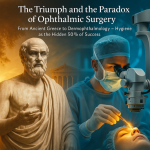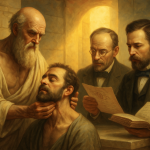

Introduction – From Hippocrates to Modern Medicine
Vision is the most precious of our senses. More than 80% of the information we receive from the world comes through our eyes. Daily life, safety, work, and social interaction all depend on clear sight. Not surprisingly, most people state their greatest fear is losing their vision.
The progress of ophthalmic surgery over the past 70 years has been extraordinary. Procedures such as:
- Phacoemulsification for cataract,
- LASIK and refractive techniques,
- Lens implants (ICL, multifocal, toric),
- Corneal transplants,
- and the Athens Protocol for keratoconus,
have restored vision to millions, offering independence from glasses and a dramatic improvement in quality of life.
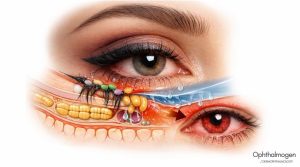
Yet, behind this triumph lies a paradox: we invest in the best technology, trust world-class surgeons, but often neglect the foundation of success – the ocular surface, eyelids, eyelashes, and periocular skin.
Hygiene is the “hidden” 50% of success.
The Great Pioneers – From the Intraocular Lens to LASIK and the Athens Protocol
Sir Harold Ridley – The Father of the Intraocular Lens
In 1949, British surgeon Sir Harold Ridley introduced the first intraocular lens (IOL), inspired by observations of World War II pilots who had acrylic fragments in their eyes without causing rejection. Ridley's idea laid the foundation for modern cataract surgery.José Ignacio Barraquer – The father of modern keratoplasty
Colombian surgeon Barraquer developed techniques that paved the way for refractive surgery. Generations of ophthalmologists worldwide, including Greek pioneers, drew inspiration from his groundbreaking work.Svyatoslav Fyodorov – The Russian innovator
The Russian Fyodorov developed pioneering methods (e.g. radial keratotomy), subsequently awarding the Greek surgeon and professor of ophthalmology Spyros Georgaras for his contribution.
Vasilios Tsigkos – Early IOL pioneer in Greece
Ophthalmic surgeon Vasilios Tsigkos, co-founding member of the Hellenic Society of Intraocular Implants, performed the first 8 successful cataract operations with IOL implantation in Greece (1980), while serving as director of Drama General Hospital.
Where everyone expected the first surgeries to be performed in Athens, Tsigos proved that innovation can start anywhere. His success marked the Dr. Marguerite Mc Donald was the first to perform PRK on a human with an excimer laser, paving the way for all laser refractive surgeries. beginning of a new era in Greek ophthalmology.
Spyros Georgaras – The pioneer of phacoemulsification
Professor Ophthalmology Spyros Georgaras contributed decisively to the spread and establishment of the phacoemulsification technique in Greece and Europe.
Before this, cataract surgery required large incisions, long hospitalization, and carried high risk of complications. Phacoemulsification changed everything: a small incision, faster recovery, safer outcomes.
Georgaras trained thousands of ophthalmologists from Greece and abroad, laying the foundations of modern cataract surgery in the country and influencing practice worldwide. His legacy lives on through the Spyros Georgaras Award, presented annually by the Hellenic Society of Intraocular Implants & Refractive Surgery (HSIOIRS) to young ophthalmologists.
Marguerite Mc Donald MD – The power of innovation and collaboration
Dr. Marguerite Mc Donald was the first to perform PRK on a human with an excimer laser, paving the way for all laser refractive surgeries.
Recognized as one of the most influential women in the history of ophthalmology, she is also a founding member of the Aegean Cornea conference, organized every two years in Greece, in collaboration with Ioannis Pallikaris and other leading scientists.
Ioannis Pallikaris – The father of LASIK
In the 1990s, Professor of Ophthalmology Ioannis Pallikaris from the University of Crete presented the LASIK (Laser in Situ Keratomileusis) technique.
Before LASIK, myopia, hyperopia, and astigmatism were corrected with glasses, contact lenses, or less predictable surgical methods. Pallikaris breakthroughrevolutionized refractive surgery, providing millions worldwide with stable, safe, and spectacle-free vision.
Anastasios Kanellopoulos – The Athens Protocol
Professor Ophthalmology Anastasios Kanellopoulos, based in Athens and NYU in New York, developed the Athens Protocol for the treatment of keratoconus.
Before this, patients had few options, with corneal transplantation often being the final step. The protocol combines cross-linking and laser, offering the internationally recognized gold standard solution for keratoconus stabilization.

Despite surgical progress, ocular surface disease undermines outcomes:
Despite surgical progress, ocular surface disease undermines outcomes:
- Cataract: 70–80% of patients already have dry eye or blepharitis before surgery.
- LASIK: up to 95% experience dry eye immediately after, worsened by untreated lid disease.
- IOLs: 40–50% report reduced satisfaction due to unstable tear film.
- Corneal transplantation: poor eyelid hygiene increases infection and rejection risk.
Conclusion
The issue is not the surgical technique, but the health of the eyelids, eyelashes, periocular area, and ocular surface.
Dermophthalmology – A new frontier

Dermophthalmology is the new branch of Ophthalmology that integrates principles from Dermatology.
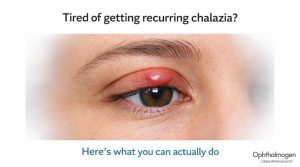
- It treats the eyelids, eyelashes, periocular skin, meibomian glands, and tear film as a single unit.
- It applies dermatological concepts to the eyes: cleansing, microbial/parasitic control, hydration, prevention.
- It ensures every surgery starts from a “clean and healthy field.”
The World Organization of Dermophthalmology (WOD) promotes this new discipline globally, in collaboration with Greek and international scientific societies, linking eye health, prevention, and periocular aesthetics.
The Dermo-Ophthalmological Care Routine
Daily care does not replace medical treatment but enhances its outcomes:
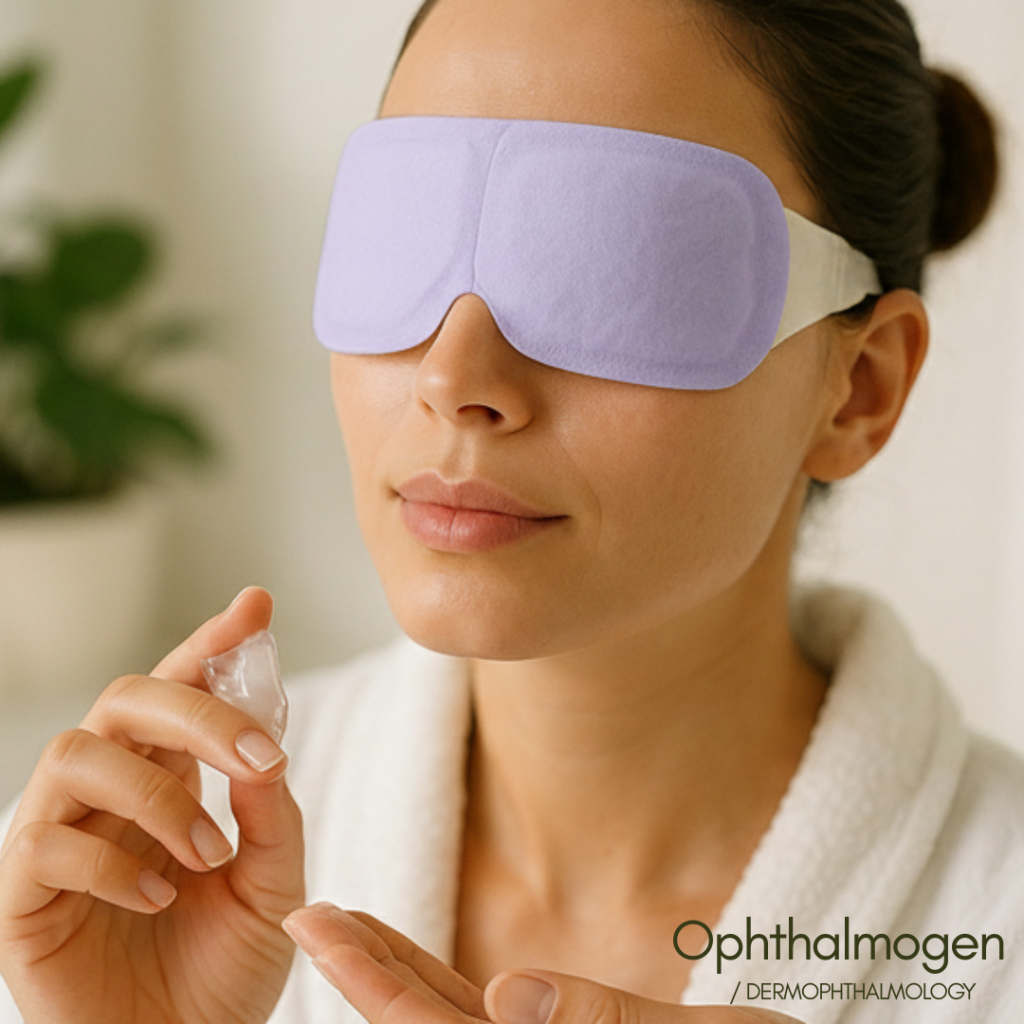
- Thermotherapy (EYE10) to unblock glands and improve tear quality.
- Cleansing (Naviblef foam) to remove bacteria and debris.
- Sprays (Ophthalmogen Spray) for Demodex control and hydration throughout the day.
- Massage (Ophthalmogen Gel) for eyelid relief and stronger lashes.
- Artificial tears for daily hydration such as VisionluxPlusDuo, Thealoz Duo, Systane, Optive.
- Artificial tears for continuous ocular surface hydration.
Just as tooth brushing is essential for dental health, lid hygiene is essential for eye health.

In Summary
Eye surgeries are a triumph of modern medicine. But surgery is only half the story. The other half is daily eyelid and ocular surface hygiene.
Greece has given the world pioneers:
- Georgaras in phacoemulsification,
- Tsiggos in early IOL surgery,
- Pallikaris in LASIK,
- τον Κανελλόπουλο στο Athens Protocol,
in harmony with global giants like Ridley, Barraquer, Fyodorov, and McDonald.
Today, Dermophthalmology continues this tradition of innovation, showing that healthy eyelids, lashes, periocular skin, and ocular surface are the true key to lasting vision, comfort, and quality of life.
Discover the full Ophthalmogen range at www.ophthalmogen.com and Dermophthalmology at www.Dermophthalmology.com
Give your eyes the care and beauty they deserve.