
Introduction – The Eyes That Speak
The very first thing we notice in a person is their eyes. In them, we read their story. In them, we recognize joy, sadness, or fatigue.
Blepharoplasty is not merely a surgical act; it is a rejuvenation of the soul expressed through the gaze.
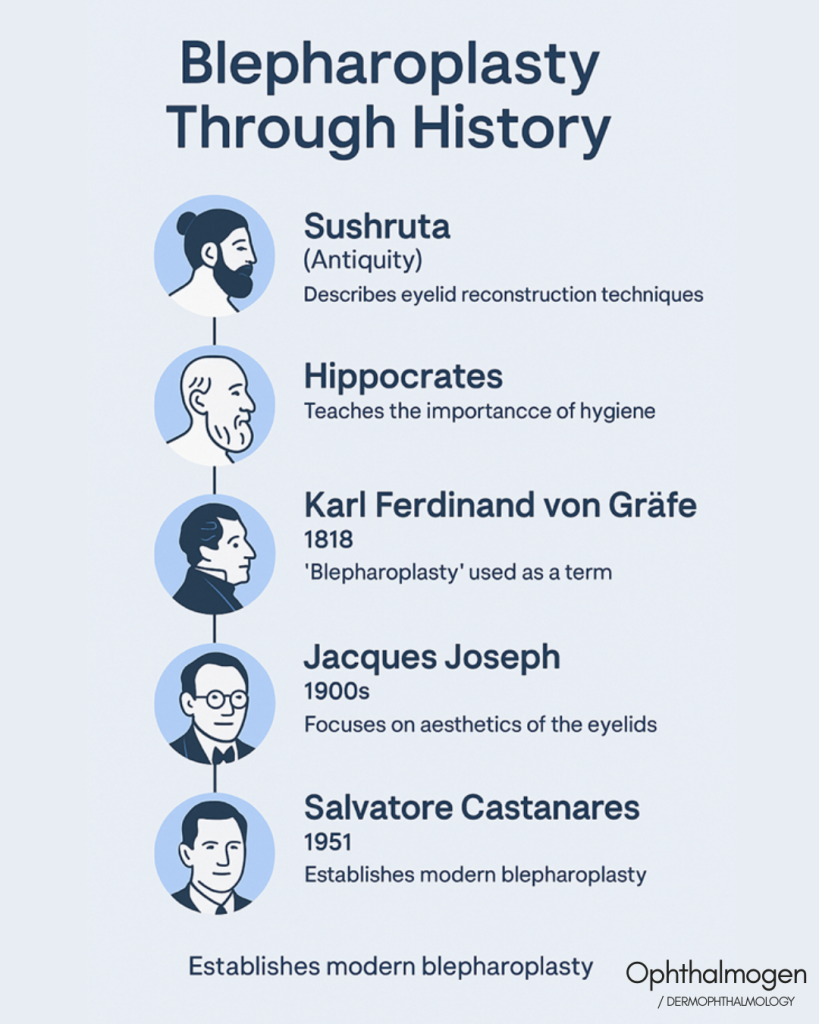
Historic Perspective – From Sushruta to Castanares
Eyelid care has accompanied humanity for centuries:
- Sushruta (6th century BC) – described reconstructive eyelid surgery techniques.
- Hippocrates (5th century BC) – emphasized hygiene: “cleanliness and balance are the foundation of health.”
- Karl Ferdinand von Gräfe (1818) – first used the term blepharoplasty, treating the eyelid as a functional organ.
- Jacques Joseph (early 20th century) – the “father of aesthetic surgery” highlighted the eyelids as a central element of beauty.
- Salvatore Castanares (1951) – established the modern technique of excess skin and fat removal, achieving natural results.
From India to Greece, and from Europe to America, the eyelid was never seen as just skin. It has always been the organ that protects, lubricates, and expresses.
Scientific Dimension – The Meibomian Glands
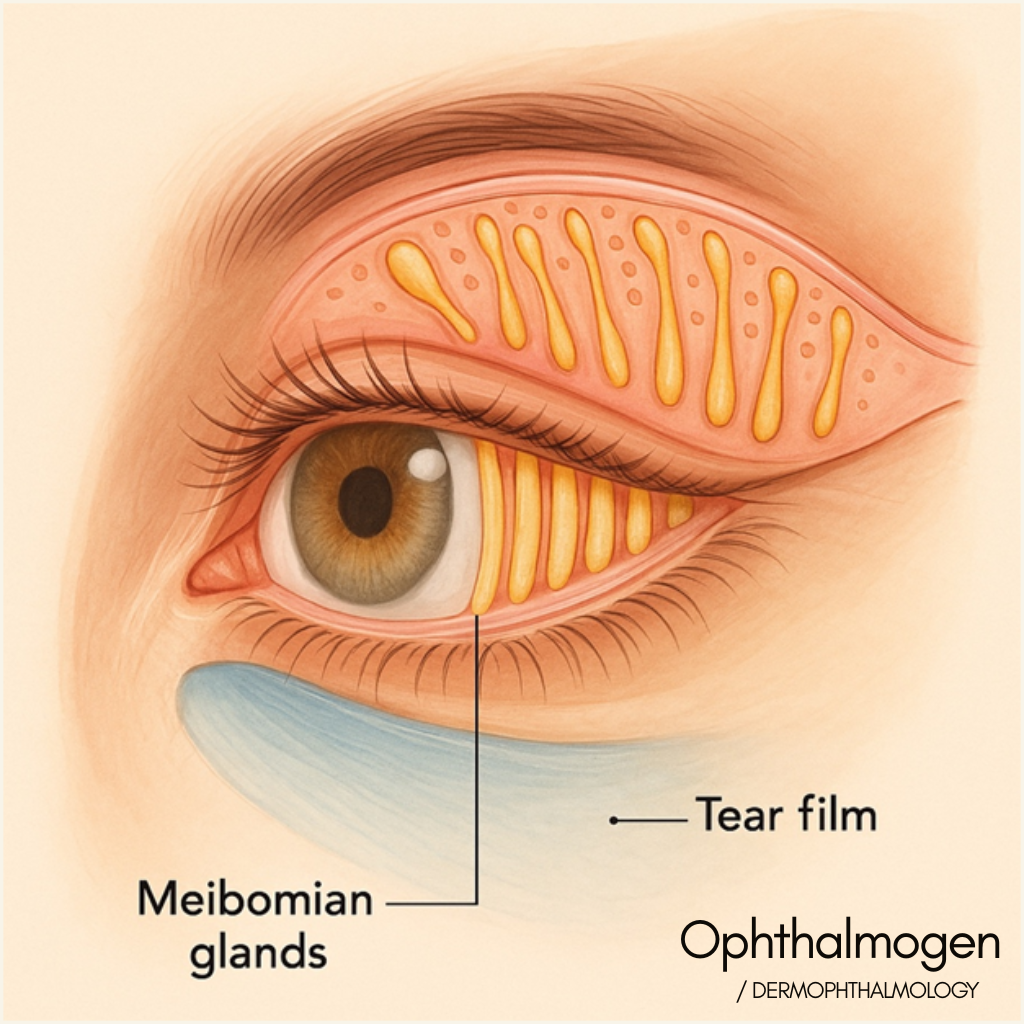
In the 1970s, ophthalmology researcher Stuart I. Danker demonstrated the decisive role of the meibomian glands in the physiology of the tear film.
These glands produce the lipid layer of tears, which:
- reduces evaporation,
- stabilizes the film,
- stabilizes the film,
When they malfunction (MGD), dry eye, blepharitis, and chronic inflammation follow.
Evidence:
- 29% of patients develop dry eye after blepharoplasty (Patel et al., Ophthalmic PlastReconstrSurg, 2010).
- MGD is recognized as the leading cause of dry eye worldwide (Nichols et al., Invest Ophthalmol Vis Sci, 2011).
- Up to 86% of dry eye cases are linked to MGD (Lemp et al., Ocul Surf, 2012).
- Preoperative eyelid therapy reduces complications (Ahn et al., AesthPlastSurg, 2013).
Conclusion: blepharoplasty is both an aesthetic and a functional challenge.
Demodex – The Invisible Enemy of the Eyelid
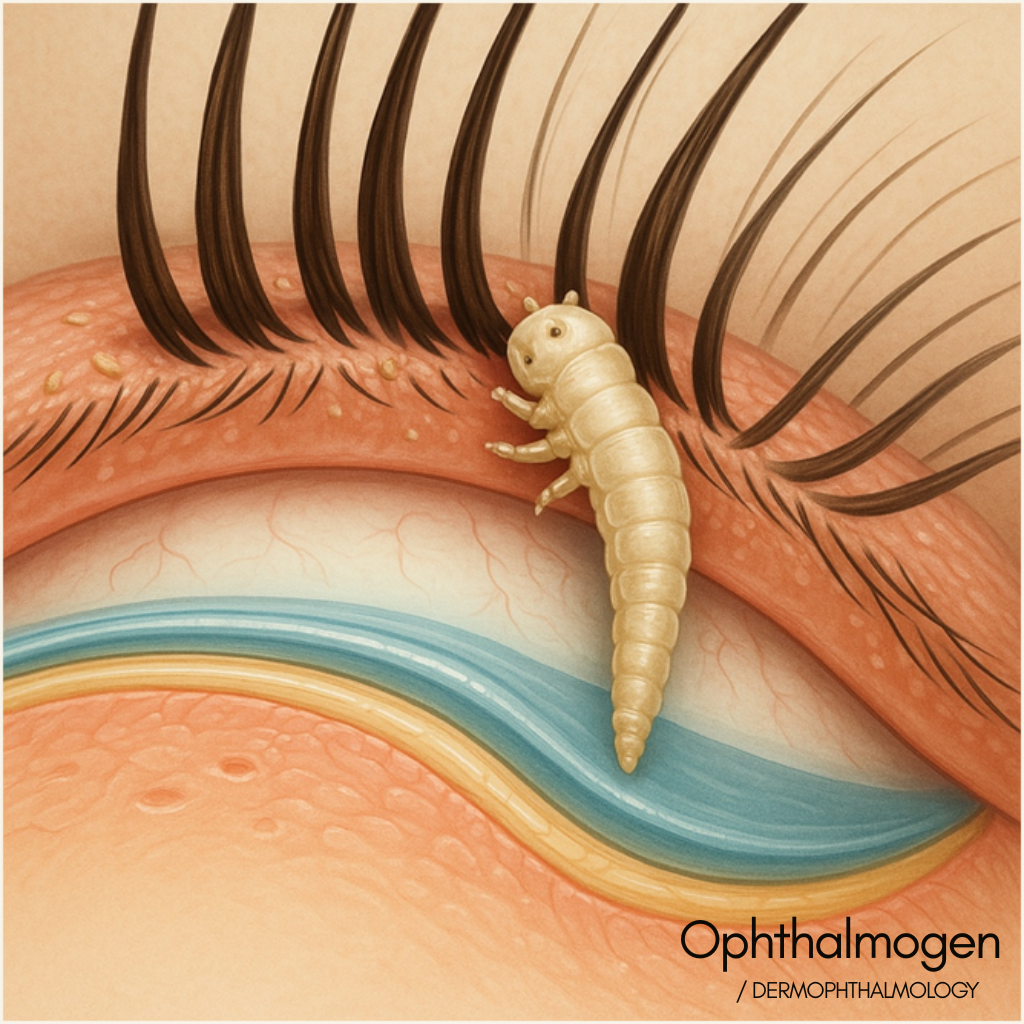
Another underestimated factor is Demodex – a microscopic mite that inhabits eyelash follicles and meibomian glands.
- Demodex – The Invisible Enemy of the Eyelid
- Demodex brevis can obstruct the meibomian glands, worsening MGD and dry eye.
Findings:
- Gao et al. (IOVS, 2005): high Demodex prevalence in chronic blepharitis.
- Gao et al. (IOVS, 2005): high Demodex prevalence in chronic blepharitis.
- Czepita et al. (KlinOczna, 2007): Demodex found in up to 84% of blepharitis patients.
In the context of blepharoplasty:
- It increases postoperative irritation.
- It may undermine aesthetic results.
The most effective natural substance against it is Tea Tree Oil.
Studies confirm that concentrations >50% are toxic to Demodex (Tighe et al., Cornea, 2013).
The Ophthalmogen range contains Tea Tree Oil in safe and effective form, offering:
- daily eyelid & eyelash care,
- reduction of Demodex load,
- stabilization of ocular comfort.
Dermophthalmology thus equips doctors with a practical tool for better functional and aesthetic outcomes.
Dermophthalmology Philosophy – The Oculodermal Ecosystem
Dermophthalmology views the eyes as an ecosystem: eyelids, lashes, brows, periocular skin, and ocular surface function as one – the Oculoderma.
- If glands are blocked → the eye dries.
- If the tear film is disrupted → comfort is lost, vision blurs.
- If inflammation persists → beauty is diminished and tearing may appear.
True beauty is founded on health.
Care Protocols
- 48–72 hours: cold compresses.
- First weeks: gentle hygiene, no makeup.
- Maintenance: sun protection, artificial tears (hypertonic NaCl 5% during the first week).
- Dermophthalmology adds:
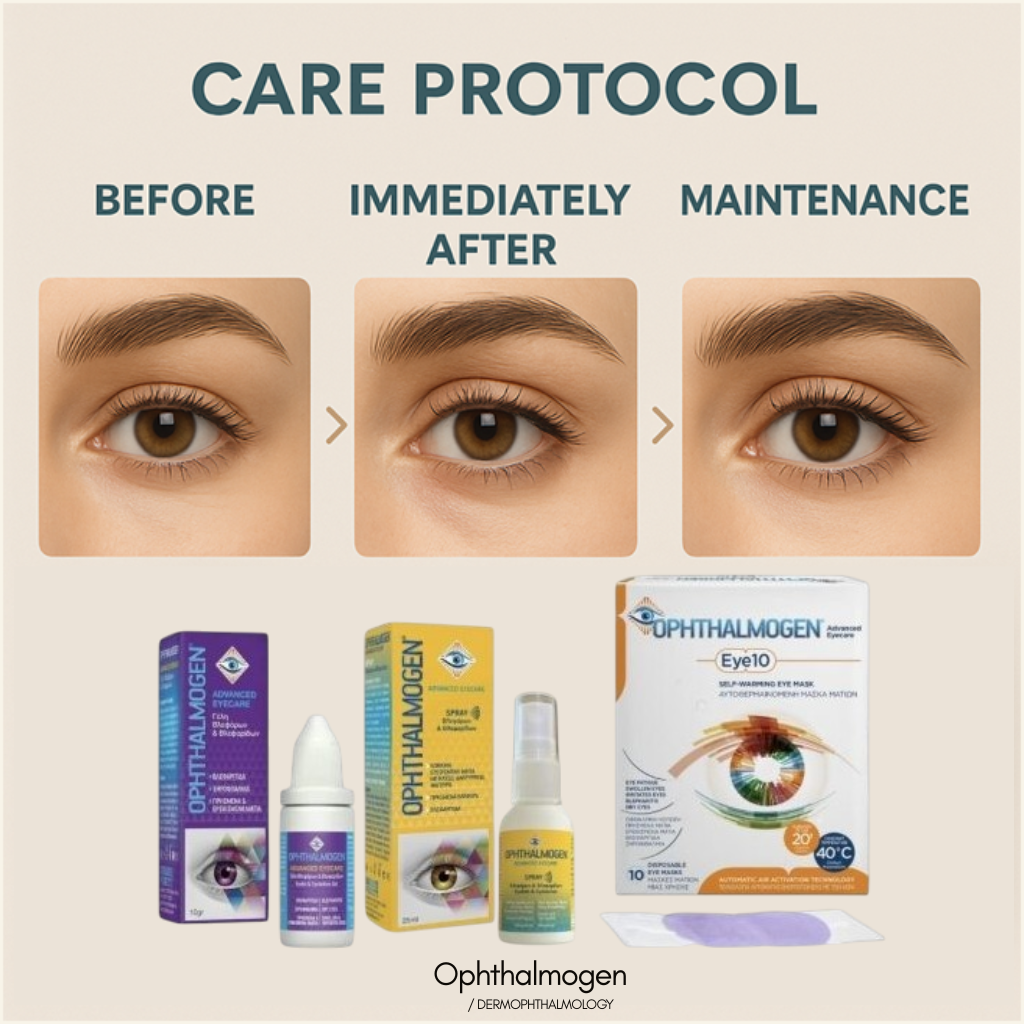
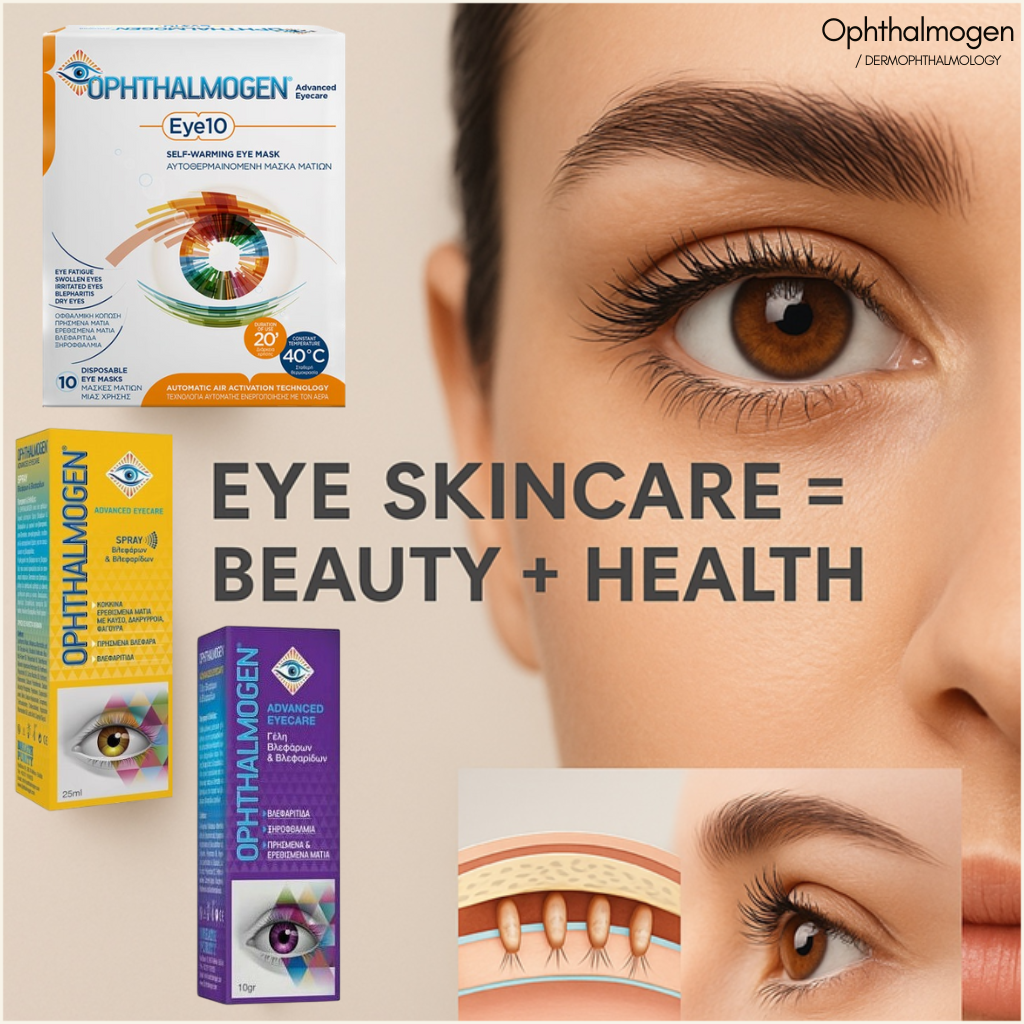
- Before: Ophthalmogen Gel → establish a healthy baseline.
- After: Ophthalmogen Spray for cooling & hydration, Ophthalmogen EYE10 self-heating compresses at later recovery stages.
- Long-term: Ophthalmogen EYE10 compresses + annual meibomian gland evacuation by ophthalmologists.
The Need for Interdisciplinary Collaboration
Blepharoplasty simultaneously concerns aesthetics and function.
- The plastic surgeon creates the artistic result.
- The ophthalmologist safeguards ocular health.
Without collaboration, the outcome is incomplete. With collaboration, the gaze becomes youthful, rested, and healthy.
Dermophthalmology does not compete – it unites.
Greek Contribution Today
- Dr. Ioannis Mavrikakis (Oculoplastic Surgeon) – internationally recognized, contributor to the Encyclopedia of the Eye.
- Dr. Ioannis Mavrikakis (Oculoplastic Surgeon) – internationally recognized, contributor to the Encyclopedia of the Eye.
- Dr. Nikolaos Chatzipieras (Plastic Surgeon) – Director at the Psychiko Medical Center, strong footprint in aesthetics.
Case Studies
- Patient A: 55-year-old woman with chronic blepharitis → severe dry eye for 6 weeks after blepharoplasty. Dermophthalmology regimen with Spray + Gel + Foam stabilized the condition.
- Patient A: 55-year-old woman with chronic blepharitis → severe dry eye for 6 weeks after blepharoplasty. Dermophthalmology regimen with Spray + Gel + Foam stabilized the condition.

FAQ
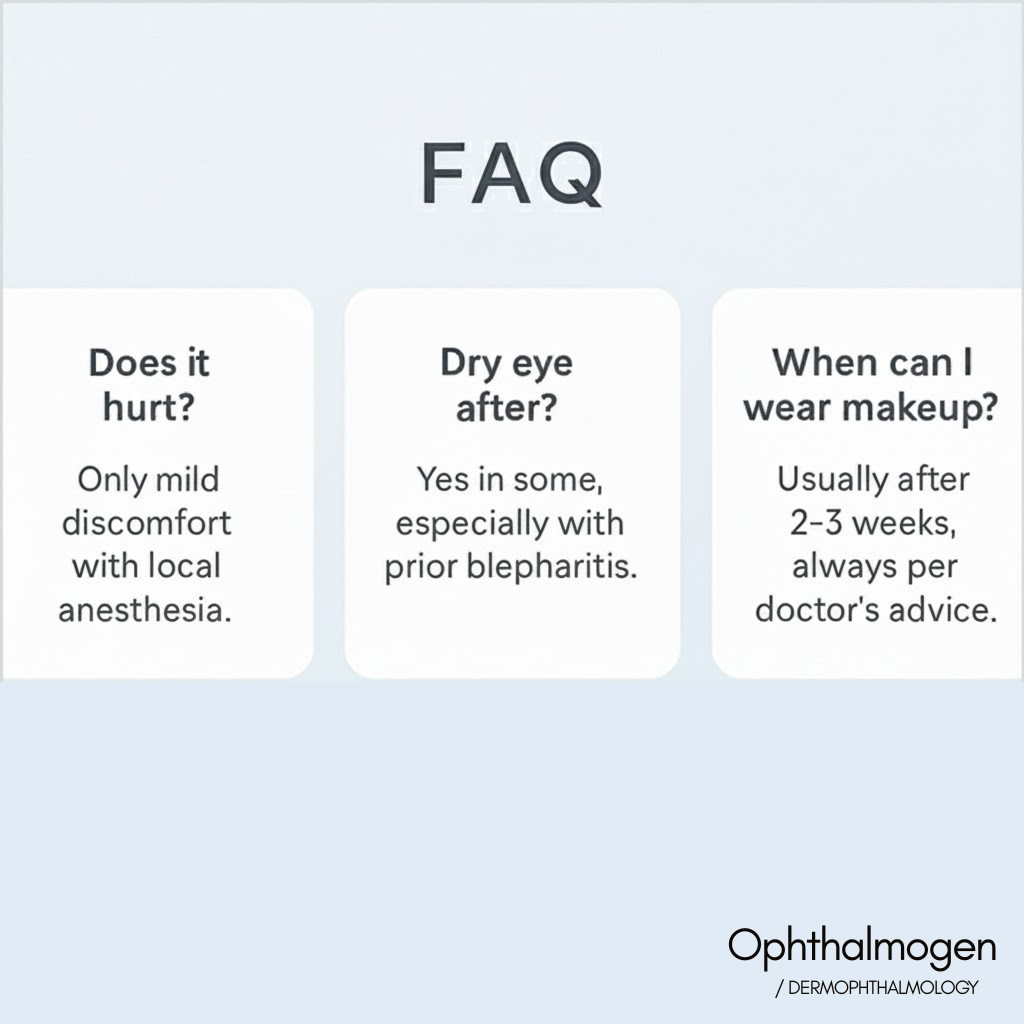
Does it hurt?
Performed under local anesthesia; discomfort is mild.
Is dry eye common after surgery?
Yes, especially in patients with pre-existing blepharitis. Pre-op care reduces the risk.
When can I wear makeup?
Usually after 2–3 weeks, with physician approval.
Conclusion – The Gaze as Light
Blepharoplasty is the intersection of art and science.
Dermophthalmology brings the missing dimension: health.
“The true beauty of the gaze is not only to look young. It is to feel comfortable, clear, and full of life.”
The future belongs to synergy: plastic surgeons and ophthalmologists together, for eyes that are both beautiful and healthy.