
Introduction
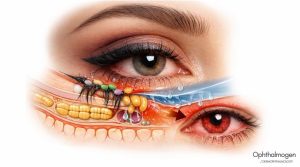
The eyes are the mirror of the soul and the most expressive part of the face. In just a few seconds, they can reveal emotions, energy, health, and even age. It is no coincidence that the most popular aesthetic treatments worldwide focus on the eye area: Botox and fillers.
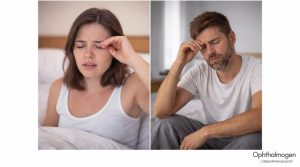
However, as aesthetic medicine evolves, a new need arises: the care not only of the skin around the eyes but also of the eyes themselves. Smooth skin is not enough if the eyes remain red, irritated, or tired.
Eyelid and eyelash hygiene emerges as the “hidden counterbalance” to the possible side effects of injectable treatments, providing the complete result: healthy, comfortable, and radiant eyes.
What is Botox and How It Works
Botulinum toxin type A (Botox) has been used for decades in medicine, initially for conditions such as strabismus and blepharospasm. Since 2002, it has been approved for cosmetic use, with explosive global expansion.
Its mechanism: it temporarily blocks nerve impulses to the muscles, causing them to relax. Wrinkles caused by intense muscle contraction smooth out, with results lasting 3–6 months.
Common periocular injection sites:
- Glabella (frown lines)
- Forehead
- Crow’s feet
Botox Around the Eyes vs. Other Facial Areas
Scientific literature shows:
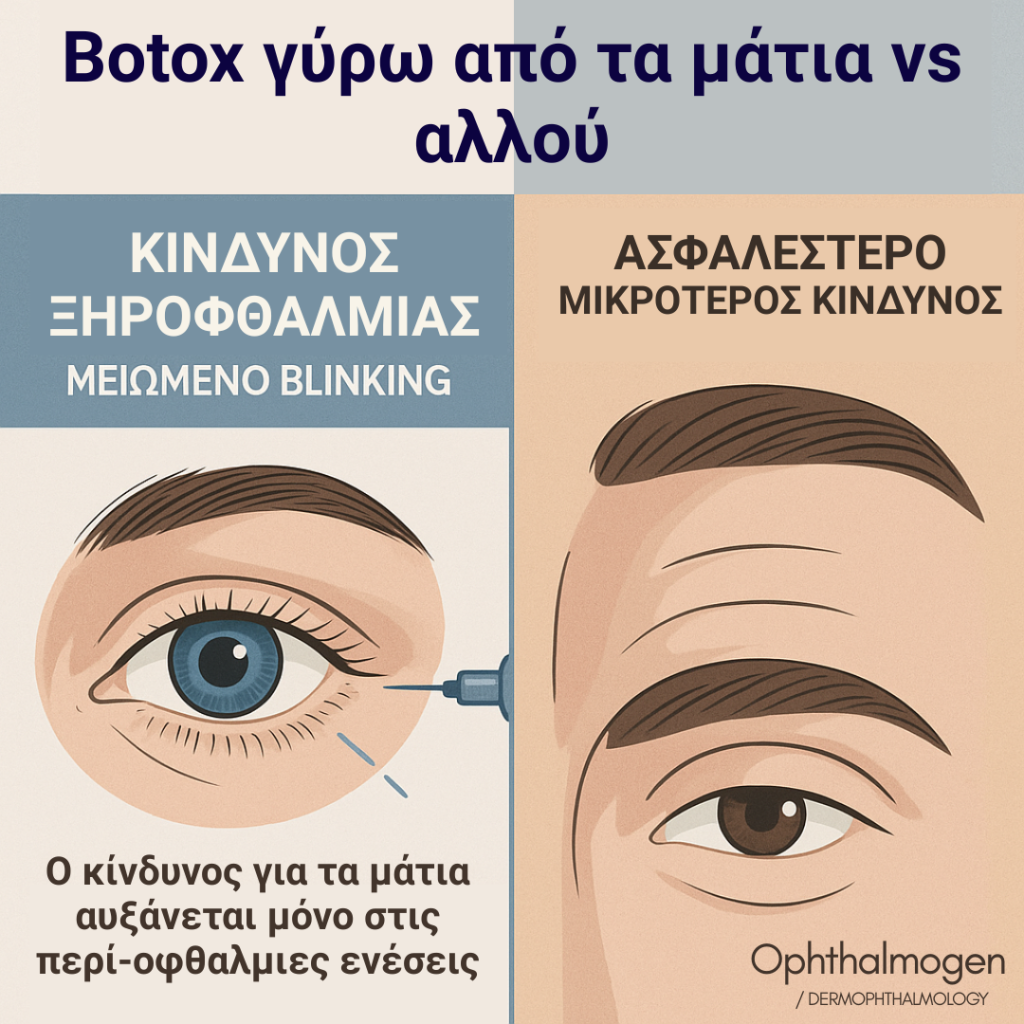
- Around the eyes: Botox can reduce the frequency or completeness of blinking, destabilizing the tear film and causing dry eye (Parketal., 2020). In some cases, incomplete eyelid closure occurs, worsening symptoms.
- Other areas (forehead, lips): much lower ocular risk. Only in cases of excessive dose or product diffusion could indirect effects occur.
What Are Fillers
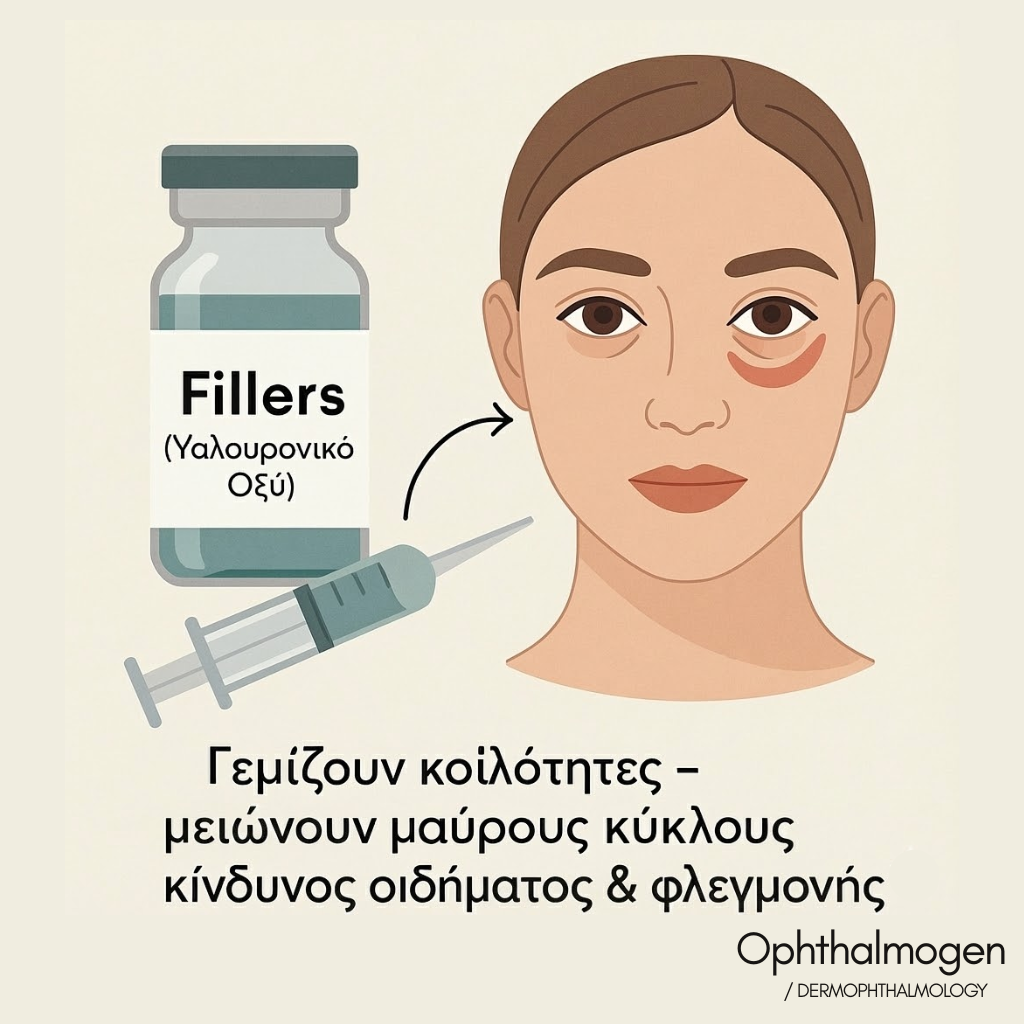
Fillers are injectable substances used to smooth wrinkles or restore facial volume. The most common is hyaluronic acid, naturally present in the skin.
Uses around the eyes:
- Reduce dark circles
- Fill under-eye hollows
- Improve tired appearance
Duration: 6–12 months. Side effects:
- swelling
- inflammation
- , and rarely, vascular complications that may affect vision (Beleznayetal., 2015).
No strong evidence links fillers directly to dry eye or blepharitis. However, edema and local inflammation can worsen preexisting conditions, increasing the need for care.
Historical Perspective: From Hippocrates to Dermophthalmology
Eye care is not new:
- Hippocrates (~400 BC): emphasized hygiene as the foundation of health, describing cleansing of the eyes with herbs and compresses.
- 19th century – Albrecht von Graefe: father of modern ophthalmology, first described blepharitis and eyelid care.
- Late 20th century: Botox (1989 medical, 2002 aesthetic) and fillers (1990s) revolutionized aesthetics.
- 21st century: Explosion of periocular aesthetic interventions coincided with more complaints of dry eye, tearing, and irritation.
Thus emerged Dermophthalmology, the new science uniting Ophthalmology and Dermatology for eye health, comfort, and beauty.
What the Studies Show
- Botox & Dry Eye: Decrease in Schirmer’s test and TBUT after periocular injections (Park et al., 2020; Naik et al., 2022).
- Blepharoplasty: 0–26.5% of patients develop dry eye symptoms (Kass&Hornblass, 1983; Damasceno et al., 2011).
- Fillers: No quantitative link to dry eye, but cases of edema, inflammation, and rare vascular complications are documented (Beleznayetal., 2015).
Conclusion: There is no population-wide “epidemic” of dry eye from Can Botox/fillers, but individual risk is clearly increased for periocular patients.
The Philosophy of Dermophthalmology: The Ophthalmoderma as a Unified Ecosystem
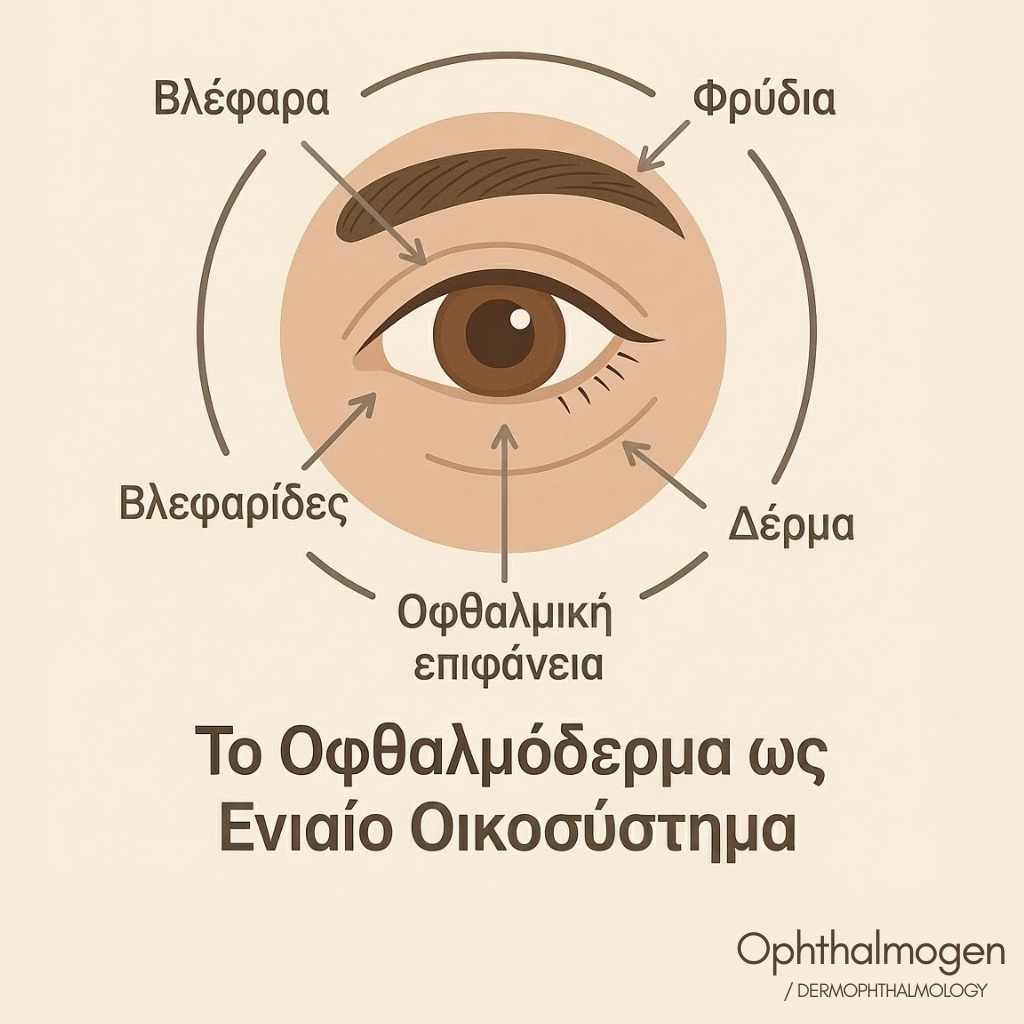
Dermophthalmology does not see the eye in isolation, but as part of the Ophthalmoderma:
The Ophthalmoderma includes:
- Eyelids
- Eyelashes
- Eyebrows
- Periocular skin
- Ocular surface
These act together, influencing health, comfort, beauty, and quality of vision.
Daily Ophthalmoderma care is therefore a preventive therapeutic act, not just aesthetics.
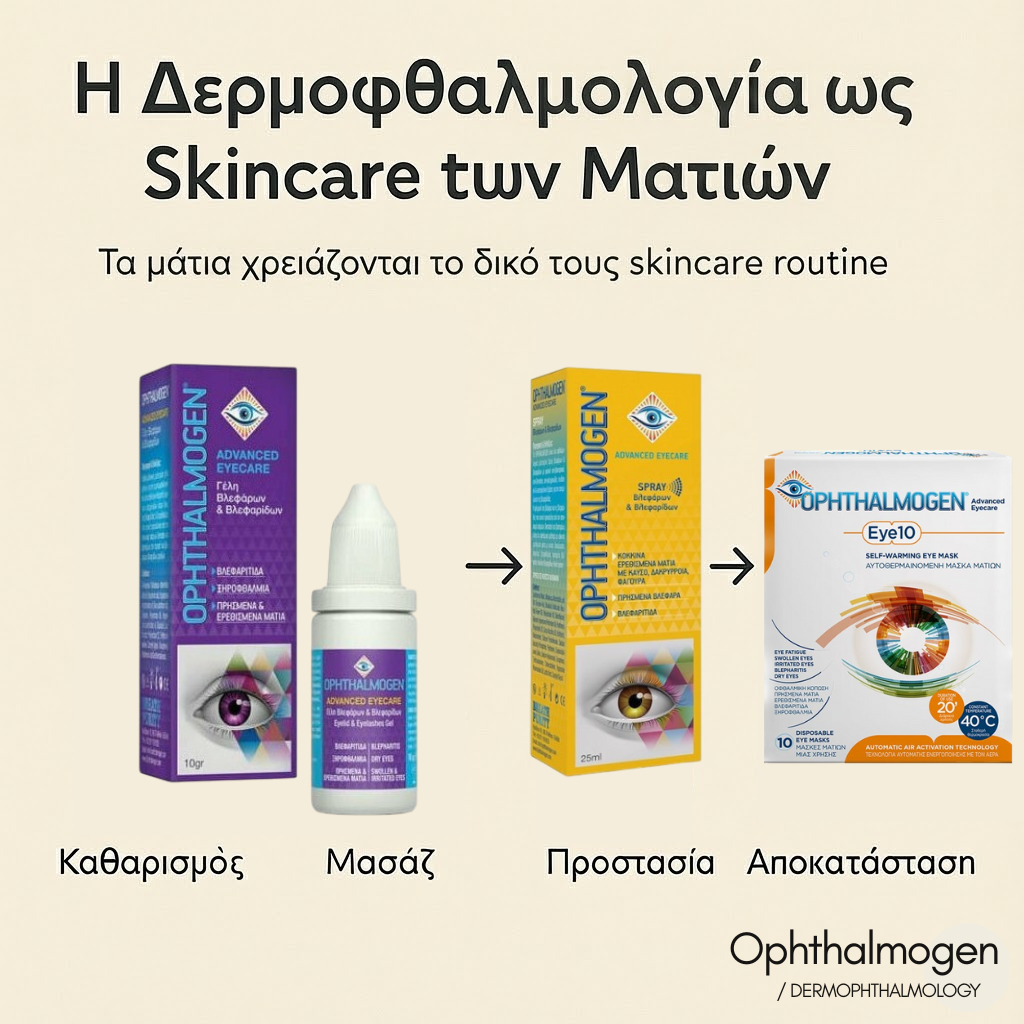
Dermophthalmology as Eye Skincare
Just like skin needs daily skincare, the eyes need their own routine:
- Massage – Ophthalmogen Gel: improves microcirculation, reduces puffiness and dark circles, rebalances eyelid flora.
- Protection – Ophthalmogen Spray: refreshes, hydrates, protects against environmental stressors.
- Restoration – Ophthalmogen EYE10: 20-min self-heating compress for eyelid relaxation and balance.
Restoration – Ophthalmogen EYE10: 20-min self-heating compress for eyelid relaxation and balance.
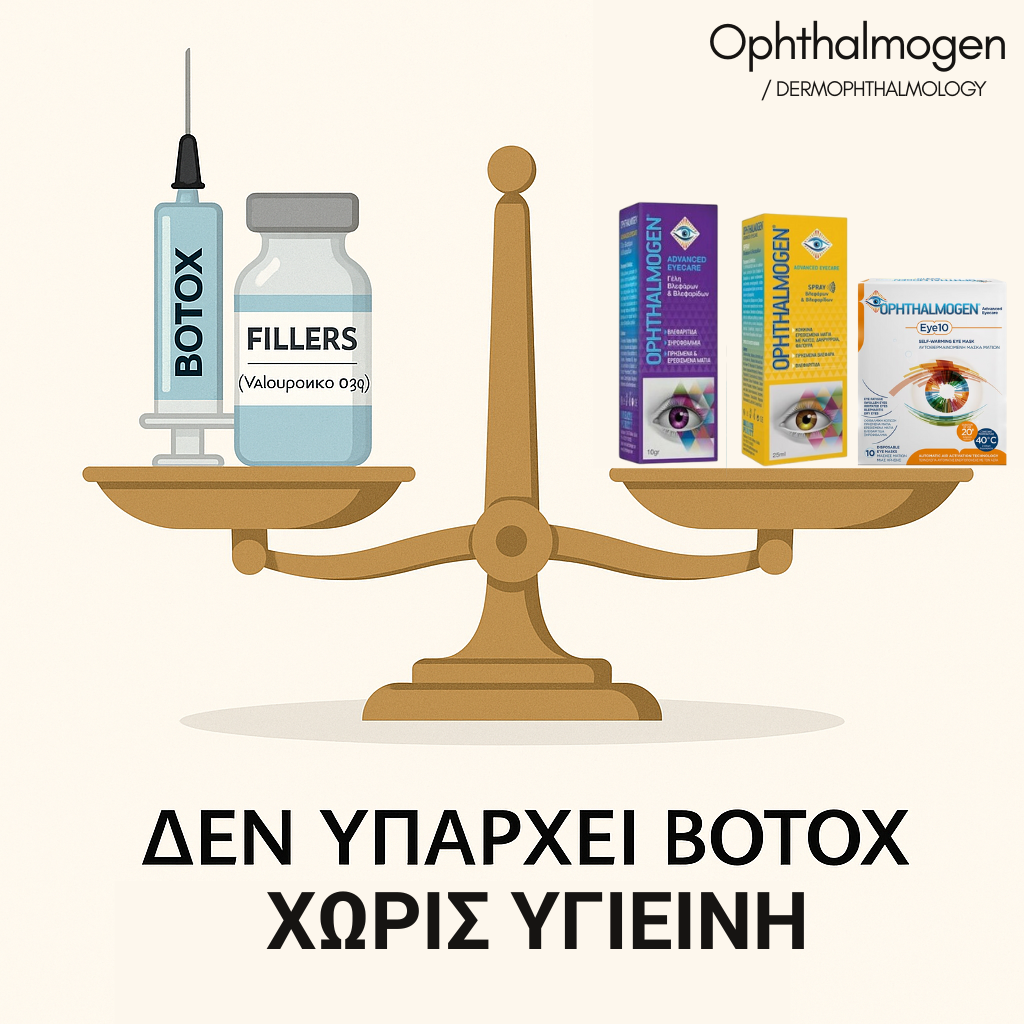
Η Υγιεινή ως αντίβαρο στο Botox και τα Fillers
Daily eyelid hygiene:
- Stabilizes the tear film
- Reduces inflammation risk
- Improves comfort
- Enhances the aesthetic outcome of Botox/fillers
Just as teeth whitening makes no sense in untreated periodontal disease, Botox without eye hygiene is incomplete.
Practical Protocol – Before & After
- Before: Spray + Gel + EYE10 for 20 min, for 3–5 days (ideally 1 week).
- After: Spray + Gel for 1–2 weeks; EYE10 daily for 1 month (starting ~10 days post-treatment).
- Maintenance: 2–3 times per week.
The Psychological Dimension
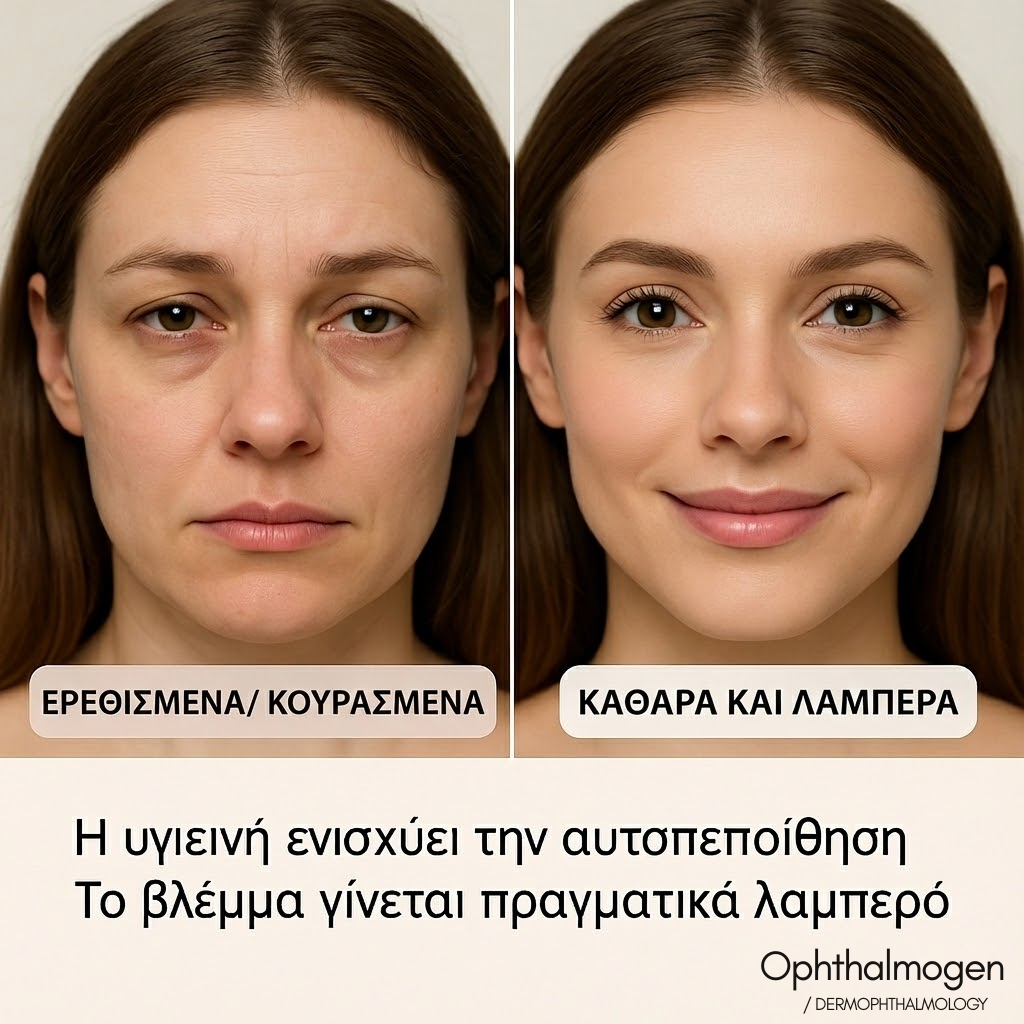
Patients seek Botox/fillers to look younger and more attractive. But if their eyes remain irritated or tired, satisfaction drops.
With daily care, the gaze becomes truly radiant, making Botox appear more successful—boosting self-confidence and self-image.
Ophthalmogen: A Partner, Not a Competitor
Botox smooths the skin.
Ophthalmogen cares for the eyes.
Together: youthful skin + comfortable, radiant eyes.
In Summary
Aesthetic medicine evolves. Today, it is not just about wrinkles—it is also about ocular health and comfort.
Dermophthalmology and eyelid hygiene are the new standard that complement Botox and fillers.
Ophthalmogen is the world’s first line to bring this philosophy to life.
FAQ
- Can Botox cause dry eye?
Yes, especially periocular injections, by reducing blinking.
- Do under-eye fillers cause blepharitis?
Not directly, but swelling/irritation increase the need for care.
- Does eyelid hygiene prolong Botox results?
It does not change duration, but keeps the gaze healthy, enhancing appearance.
- When should eye care start?
Ideally before and after treatment.
- What does Dermophthalmology recommend?
Ophthalmogen Foam, Ophthalmogen Gel, Ophthalmogen Spray, Ophthalmogen EYE10.
Call to Action
If you are undergoing Botox or fillers, ask your doctor about the new science of Dermophthalmology.
Incorporate the Ophthalmogen routine and give your eyes the comfort, freshness, and radiance they deserve.
References
- Park J et al. Changes in Tear Film and Dry Eye Symptoms after Botulinum Toxin Injection for Crow’s Feet. Ophthalmology. 2020.
- Naik MN et al. Ocular Surface Changes Following Botulinum Toxin for Periocular Aesthetics. AesthetSurg J. 2022.
- Kass J, Hornblass A. Ocular complications after blepharoplasty. Arch Ophthalmol. 1983.
- Damasceno RW et al. Dry eye after blepharoplasty. Orbit. 2011.
- Beleznay K et al. Vascular Compromise from Fillers: Literature Review and Treatment Options. AesthetSurg J. 2015