
Why Chalazion Is Not Random — and How to Break the Vicious Cycle
Why they are not separate conditions, but different stages of the same eyelid pathology — and how proper hygiene can prevent progression
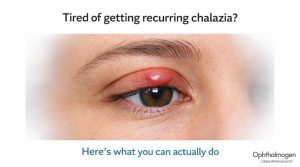
For years, chalazion has been treated as an isolated event. Something that “just happened.” Something that “suddenly appeared.” Modern science, however, shows something very different:
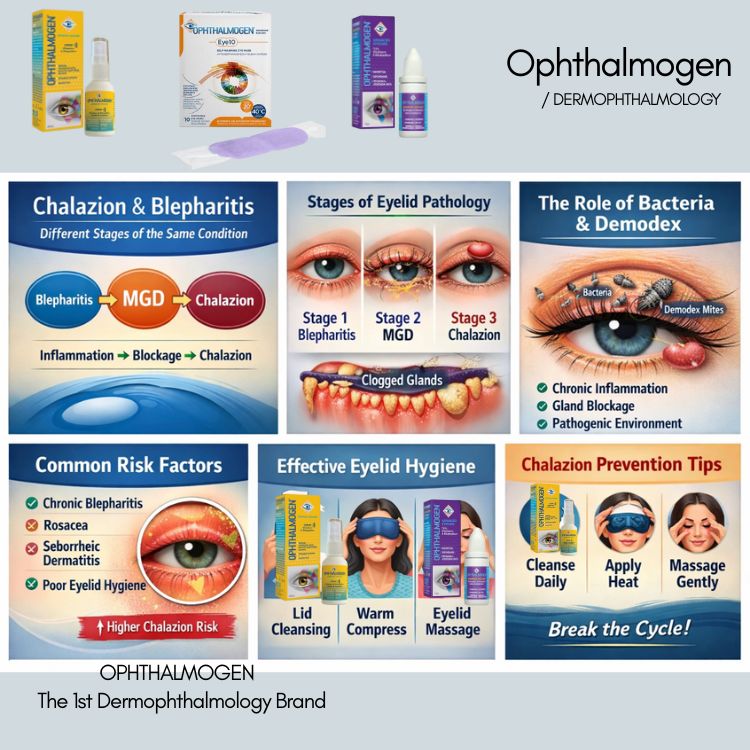
- Chalazion is often the natural continuation της chronic blepharitis and της Meibomian Gland Dysfunction (MGD).
These are not unrelated conditions, but different points along the same pathological spectrum.
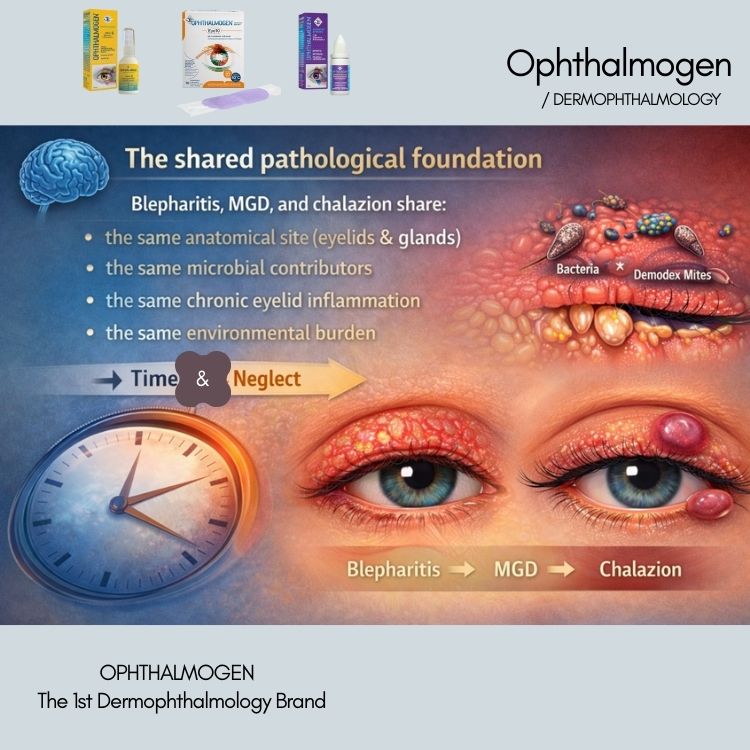
The shared pathological foundation
Blepharitis, MGD, and chalazion share:
- the same anatomical site (eyelids & glands)
- the same microbial contributors
- the samechronic eyelid inflammation
- the same environmental burden
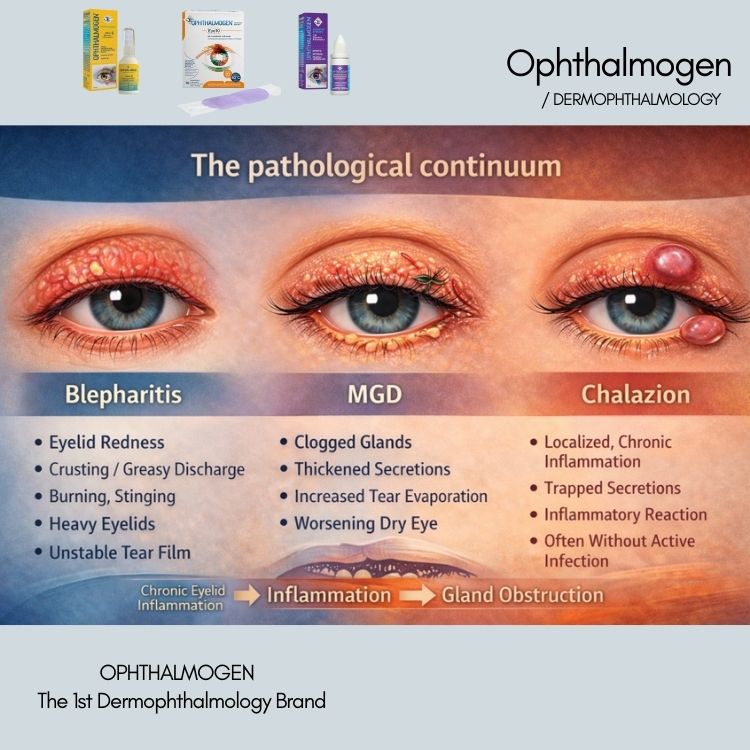
What changes? Time and degree of neglect
What changes?Time and degree of neglect
Stage 1 – Chronic Blepharitis
- eyelid redness
- crusting / greasy secretions
- burning, stinging
- “heavy” eyelids
- unstable tear film
Often perceived as “normal” and not treated systematically.
Stage 2 – Meibomian Gland Dysfunction (MGD)MGD)
- thickened meibum
- gland orifice obstruction
- increased tear evaporation
- worsening dry eye symptoms
The biological substrate becomes rigid and blocked.
Stage 3 – Chalazion
- localized, chronic inflammation
- trapped secretions
- granulomatous reaction
- often without active infection
Chalazion is not the beginning of the problem.
The role of bacteria & Demodex
The literature shows that:
- Staphylococcus species
- Demodex folliculorum / brevis
contribute to:
- chronic eyelid inflammation
- gland obstruction
- maintenance of a pathological microenvironment
Patients with blepharitis have a significantly increased risk of developing chalazion.
What the data show (indicative)
- Blepharitisreported in up to 30–40% of ophthalmology visits
- MGD: the leading cause of evaporative dry eye
- Chalazion: more frequent in individuals with:
- chronic blepharitis
- rosacea
- seborrheic dermatitis
- poor eyelid hygiene
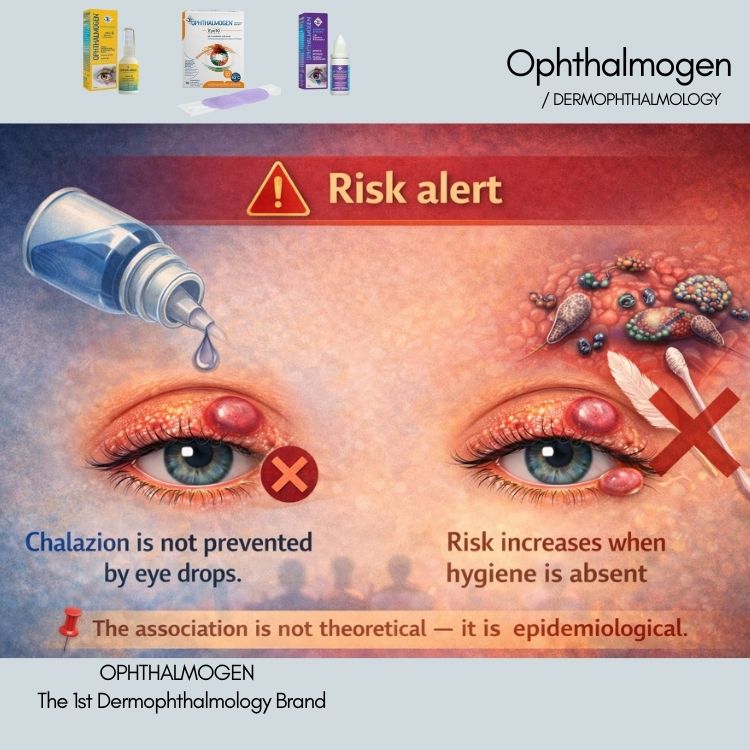
The association is not theoretical — it is epidemiological.
Chalazion is not prevented by eye drops. Chalazion is not prevented by eye drops.
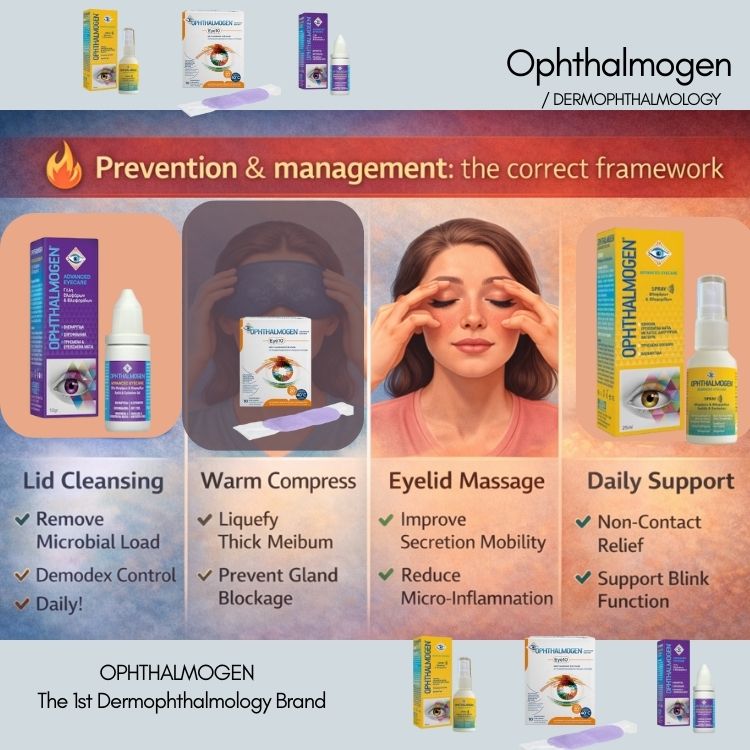
Prevention & management: the correct framework
Modern care does not “chase” chalazion.
- It prevents the biological ground that produces it.
Daily πρωινός eyelid cleansing
- Naviblef Daily Care & Ophthalmogen
- removal of microbial & lipid load
- Demodex control
Heat & massage
- Heat therapy (Ophthalmogen EYE10)
- liquefies thick meibum
- prevents gland obstruction
Eyelid massage with Ophthalmogen Gel
- improves secretion mobility eyelid massage
- Improves the flow of secretions
- reduces micro- inflammation
- improves eyelid hygiene.
Daily support Ophthalmogen Spray
- ideal for screens
- without contact
- supports healthy eyelids & comfort
- easy to use anywhere
Consistency reduces episodes of blepharitis and the risk of chalazion.
FAQ Frequently Asked Questions
Is chalazion an infection?
Not necessarily. It is primarily an inflammatory reaction due to gland obstruction.
Do antibiotic eye drops prevent chalazion?
No. They may help in secondary complications, not the root cause.
If I have blepharitis, will I definitely develop chalazion?
No. But the risk is higher without proper hygiene.
Can chalazion recur?
Yes — when the underlying substrate remains unchanged.
In Summary
- Chalazion is not random
- It is not separate from blepharitis
- It represents a stage of the same pathological chain
- Prevention begins at the eyelids
- Hygiene is a public-health level intervention
Care for your eyelids today —— so you don’t have to treat chalazia tomorrow..
.
Indicative scientific references
- TFOS DEWS II
- International Workshop on Meibomian Gland Dysfunction (2011)
- Lindsley K. et al., Blepharitis – Cochrane Reviews
- Liu J. et al., Association of blepharitis and chalazion