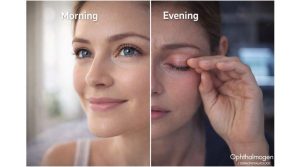

Prolonged use of computers, smartphones, and tablets has become part of everyday life.Along with it, one symptom is becoming increasingly common:
- red eyes without infection
- burning, stinging, heaviness
- eyes that tire and “turn red” as the day goes on
If you spend many hours in front of screens, you are not the exception — you are the norm.
It’s not conjunctivitis — it’s digital eye strain
In most cases, screen-related redness is not caused by infection.
It is caused by:
- reduced blink rate
- accelerated tear evaporation
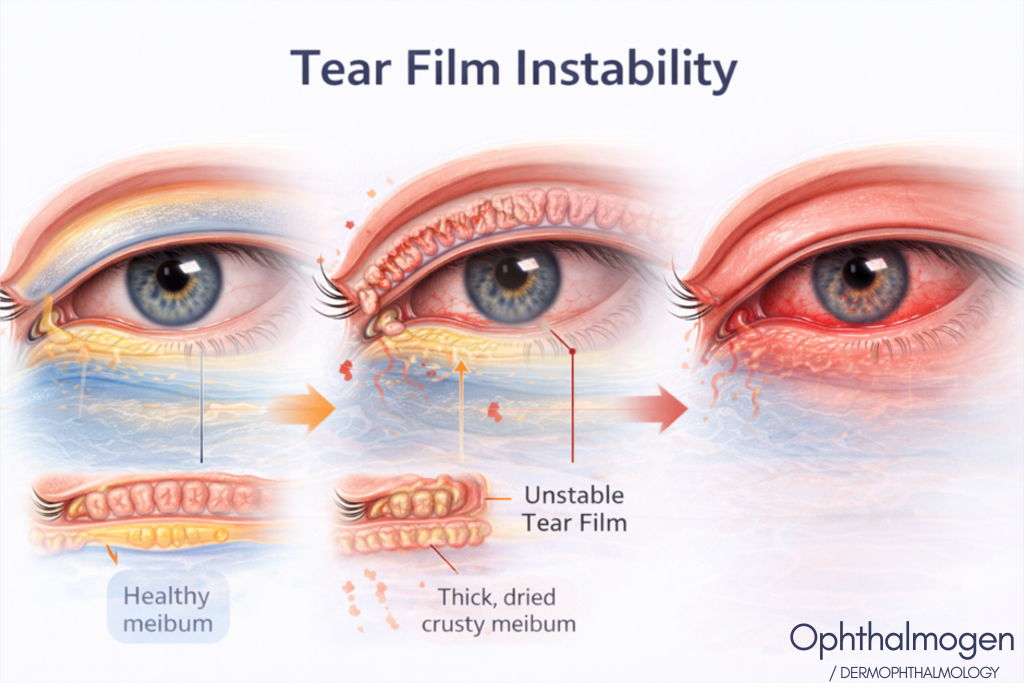
- tear film instability
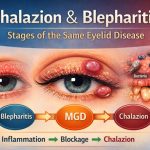
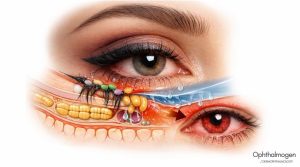
- dysfunction of the eyelids and meibomian glands
In other words: the problem starts at the eyelids.
What scientific studies show
How Common Is the Problem?
- 60–90% of computer users experience symptoms of digital eye strain
(Rosenfield, Ophthalmic & Physiological Optics)
- >70% report redness and dryness after prolonged screen use
(American Optometric Association)
- Blink rate is reduced by up to 60% during screen use
(Tsubota & Nakamori, British Journal of Ophthalmology)
Less blinking = poorer tear film = redness.
The real cause: tear film instability
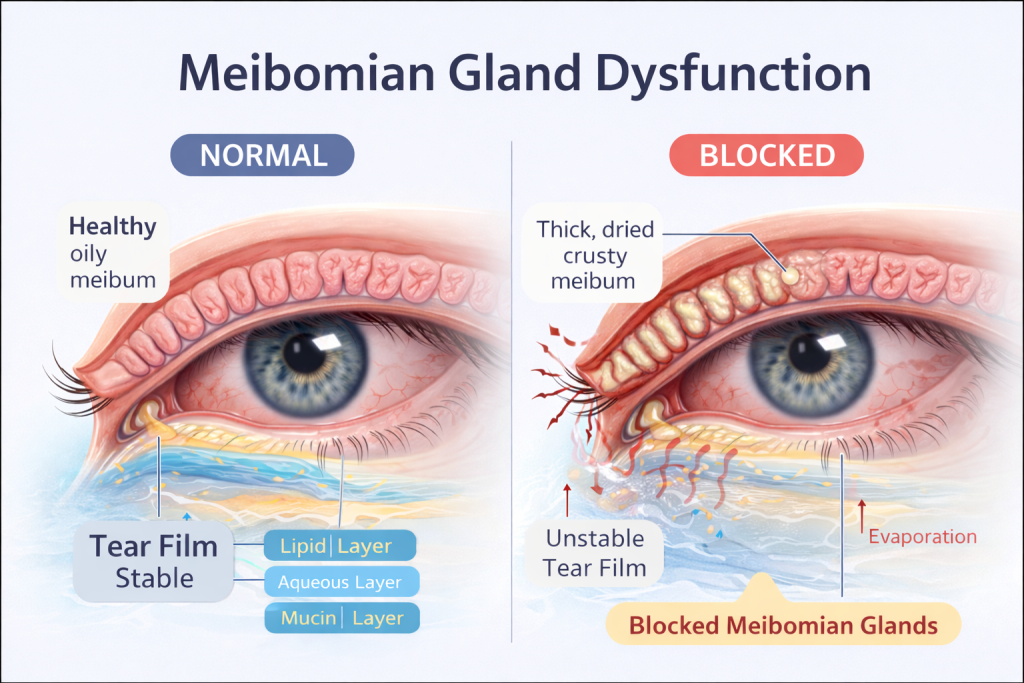
According to TFOSDEWSII (2017):The most common cause of chronic redness and discomfort is evaporative dry eye, not lack of tear production.
This is directly linked to:
- poor lipid layer quality
- blocked meibomian glands
- chronic eyelid inflammation
Eyes turn red because their protective tear film breaks down.
Why eye drops alone are often not enough
Simple lubricating drops:
- provide temporary relief
- do not reduce evaporation
- do not restore eyelid function
- do not restore eyelid function
That is why symptoms return every day.
The foundation of protection for screen users: eyelid hygiene
When you:
- work long hours on screens
- blink less
- overload the tear film
your eyelids need support.
The modern approach is not “add another drop,” but:stabilize the tear film at its source.
The Ophthalmogen protocol for digital eye strain
Ophthalmogen products EYE10 — evening use
Self-heating compresses:
- liquefy thick meibomian secretions
- open blocked glands
- improve the lipid layer
- reduce evaporative dryness
Studies show thermal therapy improves gland function(IOVS, Thermaltherapy&MGD)
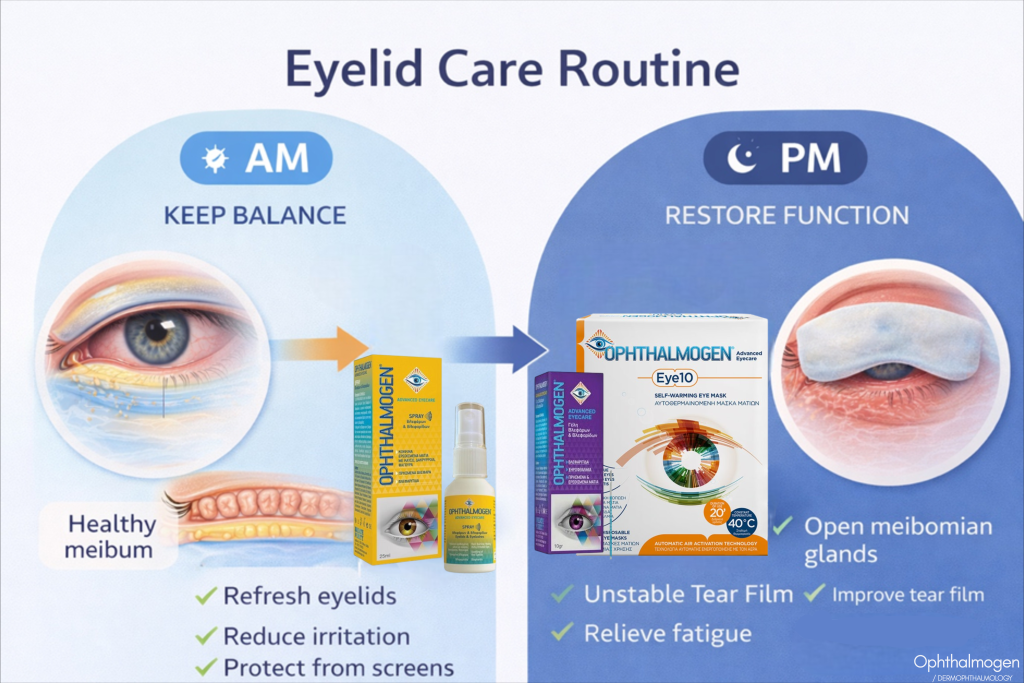
Ophthalmogen Gel — after EYE10
- allows gentle eyelid massage
- supports natural drainage
- reduces congestion
- enhances tear film stability
Ophthalmogen Spray — during the day
- supports comfort without “flooding” the eye
- reduces micro-irritation
- ideal for office use
- does not disturb makeup or contact lenses
It does not “whiten” the eye.It helps prevent redness from developing.
How this works in real life
Screen users report:
- less redness at the end of the day
- reduced burning and heaviness
- decreased reliance on eye drops
- clearer, more comfortable eyes after long hours
This is not placebo. It is functional restoration.
In Summary
Red eyes from screens are not an infectionThey are not solved with a single dropThey are a tear film issue. They start at the eyelids. Eyelid hygiene is preventive eye care. If you work in front of screens:protect your eyes at the root of the problem.
FAQ — Eyes & Screens
- Why do my eyes turn red when using a computer?
Due to reduced blinking and tear film instability.
- Is this dry eye disease?
Often evaporative dry eye, not insufficient tear production.
- Are eye drops enough?
Not on their own. They are supportive, not foundational.
- When should I use EYE10;
In the evening, after prolonged screen exposure.
- - Can I keep the Spray at my desk?
Yes. It is ideal for daily support.
- When should I see an ophthalmologist?
If you experience pain, photophobia, or sudden vision loss.