If you start the day feeling relatively fine, but as the hours pass:
- your eyes feel heavy
- they burn or sting
- they become red or watery
- your vision loses clarity
- you feel fatigue and discomfort
this is not random.And it is not just “screen fatigue.”It is a progressive functional dysregulation of the ocular surface.
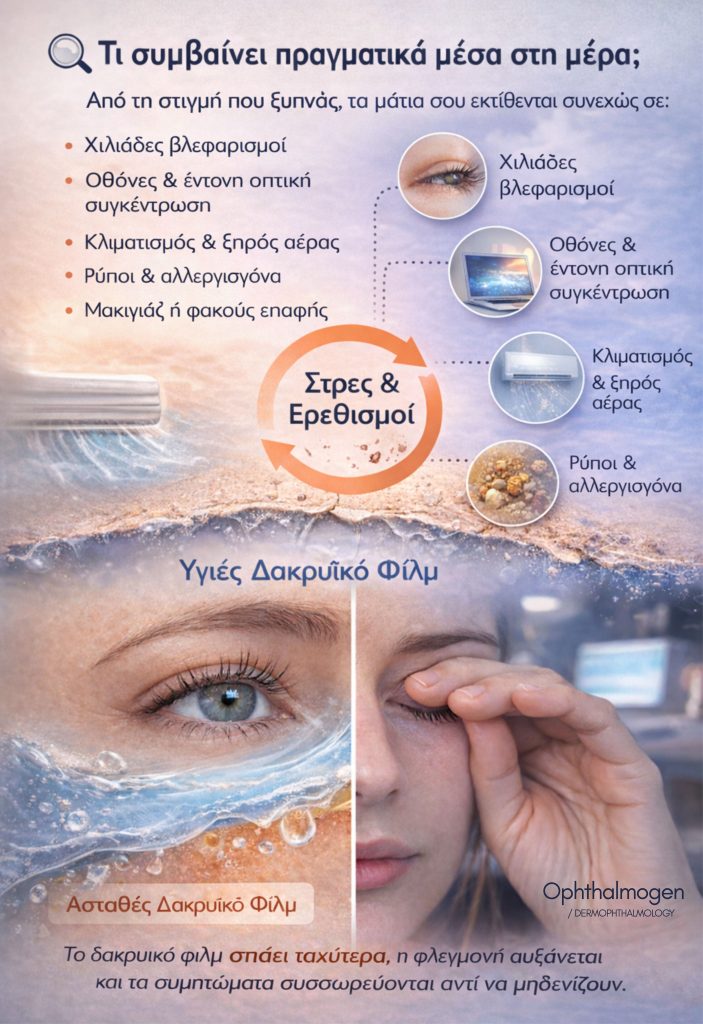
What really happens during the day?
From the moment you wake up, your eyes are constantly exposed to:
- thousands of blinks
- screens and intense visual focus
- air conditioning and dry environments
- pollutants and allergens
- makeup or contact lenses
If the eyelids are not functioning properly, every hour adds stress instead of recovery.
The result:The tear film becomes increasingly unstable, inflammation builds up, and symptoms accumulate instead of resetting.That’s why eyes are usually worse in the evening than in the morning.
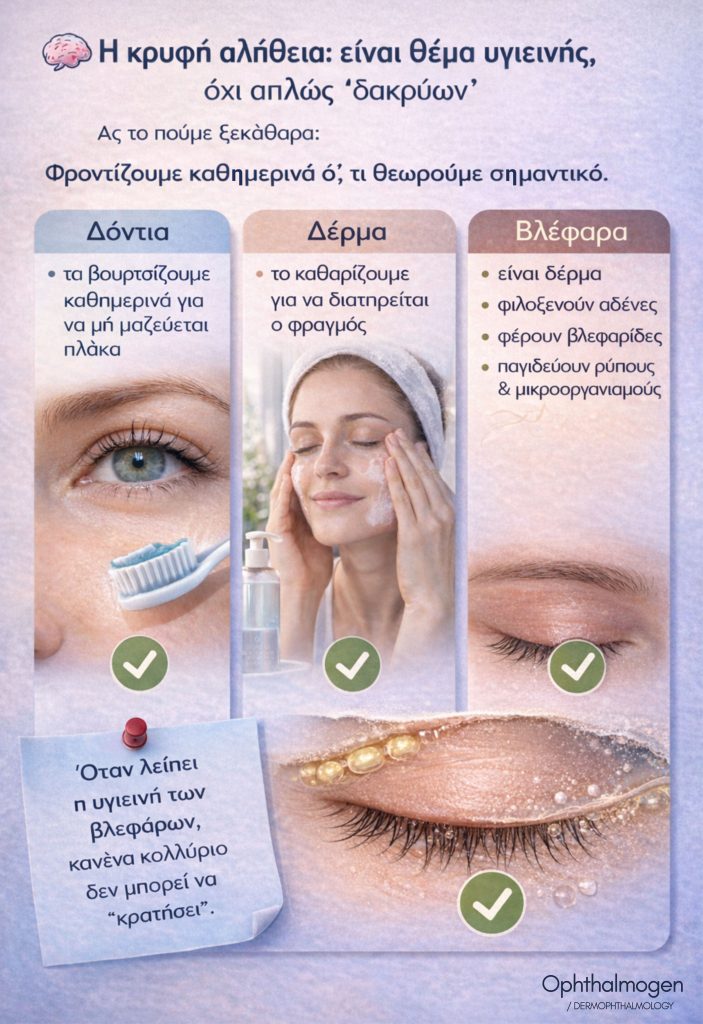
The hidden truth: it’s about hygiene — not just “tears”
Let’s be very clear.We care daily for what we consider important.
- Teeth → we brush them every day to prevent plaque
- Skin → we cleanse it to preserve the barrier
- Hands → we wash them to reduce microbial load
Eyelids?Most people do nothing on a daily basis.
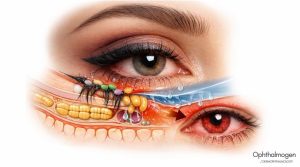
And yet, the eyelids:
- are skin
- host glands
- carry eyelashes
- trap pollutants and microorganisms
- regulate the quality of the tear film
When eyelid hygiene is missing, no eye drop can “hold.”
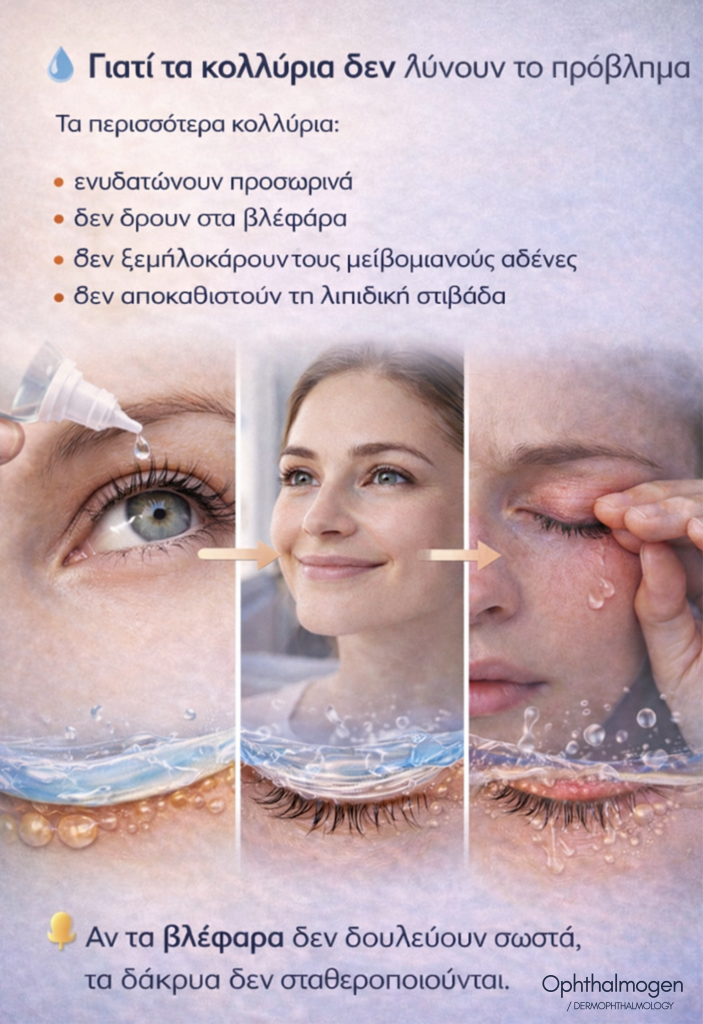
Why eye drops alone don’t solve the problem
Most eye drops:
- provide temporary hydration
- do not act on the eyelids
- do not unblock the meibomian glands
- do not restore the lipid layer
What happens in practice?
- you use eye drops
- brief relief
- tears evaporate
- symptoms return — often stronger
If the eyelids are not working properly, tears cannot stabilize.
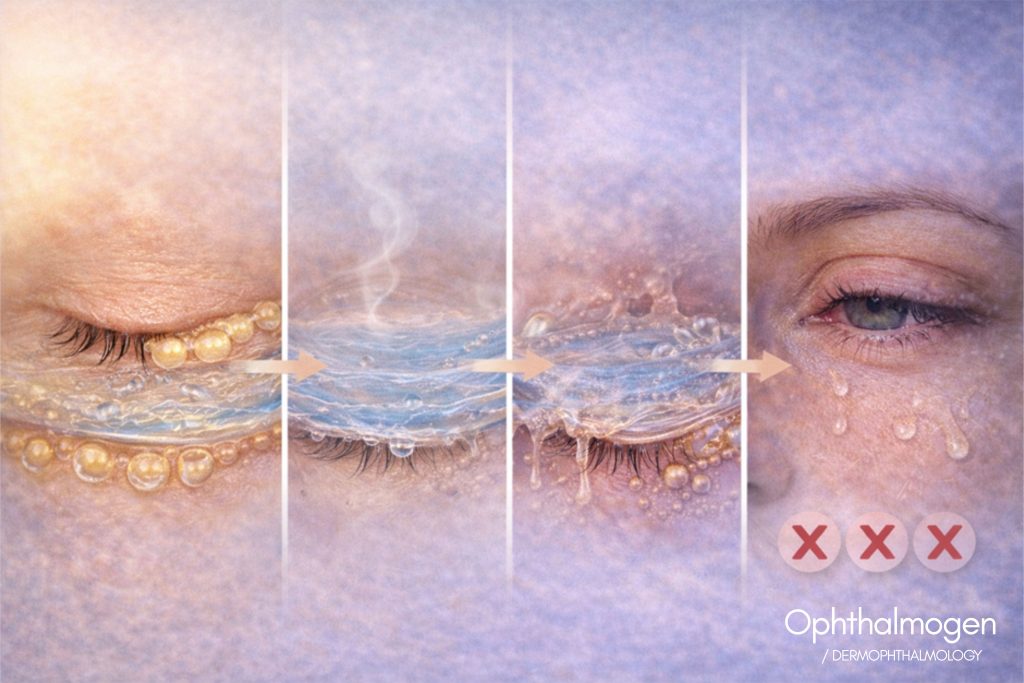
The mechanism behind “worsening during the day”
When daily hygiene is absent:
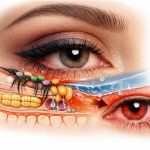
- meibomian glands remain partially blocked
- the lipid secretion is thick and uneven
- evaporation increases hour by hour
- inflammation accumulates
- the tear film breaks faster and faster
That’s why:
- eyes feel worse in the afternoon
- you need eye drops more frequently
- comfort never truly stabilizes
The functional hygiene approach (Dermophthalmology)
Just as oral hygiene requires brushing + flossing, eyelids require a routine, not a single product.
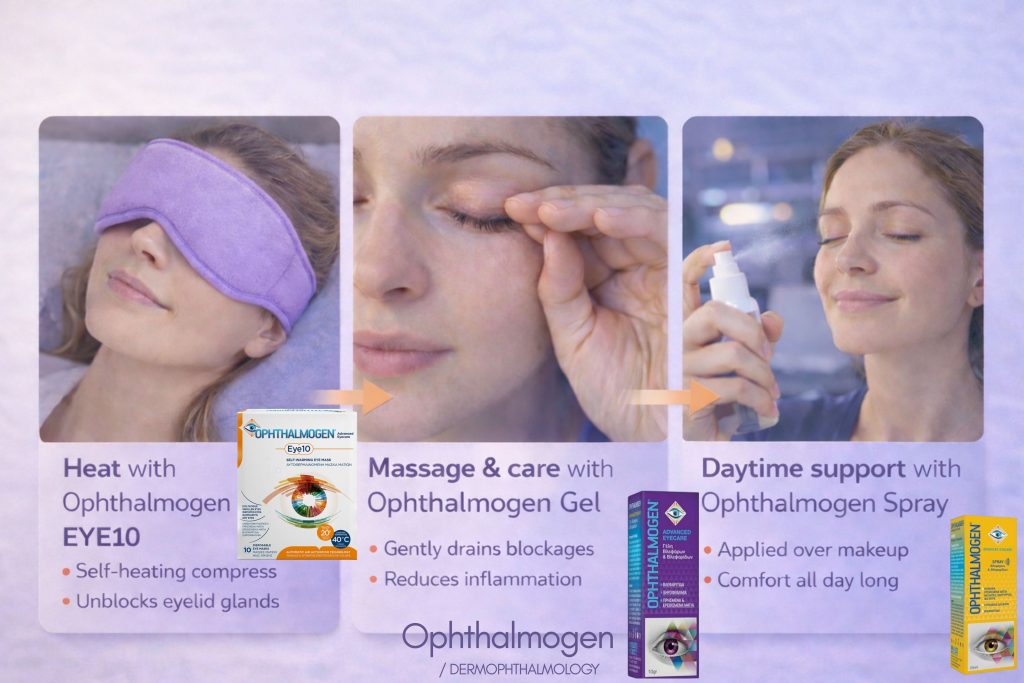
Step 1 — Heat with OphthalmogenEYE10
Self-heating Ophthalmogen EYE10 compresses deliver controlled heat(~40°C):
- liquefy thick lipid secretions
- open gland orifices
- restore the lipid layer of the tear film
- reduce evaporation
This step restores eyelid function.
Step 2 —Massage & care with Ophthalmogen Gel
After heat, the eyelids are receptive.
- allows gentle, controlled eyelid massage
- supports mechanical gland drainage
- reduces congestion and inflammation
- stabilizes the tear film
Heat + massage = functional restoration, not cosmetic care.
Daytime support — Ophthalmogen Spray
During the day, Ophthalmogen Spray::
- enhances comfort without disturbing makeup
- supports ocular surface function
- reduces dependence on frequent eye drops
What changes in real life?
Most users report:
- eyes that do not feel heavier as the day progresses
- less dryness and burning
- more stable vision
- reduced need for eye drops
The key is daily consistency. Just as you don’t brush your teeth only “when they hurt.”
Who is this approach for?
- screen users
- people with dry eye or blepharitis
- contact lens wearers
- allergic conjunctivitis
- those told “everything looks normal,” yet still suffer
In Summary
It is not normal for eyes to worsen throughout the day.
It is not “age” or simple fatigue.
It is a sign that the eyelids need daily care.
And this only changes when hygiene becomes part of the routine.
The daily eye-care ritual
- Ophthalmogen EYE10
- OphthalmogenGel
- Ophthalmogen Spray