
Why Spring & Antihistamines Can Worsen Dry Eye
And how a smarter, eyelid-centered approach can truly improve quality of life
Spring is the season of allergies.But for many people, it’s also the season when the eyes suffer the most.You take your antihistamine.Your nasal symptoms improve.The allergy seems “controlled.”
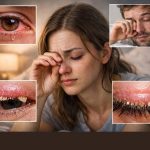
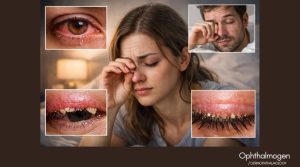
And yet, your eyes are:
If this sounds familiar, you’re not imagining it — and you’re not doing anything wrong.
Why spring is the worst season for your eyes
In spring, multiple aggravating factors hit at the same time:
- High pollen load in the air
- Wind and environmental dryness
- Increased outdoor exposure
- More frequent use of systemic antihistamines
- Increased screen time
Together, these create a “perfect storm” for the ocular surface — especially in people with allergies.
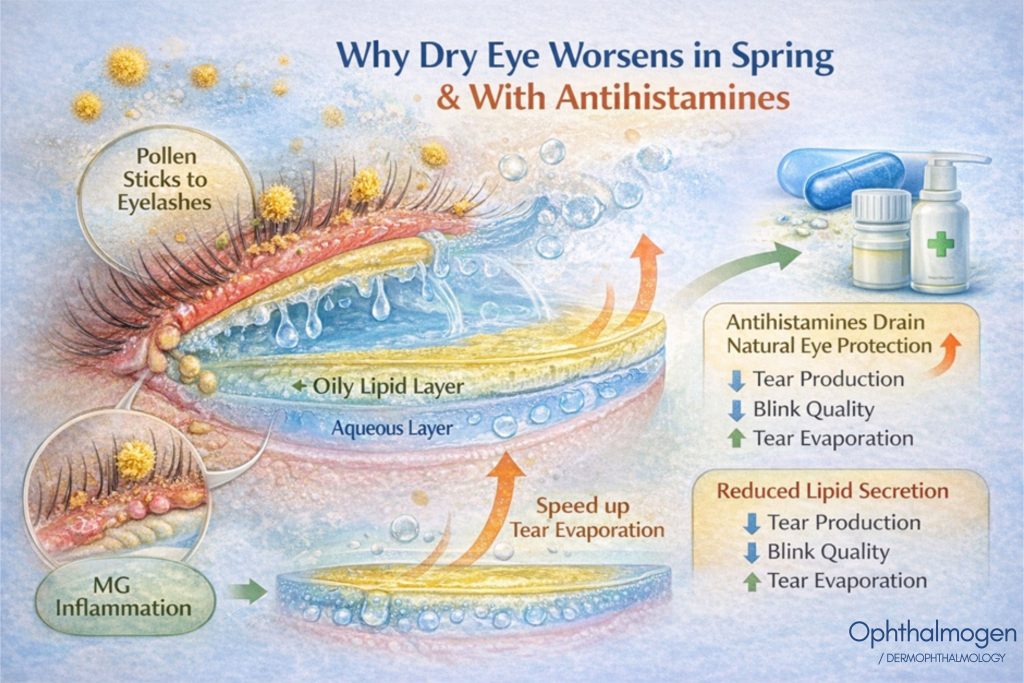
What is really happening to the eyes during allergy season
- Redness,burning, tearing, and fatigue often come not from ongoing allergy exposure, but from:
- tear film instability
- increased evaporation
- eyelid and meibomian gland dysfunction
According to TFOS DEWS II (2017), the most common cause of ocular discomfort is evaporative dry eye, not simply “not enough tears.”
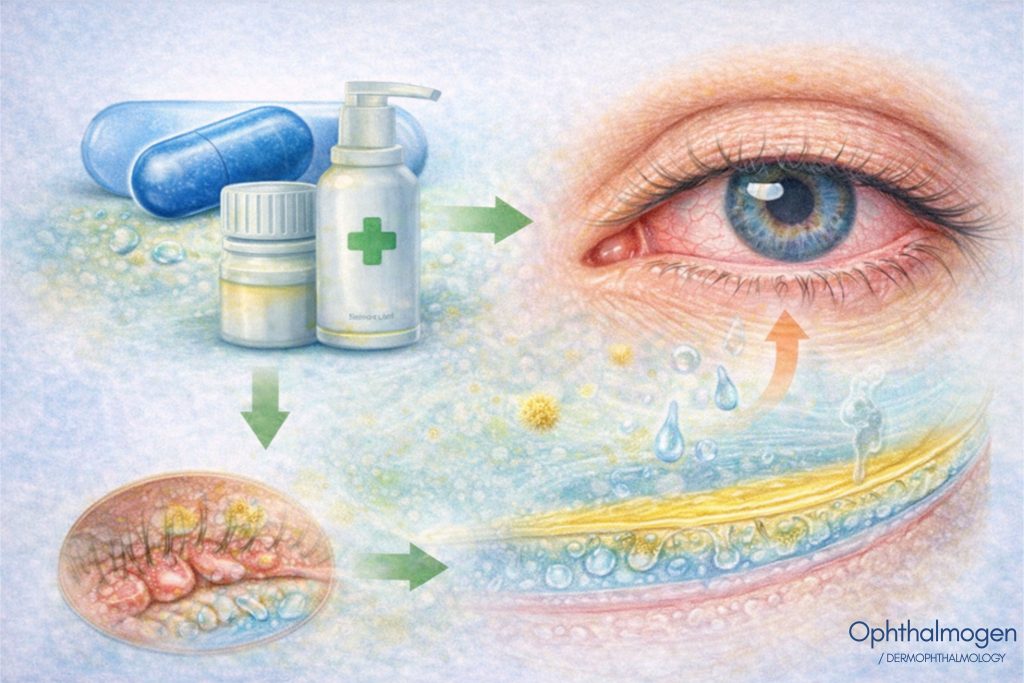
Antihistamines: essential for allergy control — not neutral for the eyes
Clinical studies suggest antihistamines may:
- reduce tear secretion
- increase tear evaporation
- affect meibomian gland function
- destabilize the tear film
allergy controlled, but eyes not protected. allergy controlled, but eyes not protected.
Artificial tears: necessary, but not sufficient
Do Artificial tears are a key support tool during allergy season.
Options such as:
- Visionlux Plus DUO
- THEALOZ Duo/ Hyabak
- Navitae Plus
- Systane
- Navi Infla
and anti-allergic eye drops (e.g., mast cell stabilizers and/or mild anti-inflammatory allergy drops) can help:
- hydratethe ocular surface
- the ocular surface
- reduce the “allergic load” reaching the eye surface
However:
- they mainly support the aqueous layer
- they do not restore the lipid layer
- they do not improve eyelid function
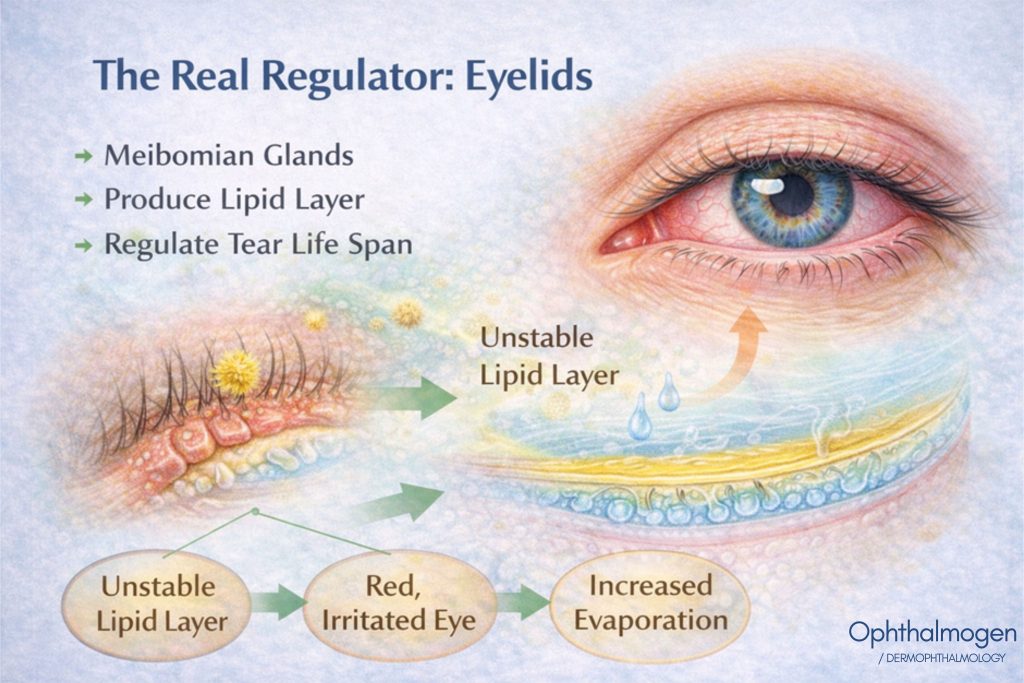
The true regulator: the eyelids
Chronic ocular surface inflammation is often maintained primarily by the eyelids
(Baudouin C. et al., The Ocular Surface).
Eyelid hygiene — the first critical step
Daily eyelid cleansing helps remove:
- pollen
- allergens
- microbial load
Naviblef .
– gentle daily hygiene
– suitable for long-term use
– external use on the eyelids only
– activity against bacteria & Demodex
– use up to 15 days
Where Ophthalmogen
- Ophthalmogen does not replace medication.It supports the system where medication does not act directly.
– controlled warmth
– supports meibomian gland function
– faster treatment of allergic conditions
– eyelid massage without rinsing
– ideal before sleep
– suitable for long-term use
– spray onto closed eyes
– ideal for work and outdoor exposure
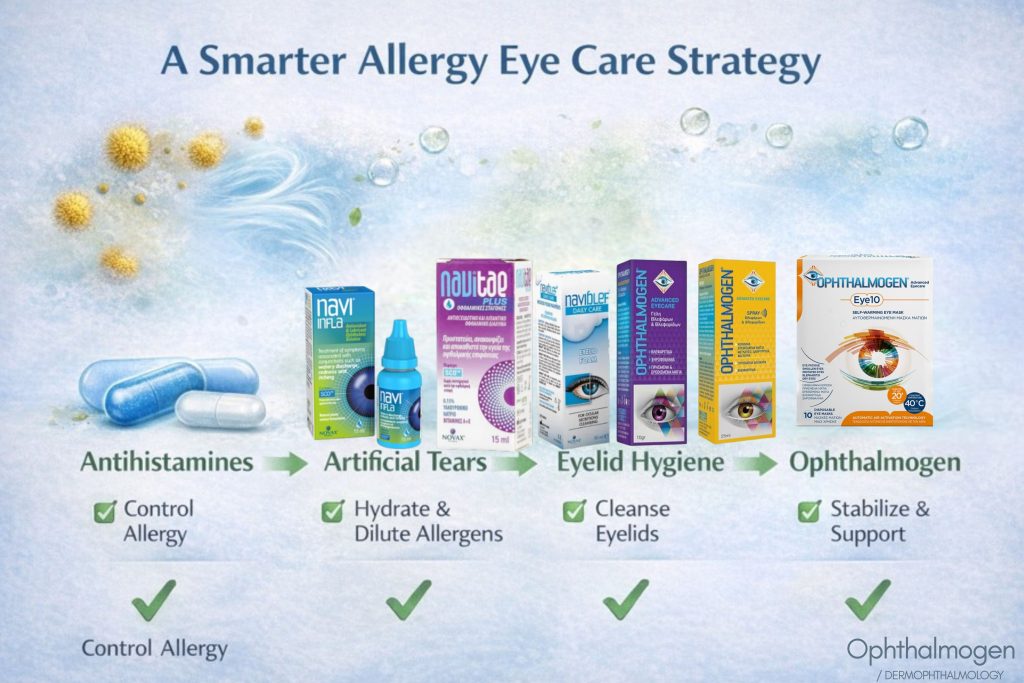
The smarter strategy during allergy season
Antihistamines → allergy control
Artificial tears (Navitae Plus, Navi Infla) → hydration & dilution of allergens
Eyelid hygiene (Naviblef) → reduction of eyelid allergic load
Ophthalmogen → eyelid decongestion and tear film stability support
Integration, not replacement.
FAQ
Are artificial tears useless?
No. They are helpful — but often not enough on their own.
Can I combine all of these daily?
Yes. Each step targets a different mechanism.
In Summary
- Antihistamines are not “bad”
- Artificial tears alone are not enough
- Eyelid care is the key in spring
- Quality of life can improve substantially