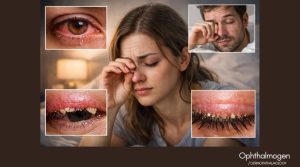
Corticosteroids are a cornerstone of modern dermatology.They are widely used in daily practice to treat conditions such as atopic dermatitis, rosacea, seborrheic dermatitis, and psoriasis.However, when corticosteroids are applied around the eyes, the situation changes significantly.

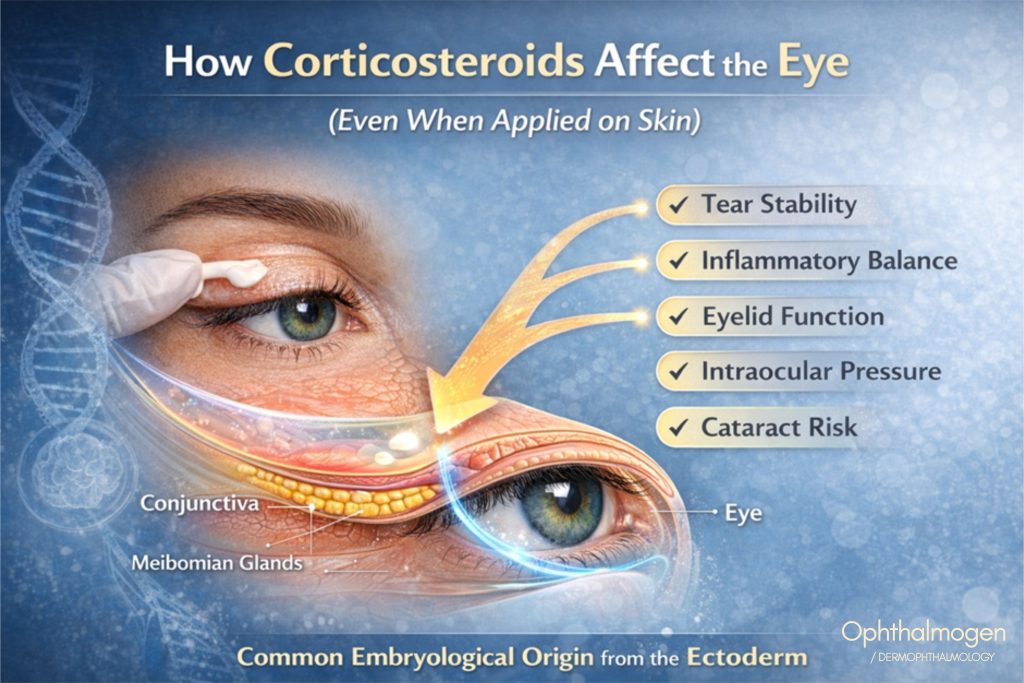
Even when corticosteroids are applied only to the skin, they may affect:

  • intraocular pressure
  • the eye’s crystalline lens (cataract formation)
  • eyelid function
  • tear film stability

This is not a theoretical concern. It is well-documented medical knowledge.

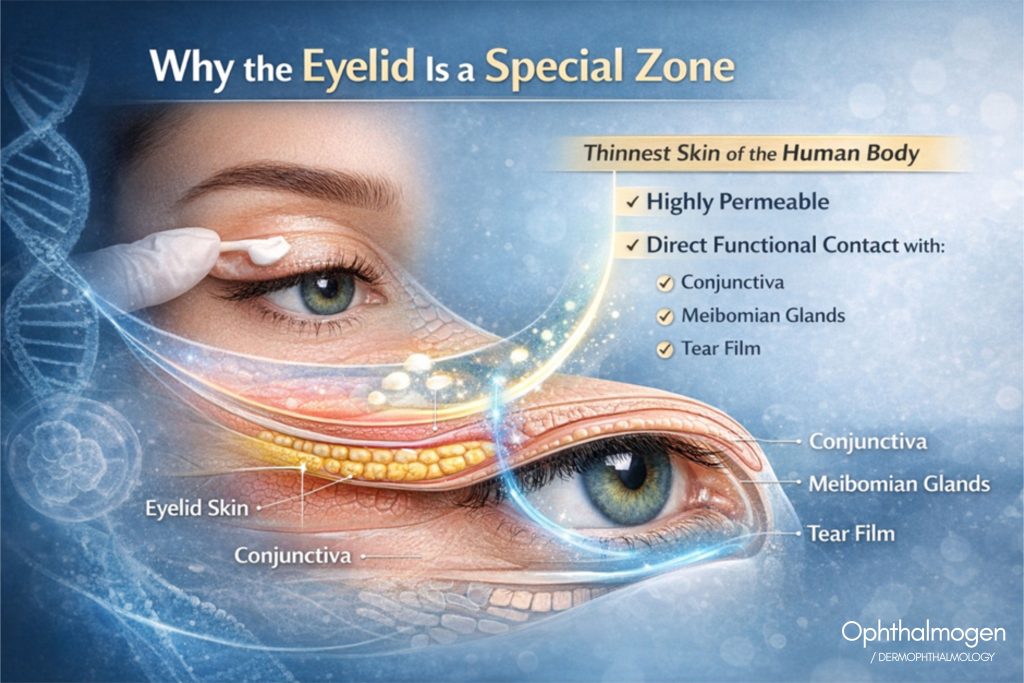
Why the eyelid is a “special zone”

Eyelid skin:

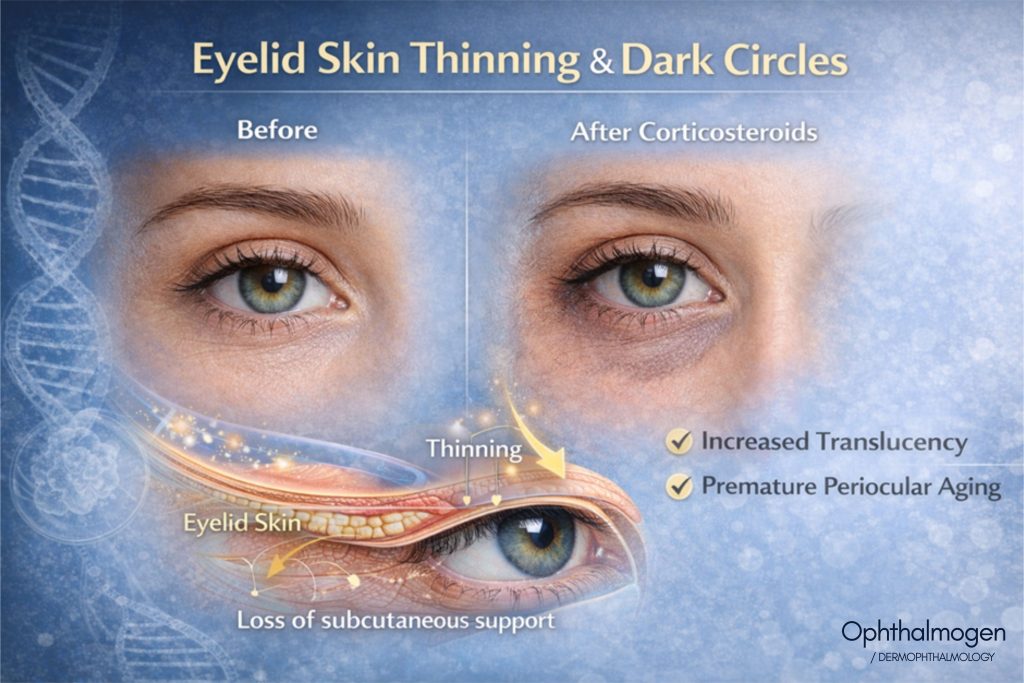
  • is the thinnest skin in the human body
  • has high permeability
  • is in direct functional contact with:
    • the conjunctiva
    • the meibomian glands
    • the tear film

This is not “just skin around the eye.”

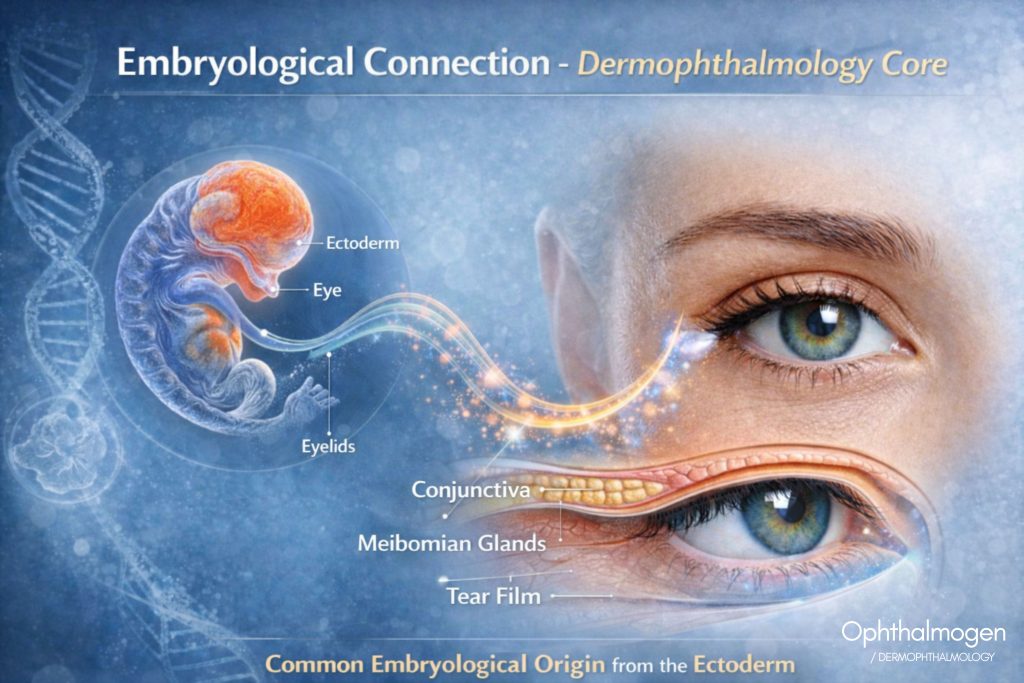
The embryological truth (Dermophthalmology core)

The eyelids, their skin, the eyelashes, and the ocular surface:share a common embryological origin from the ectoderm.

This means:

  • these tissues are biologically related
  • they influence each other functionally and pathologically

This is the foundation of Dermophthalmology.

Vasoconstrictor Eye Drops (Oculosan, Septobore, etc.)

Topical corticosteroids:

  • are absorbed transdermally
  • diffuse into adjacent tissues
  • may influence:
    • eyelid function
    • inflammatory balance
    • tear production and tear quality

With chronic or repeated use, these effects accumulate over time.

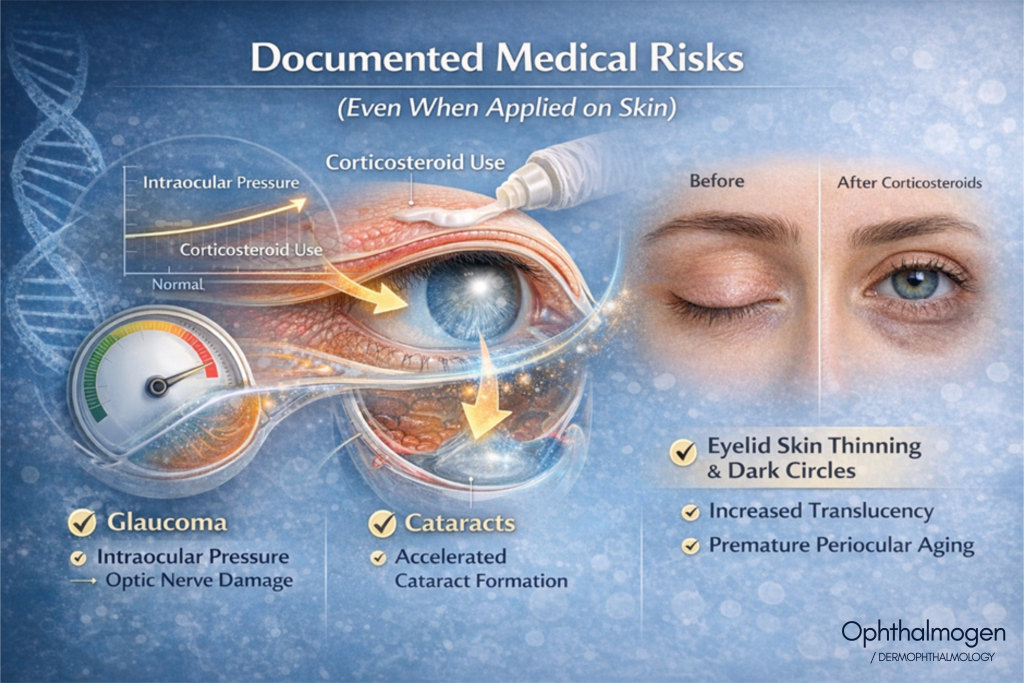
What medical literature shows

Intraocular pressure & glaucoma

  • Armaly, Archives of Ophthalmology

→ Documented steroid-induced increase in intraocular pressure

→ Risk of steroid-induced glaucoma

Cataract formation

Cataract Surgery

  • Becker & Mills, American Journal of Ophthalmology

→ Accelerated lens opacification associated with steroid exposure

Eyelid skin & aesthetics

Dermatology literature on periocular steroids reports:

These are not “rare side effects.”They are known risks with repeated use.

Who needs special attention

Particularly at risk are:

  • patients with atopic dermatitis
  • individuals with rosacea
  • chronic facial dermatoses
  • long-term corticosteroid use on the face

Many of these patients never undergo an eye examination.

The problem is not corticosteroids — it’s the lack of prevention

We are not saying:“Do not use corticosteroids.”

We are saying:“Use them with knowledge and parallel care.”

When the skin around the eyes is affected,ocular function is affected as well.

The Dermophthalmology approach in practice

This approach is not pharmacological.It is functional and preventive.

It focuses on:

  • eyelid hygiene
  • maintaining patent meibomian glands
  • tear film stability
  • reducing chronic micro-irritation

This is where Ophthalmogen fits in.

How daily Ophthalmogen Ophthalmogen Protocol

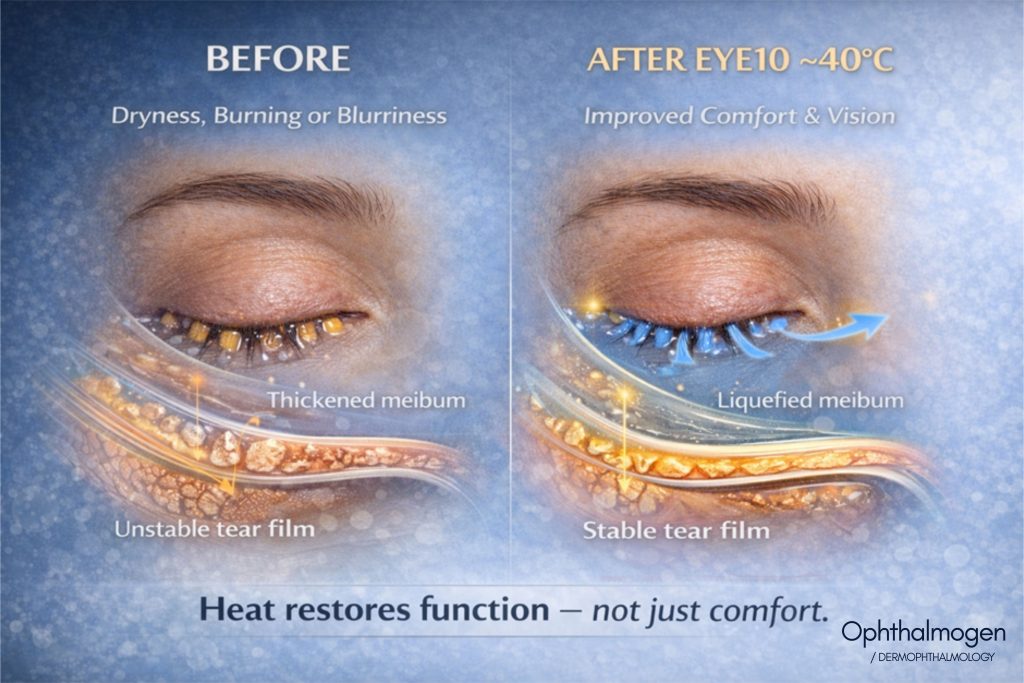
Ophthalmogen EYE10 — Heat

  • controlled heat ~40°C
  • liquefies thickened meibomian lipids
  • supports gland function
  • reduces chronic inflammatory load

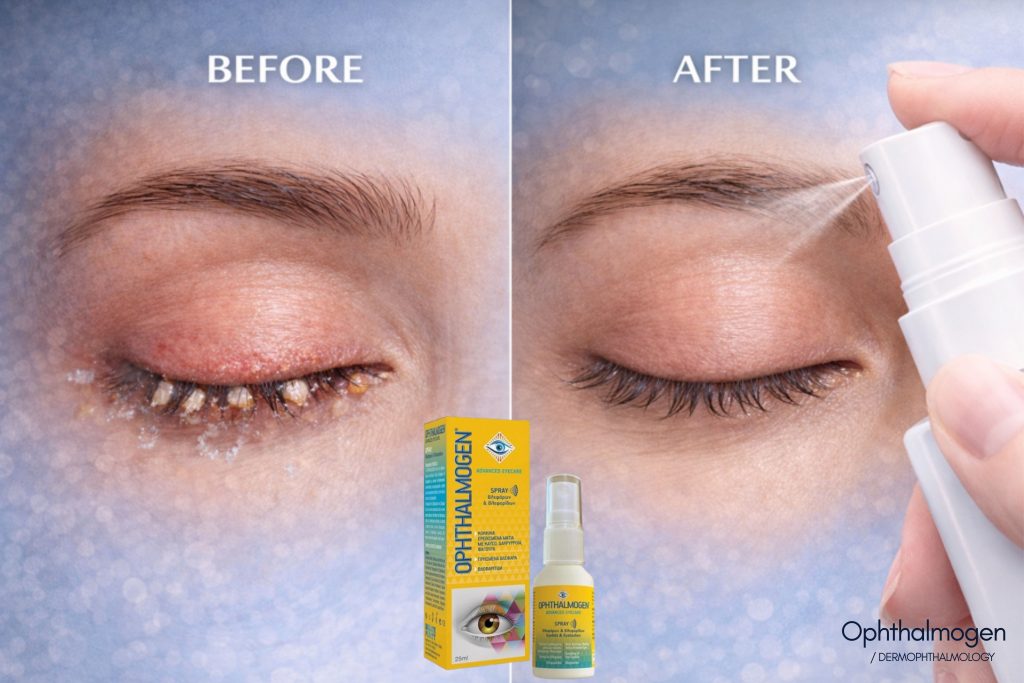
Ophthalmogen Gel & Spray — Balance

  • gentle eyelid care
  • support of microbial balance
  • comfort without irritation
  • suitable for long-term use

It does not replace medical treatment.It supports normal physiology.

In Summary

  • Corticosteroids on the eyelids are not harmless
  • Even when applied only to the skin
  • Eyelids are a functional part of the eye
  • Prevention is a meaningful medical act
  • Eyelid hygiene protects function and vision

Όχι φόβος. Γνώση. Ρουτίνα.

FAQ — Corticosteroids & Eyelids


  1. Can a corticosteroid cream increase intraocular pressure;

Yes, especially with chronic or repeated use on the eyelids.


  1. Is an eye examination necessary?

Yes, for patients using corticosteroids long-term on the face.


  1. Can appearance be affected?

Yes. Skin thinning and dark circles are well-documented effects.


  1. Does eyelid hygiene replace medical treatment?

No. It complements treatment and improves safety.


  1. Who should perform daily eyelid hygiene?

Anyone using corticosteroids around the eyes or living with chronic facial dermatoses.

Recommended Posts