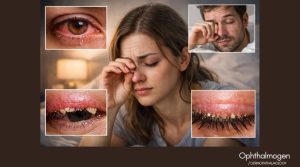
Many people search daily for: “red eyes but not conjunctivitis”, “red eyes without infection”, “why are my eyes red without conjunctivitis”.
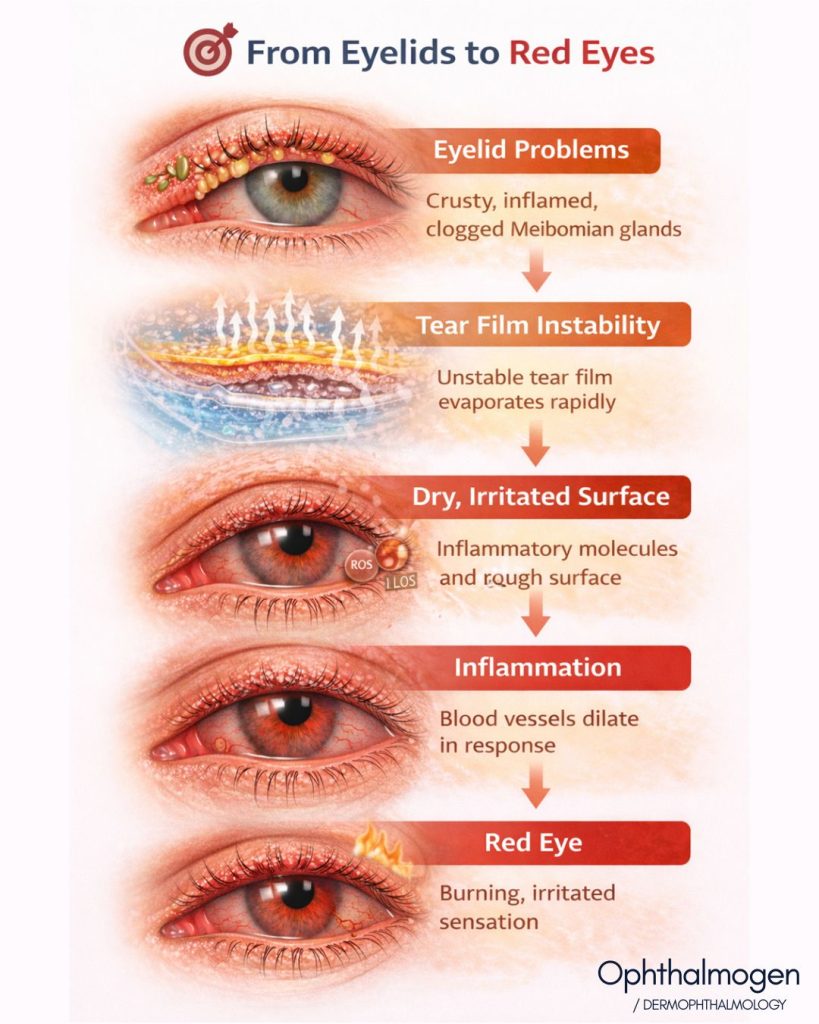
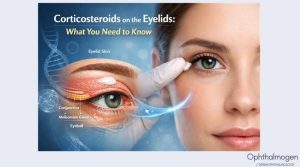
And they are right.Because in most cases, eye redness is not caused by infection.It is caused by a functional disruption of the tear film, which starts at the eyelids.
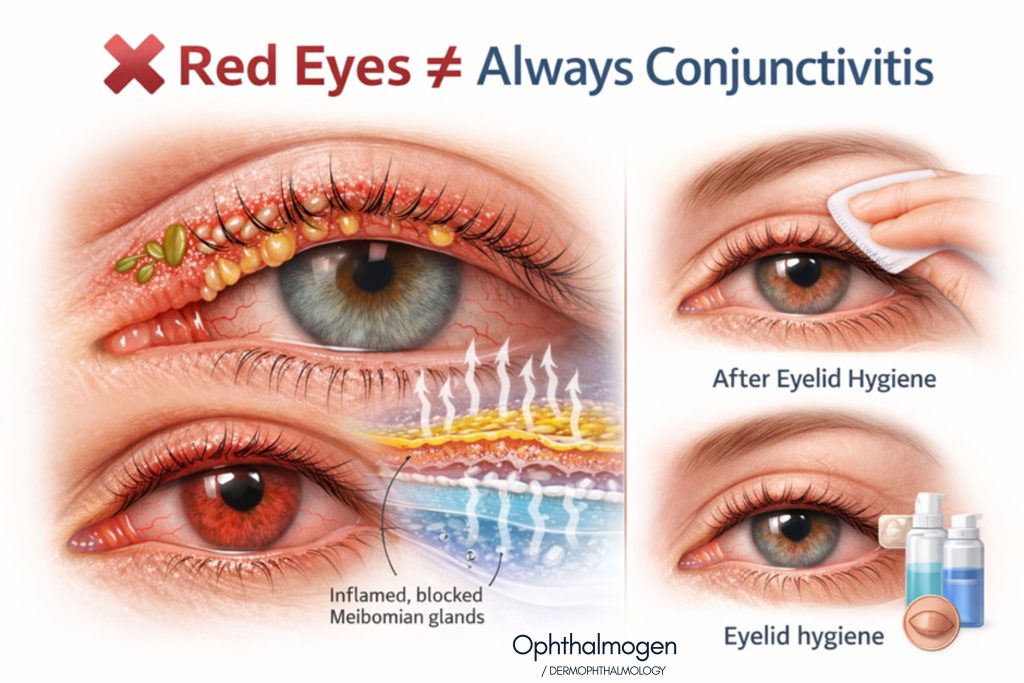
Red Eyes ≠ Always Conjunctivitis
When there is no discharge, severe pain, or acute infection, redness is usually related to:
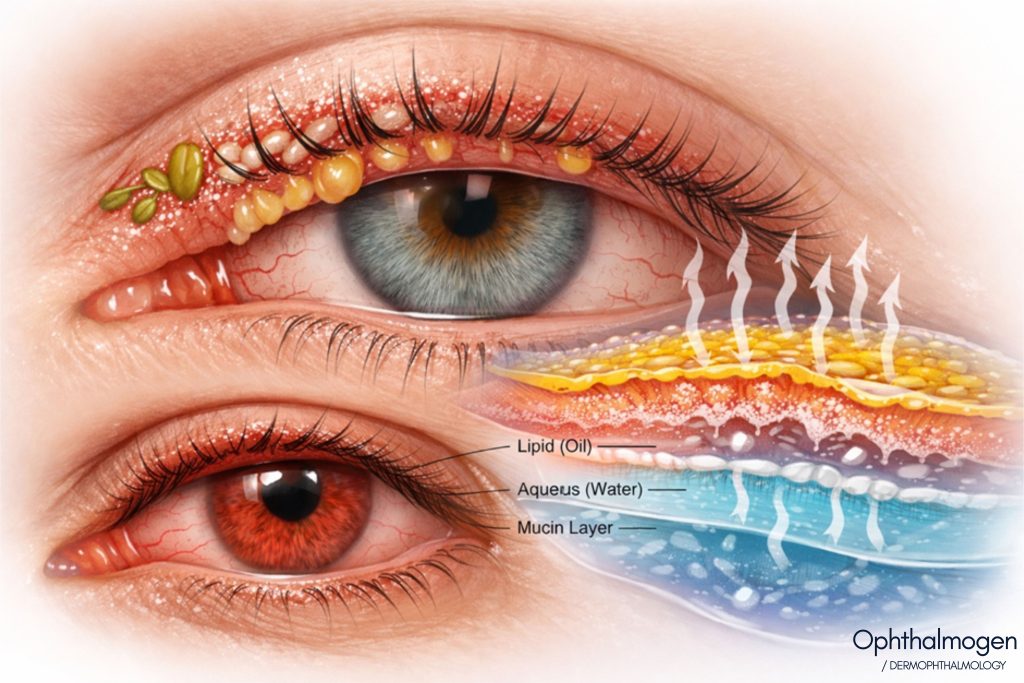
- rapid tear evaporation
- poor tear film quality
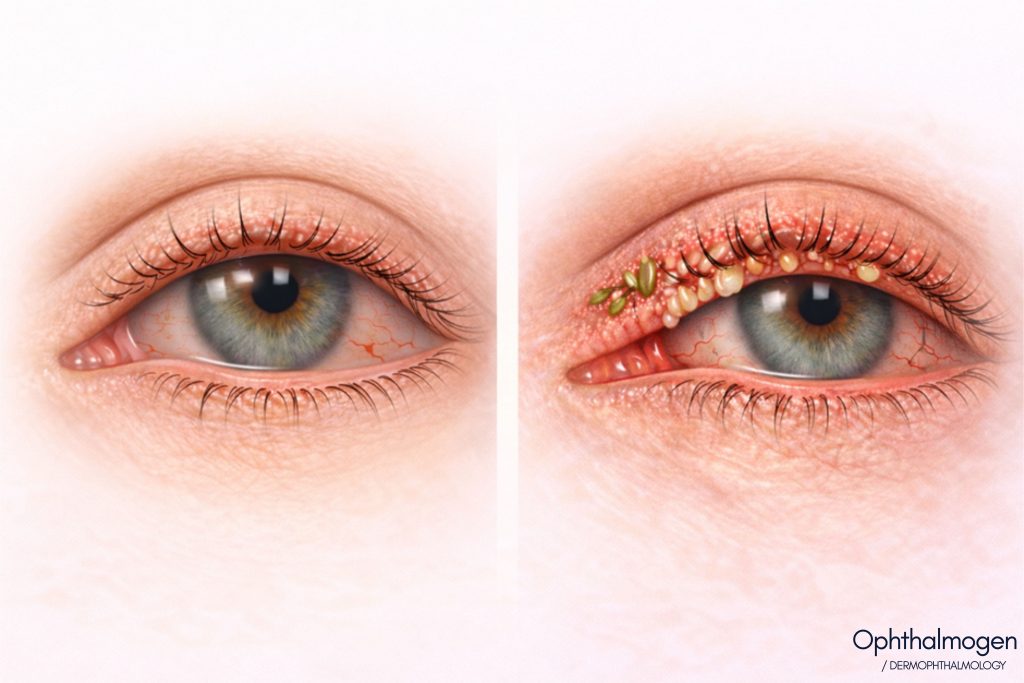
- blocked meibomian glands
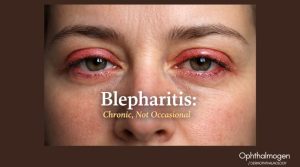
- chronic eyelid inflammation
- neglected eyelash and eyelid hygiene
In other words: the problem starts at the eyelids.
The Scientific Truth
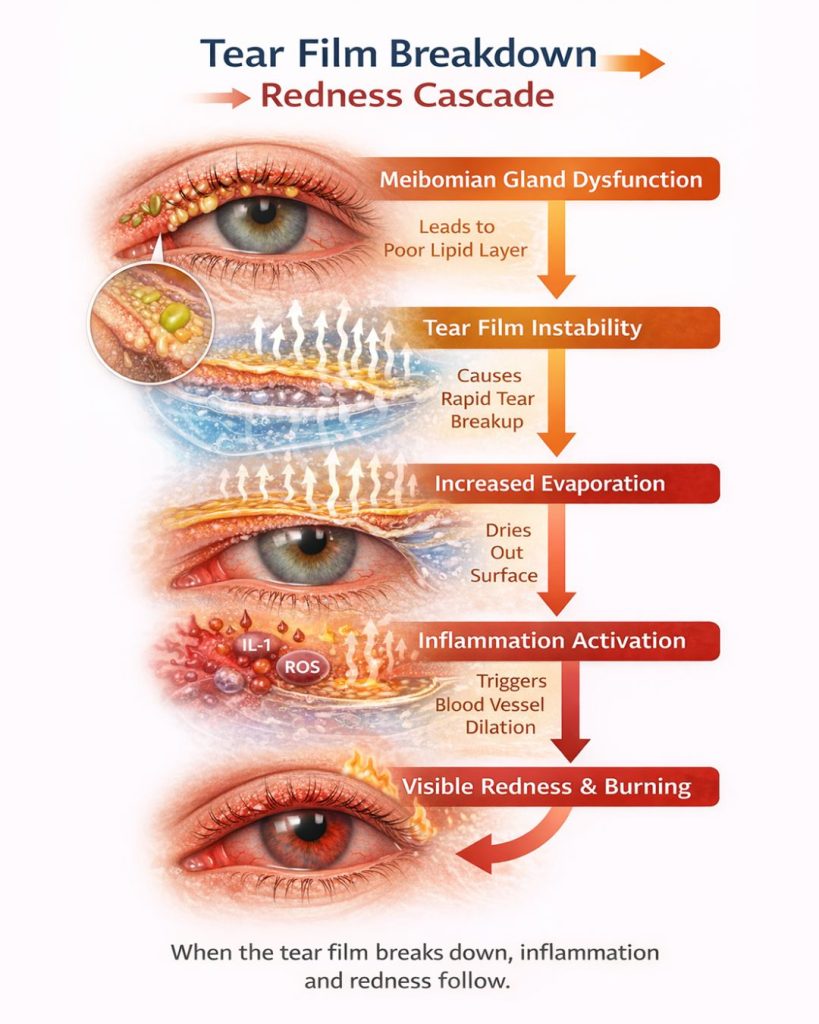
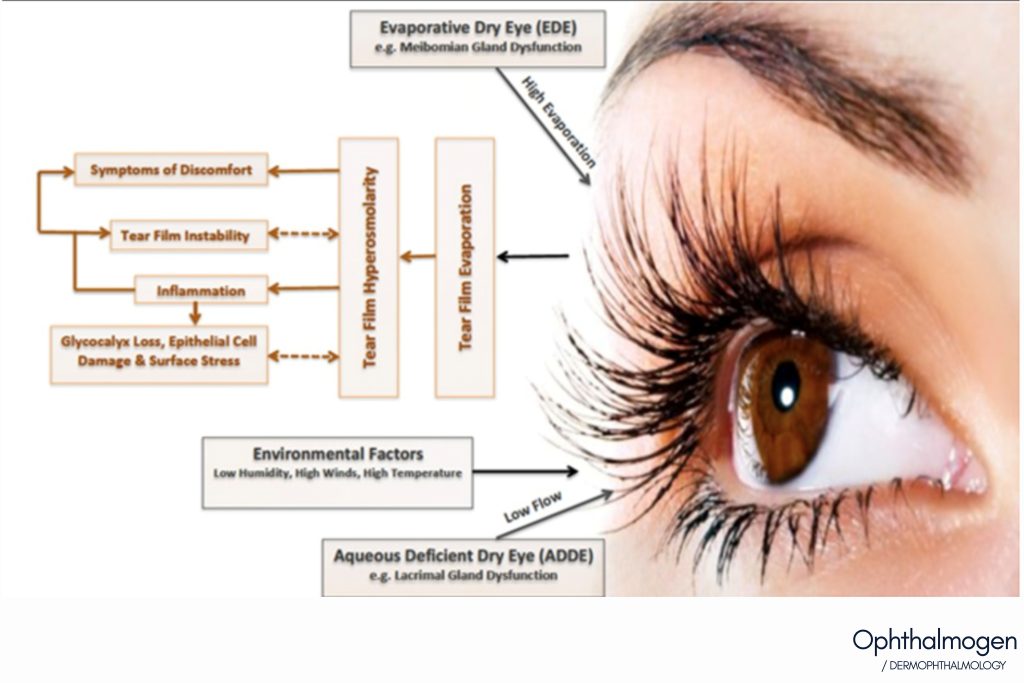
Redness Is a Symptom of Tear Film Instability
Major scientific studies show that:
- TFOS DEWS II (2017)
→ The leading cause of chronic irritation and redness is evaporative dry eye, not lack of tears.
- Nichols et al., IOVS
→ Poor lipid layer quality leads to vasodilation and redness.
- Baudouin et al., Ocular Surface
→ Inflammation is maintained by the eyelids, not the ocular surface itself.
If the root cause is not corrected, redness keeps returning.
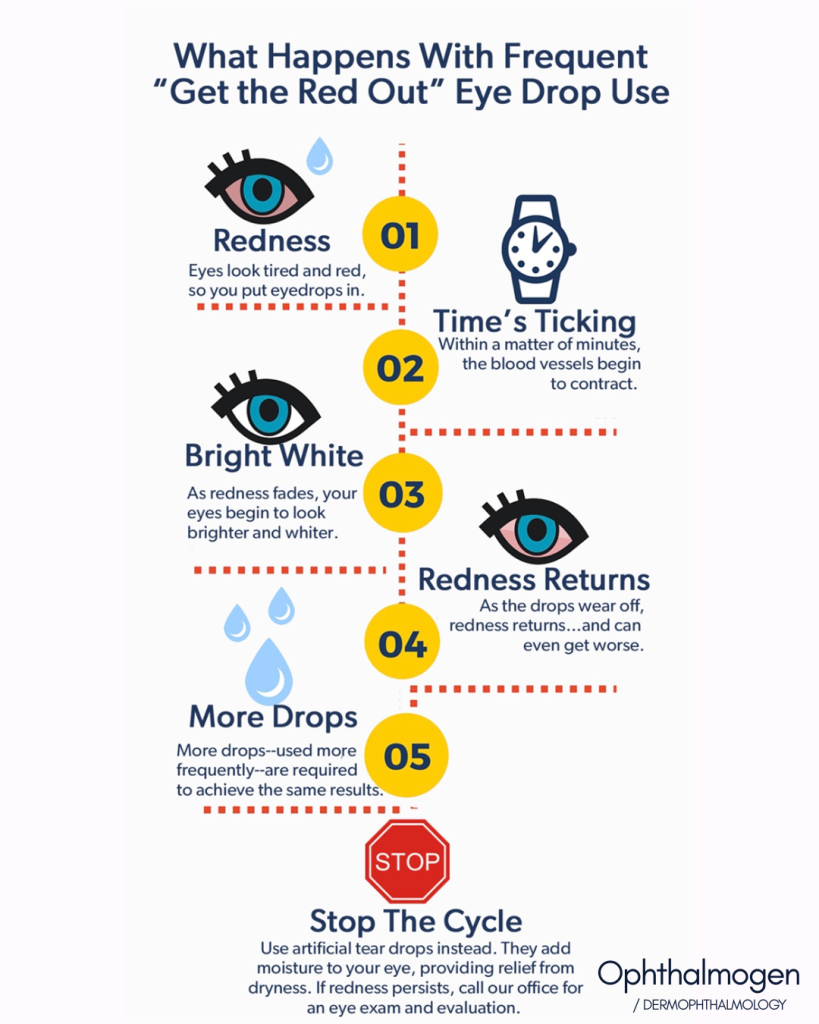
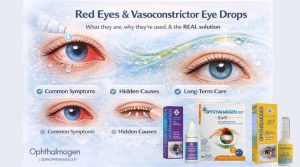
Vasoconstrictor Eye Drops (Oculosan, Septobore, etc.)
Many people rely on vasoconstrictor eye drops such as:
- Oculosan
- Septobore
- similar “whitening” products
What don’t do:
- rapidly reduce redness
- temporarily “whiten” the eyes
Τι δεν don’t do:
- do not treat the cause
- do not improve tear film quality
- are not suitable for daily use
Frequent use may lead to:
- rebound redness (stronger redness when effects wear off)
- dependency
- worsening of chronic redness
Fast relief — not a long-term strategy.
A New Category of Natural & Modern Options
NaviInfla — Ophthalmic Drops
- support inflammatory balance
- suitable for frequent use
- no vasoconstriction
- gentle, natural eye whitening
Flora Vision Spray (red packaging)
- next-generation artificial tears in spray form
- applied directly to the ocular surface
- practical for everyday comfort
- natural whitening without rebound effect
They respect ocular physiology — but they do not replace the foundation.
The Role of Modern Lubricating Artificial Tears
(Visionlux Plus, THEALOZ Duo, Systane, Artelac, Navitae Plus κ.ά.)
They provide:
- immediate relief
- surface hydration
- safety for frequent use
However:
- they do not improve tear quality
- they do not reduce evaporation long-term
- they do not correct eyelid & eyelash dysfunction
- they do not control bacteria or Demodex
Supportive — not foundational.
The Real Solution Starts at the Eyelids
Eyelid hygiene = the cornerstone of managing red eyes
The eyes are largely influenced by:
- Eyelids
- Eyelashes
- Meibomian glands
When these are neglected:
- the tear film breaks down
- redness appears
- eyes burn and fatigue
The Ophthalmogen Protocol
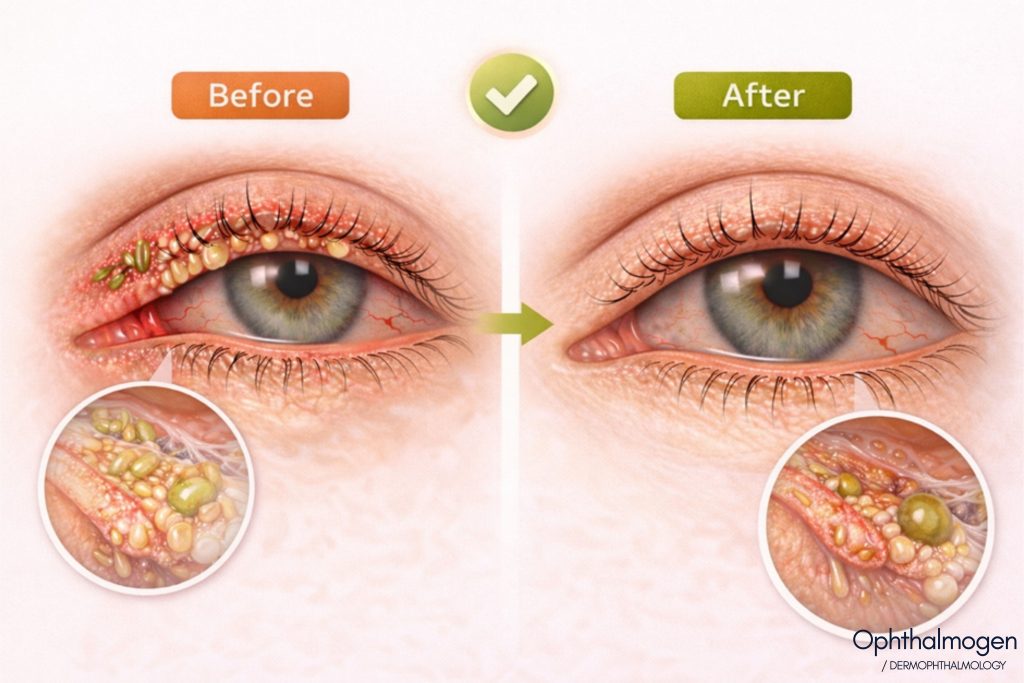
Ophthalmogen EYE10 — Controlled Heat Therapy
- liquefies thickened lipid secretions
- opens Meibomian glands
- stabilizes the tear film
- relaxes and “brightens” the eyes
Ophthalmogen Gel & Spray — Balance
- daily eyelid & eyelash hygiene
- reduction of microbial load
- control of Demodex-related conditions
- comfort without irritation
They don’t “whiten” the eyes.They prevent the need for redness to occur.
How to Combine Everything Correctly
Foundation
- Eyelid hygiene (Ophthalmogen)
Supportive
- Lubricating drops (Visionlux Plus, Navitae Plus, etc.)
- Navi Infla / Flora Vision Spray
Occasional
- Vasoconstrictors (only if absolutely necessary)
In Summary
Red eyes do not always mean infectionEye drops are not always the solutionThe cause often lies in the eyelidsEyelid hygiene is preventive medical careWhen the tear film stabilizes, redness resolves naturally
- No more temporary masking
- Daily routine
- Eyes that last all day
FAQ — Red Eyes Without Infection
- Why are my eyes red without conjunctivitis?
Because of tear film instability and eyelid dysfunction.
- Can I use vasoconstrictor drops daily?
No. They offer temporary relief and may worsen the condition.
- Are artificial tears enough?
Not on their own. They are supportive only.
- What is the treatment foundation?
Daily eyelid hygiene.
- When should I see an ophthalmologist?
If there is pain, photophobia, sudden vision loss, or discharge.