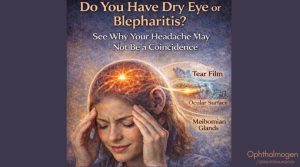

What do they offer, what are the side effects on the eyes, and what do their users really need?
The Antihistamines are a key pillar in modern medical treatment:
- allergic rhinitis
- seasonal and chronic allergies
- asthma (as adjunctive therapy)
Millions of people take them daily, often for months or even a year. In everyday practice, the most commonly used antihistamines that patients search for online include:
- Zyrtec® (cetirizine)
- Aerius® (desloratadine)
- Claritine® (loratadine)
- Xyzal® (levocetirizine)
- Telfast® / Allegra® (fexofenadine)
- Rupafin® (rupatadine)
- Fenistil®
- Benadryl® (diphenhydramine)
These are medicines that:
- taken daily
- often without interruption
- by people looking for a solution for red or dry eyes, without suspecting the connection
However, a very large percentage of users report:
- red eyes
- dryness and burning
- "pulling" feeling
- transient tearing alternating with intense dryness
And then the reasonable question arises: "And then the reasonable question arises:»
The truth that is rarely discussed
Antihistamines:
- control the allergic reaction
- reduce inflammation caused by histamine
- do not protect tear function
- they do not support the eyelids
- often worsen dry eyes
The problem is not the lawsuit. The problem is that eye support is missing.
What do scientific studies show (Ophthalmology)
TFOSDEWSII (2017)
The world's largest scientific study on dry eye reaches a crucial conclusion: The most common cause of redness and discomfort is not a lack of tears, but evaporative dry eye, which is directly related to the function of the eyelids.
Nicholsetal. – IOVS
The basic mechanism is highlighted: Lipid layer disruption → tear film instability → vasodilation → red eyes
Baudouin et al. – The Ocular Surface
Chronic inflammation of the ocular surface is maintained primarily by the eyelids and not by the eye itself.
Bielory L. – Current Opinion in Allergy & Clinical Immunology
The overlap between:
- allergy
- dry eye
- eyelid inflammation
even when the allergy appears clinically controlled.

Antihistamines and eye side effects
Studies from:
- Ousler GW et al. – Clinical Therapeutics
- Welch D et al. – Clinical Drug Investigation
- Abelson MB et al. – Survey of Ophthalmology
They show that antihistamines:
- Reduce allergic inflammation
- They reduce tear secretion.
- They increase the evaporation of tears
- worsen tear film instability
This explains why: the allergy is controlled, but the eyes remain red..
ENT and Allergology: the rhino-ophthalmic axis
According to BousquetJ. etal. (ARIA – Journal of Allergy and Clinical Immunology):Nose, eyes and lungs function as a single system (United Airway Concept).
Baroody FM (Current Allergy and Asthma Reports) shows that:
- Nasal inflammation activates rhino-ocular reflexes causing tearing, redness and feeling of heaviness in the eyes
This is why high volume/low pressure nasal washes (e.g. OTOSAN Nasal Wash, Sinus Rinse) often improve ocular symptoms as well.
Why artificial tears are needed with antihistamines
Artificial tears such as:
- Visionlux Plus (moisturizing drops)
- Flora Vision Spray (newer generation spray)
provide:
- Instant hydration
- Dilution of inflammatory factors
- temporary relief
But: they are ancillary — not the root of the solution.
The root of the problem: the eyelids
The actual stability of the tear film depends on:
- the proper functioning of the eyelids
- the meibomian glands
- the lipid layer
That is where modernity focuses. DermOphthalmology approach.

The Role of Ophthalmogen EYE10 in antihistamine users
Antihistamines often lead to thicker and stagnant meibum, resulting in:
- meibomian gland blockage
- worsening MGD
- severe evaporative dry eye
Ophthalmogen EYE10
- Ophthalmogen EYE10 offers
- controlled heat on the eyelids
- liquefaction of viscous meibum
- restoration of meibomian gland flow
- improvement of the lipid layer
- more stable tear film
Ideal for Zyrtec, Aerius, Claritin, Xyzal users. Ideal for people with chronic allergic rhinitis and red eyes
Γιατί οι χρήστες αντιισταμινικών ΠΡΕΠΕΙ να χρησιμοποιούν Ophthalmogen
Ophthalmogen Gel
- eyelid & eyelash base cleaning
- reduction of inflammatory load
- lipid layer support
- better tear film quality
Ophthalmogen Spray
- spraying on closed eyes
- without irritation
- ideal for work, travel, allergy flare-ups
It does not replace medications. Protects the eyes from their side effects.
The right, modern strategy
- Antihistamines → for allergy control
- Ophthalmogen EYE10 → decongestion & thermal restoration
- Ophthalmogen Gel → cleansing & anti-inflammatory support
- Ophthalmogen Spray → daily protection
- Artificial tears → adjuvant
No conflict. Collaboration.
In Summary
- Antihistamines are not “bad”
- But they are not enough for the eyes
- Dryness is an expected side effect
- Eyelid hygiene is essential
- Ophthalmogen protects the basis of vision
- Quality of life improves substantially
FAQ — Antihistamines & Eyes
- Should I stop taking antihistamines?
No. When they are appropriate, they are necessary.
- Why do I need Ophthalmogen;
Why medications don't support eyelids.
- Are artificial tears enough?
Not on their own. They don't fix the cause.
- Can I use them every day?
Yes. They are designed for long-term use.
- When should I see a doctor?