What Happens to Children’s Eyes — and How We Can Protect Them Properly
Allergies are not just an “adult issue.”An increasing number of children develop seasonal allergies as early as preschool age.Runny nose. Sneezing. Itching.And very often… irritated eyes.
Parents do the right thing:
they visit the pediatrician
antihistamines are prescribed
the allergy appears to be “under control”
Yet many children continue to:
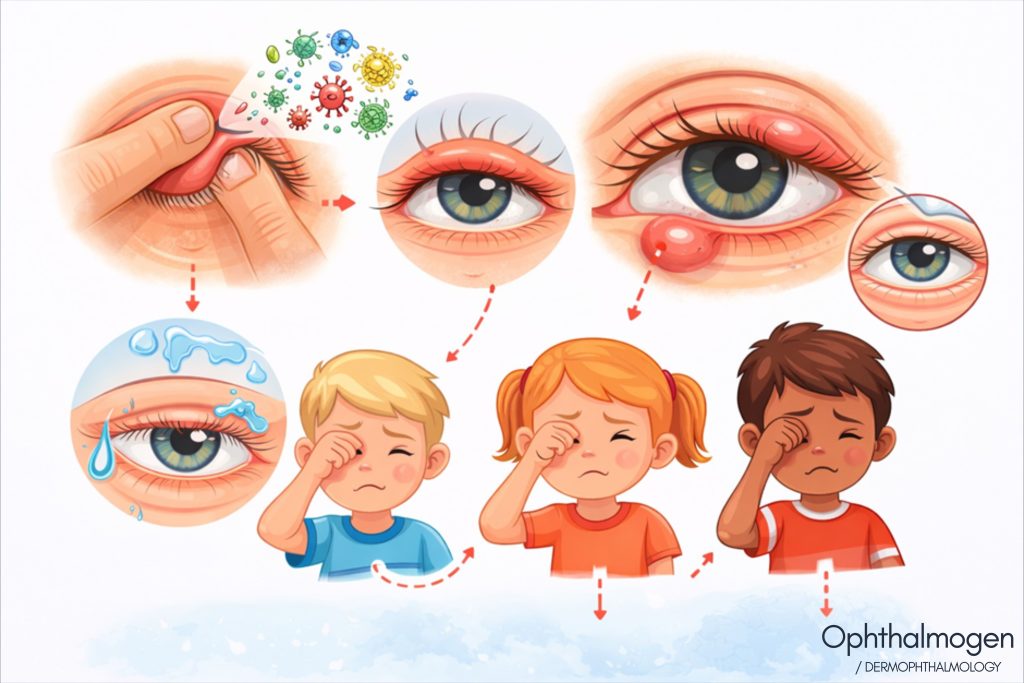
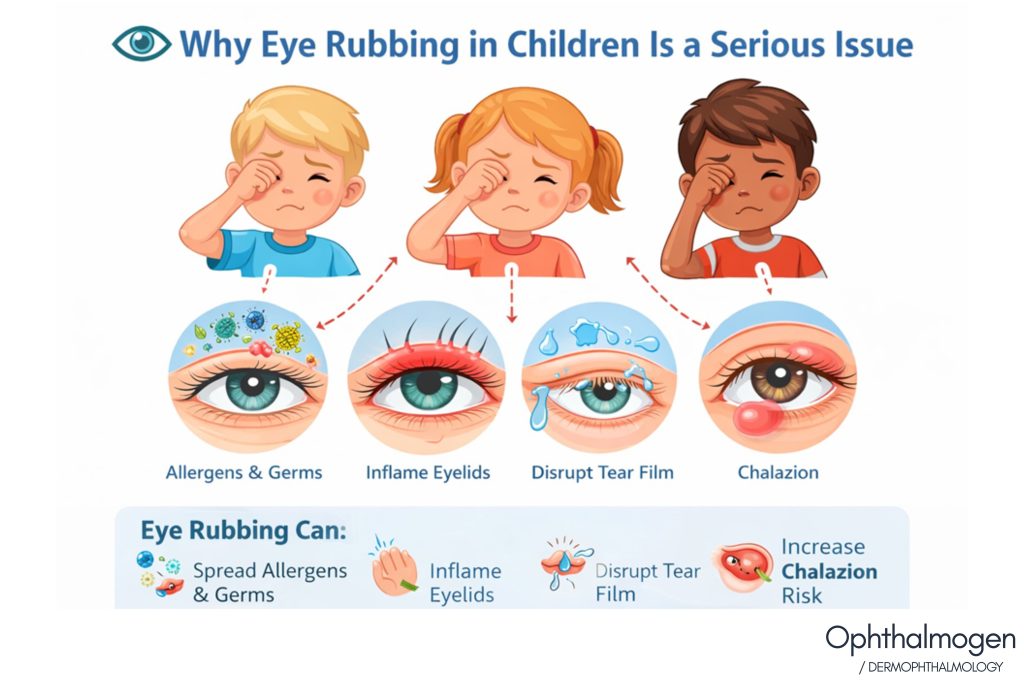
rub their eyes frequently
have red or tired-looking eyelids
complain of burning or stinging
tear excessively for no obvious reason
feel eye fatigue more easily during reading or screen use
If you notice this in your child, it is not your fault — and it is not the medication’s fault either.
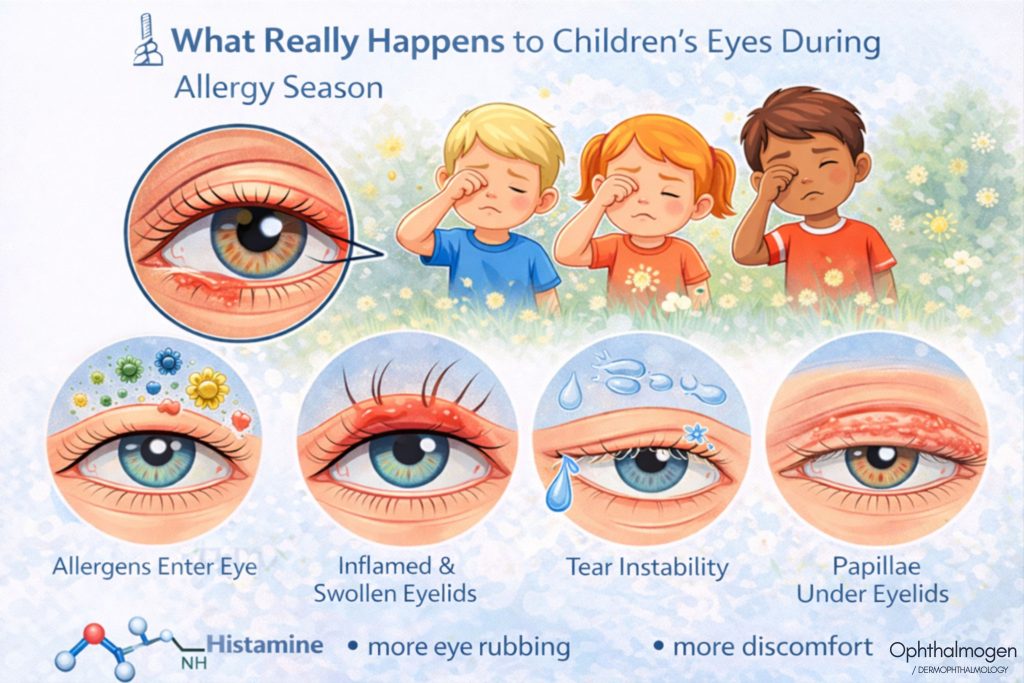
What Really Happens to Children’s Eyes During Allergy Season.
In children, the ocular system is:
more sensitive
more reactive
less resilient to inflammation
During allergy season:
allergens (pollen, dust) accumulate on the eyelashes
eyelid inflammation increases
the tear film becomes unstable
Pediatric ophthalmology studies show that in children with allergic conjunctivitis,tear film instability, mild blepharitis, and frequent eye rubbingare key factors that perpetuate symptoms — even when the allergy itself is systemically controlled.
Leonardi A. et al., Allergic conjunctivitis in children, Pediatric Allergy and Immunology
Bielory L., Ocular allergy and dry eye in pediatric patients, Current Opinion in Allergy and Clinical Immunology
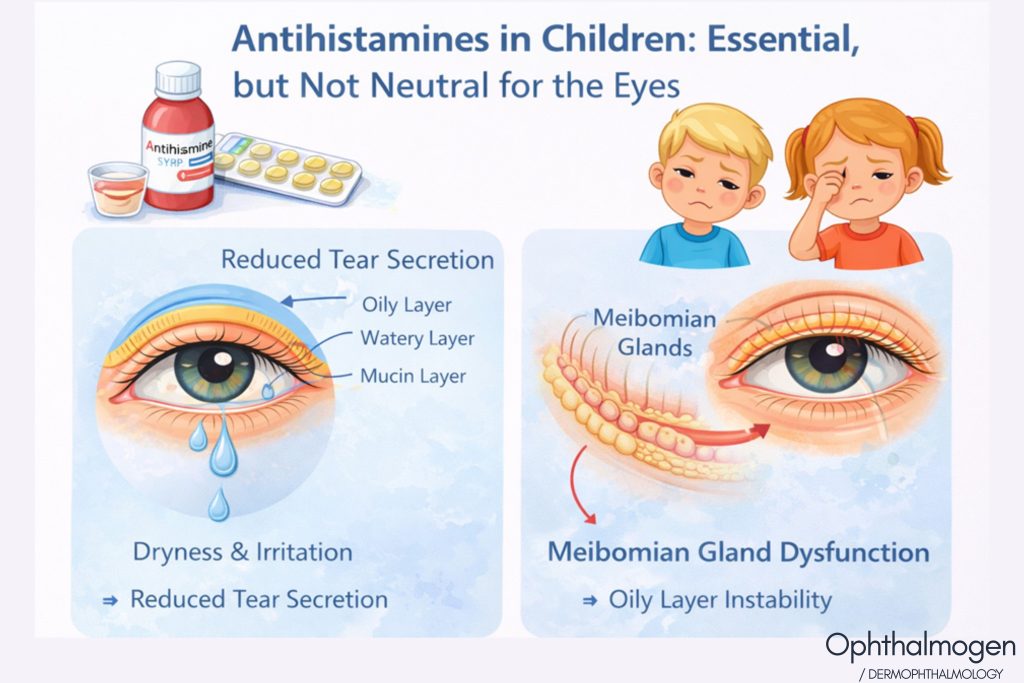
Antihistamines in Children: Essential, but Not Neutral for the Eyes.
Antihistamines are absolutely essential for managing:
allergic rhinitis
atopic conditions
seasonal allergies
However, pediatric and ophthalmologic studies have shown that antihistamines may:
reduce normal ocular hydration
affect tear film stability
increase the tendency for eye irritation and rubbing
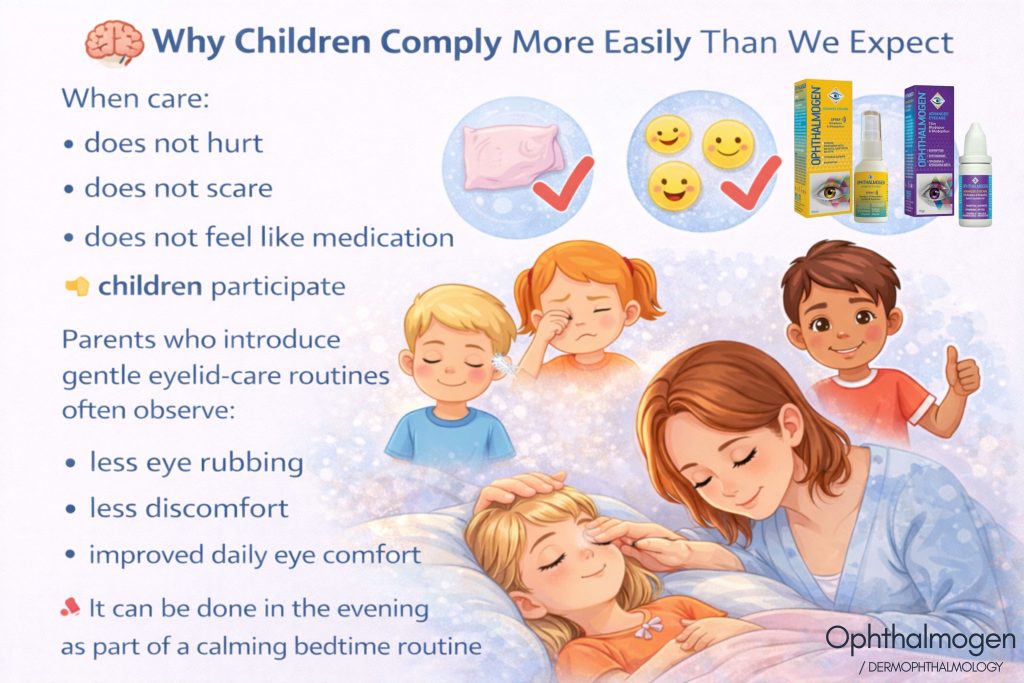
It can be done in the evening as part of a calming bedtime routine.
Why Children Comply More Easily Than We Expect.
When care:
does not hurt
does not scare
does not feel like medication
children participate.Parents who introduce gentle eyelid-care routines often observe:
less eye rubbing
less discomfort
improved daily eye comfort
FAQ – Common Questions from Parents.
Is this safe for children?
Yes. We are talking about external eyelid care, not pharmacological treatment.
If my child takes antihistamines, is extra care necessary?
Often yes — to protect the eyes from dryness and irritation.
What if my child refuses eye drops?
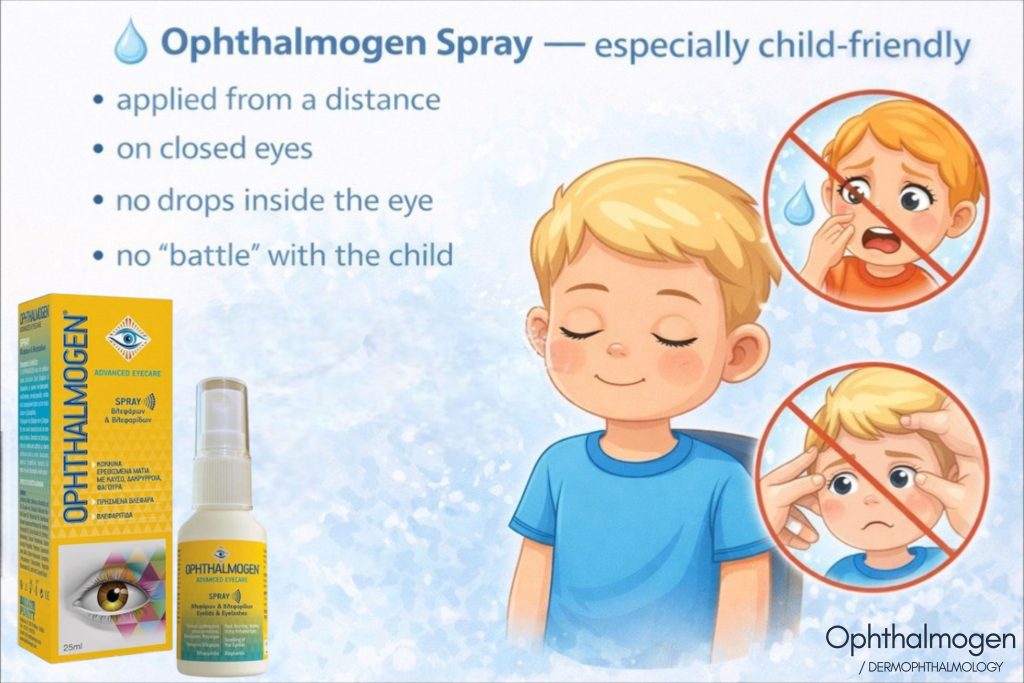
Spraying the eyelids with Ophthalmogen Spray on closed eyes is far more easily accepted.
Are there artificial tears specifically for children?
Yes. Spray-based artificial tears, such as Flora Vision Spray,can be applied from a distance and are usually much better tolerated than classical artificial tears.
Conclusion
Antihistamines are not “bad”
Children’s eyes are not simply “small adult eyes”
Eyelids play a crucial regulatory role
Gentle care builds comfort and prevention
Parents regain control without conflict
If you want to understand more deeply how antihistamines affect the tear film and eye function, read the detailed article here.