
A New Philosophy of Care for Eyes, Eyelids, and Eyelashes.
Introduction
Patients living with autoimmune diseases face daily challenges: chronic inflammation, immunosuppression, dry eye, delayed healing, and increased susceptibility to infections.
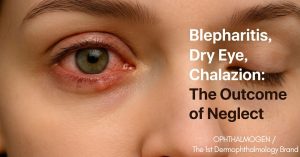
At the level of the eyes and eyelids, these conditions often manifest as recurrent chalazia, blepharitis, eyelash loss (madarosis), trichiasis, and visible aesthetic alterations.
Traditional medical approaches have long provided strong foundations. However, until now, the eye and the skin were largely addressed in parallel rather than as a unified system. Dermophthalmology emerges as the natural evolution, integrating the knowledge of Ophthalmology and Dermatology and creating a new perspective in patient care.
The Condition of Patients with Autoimmune Diseases

- Chronic inflammation → affects both skin and ocular tissues.
- Immunosuppressive therapy → increased infection risk and delayed wound healing.
- Dry eye & Meibomian Gland Dysfunction (MGD) → recurrent chalazia and persistent irritation.
- Aesthetic alterations → eyelash loss, trichiasis, eyelid irritation.
- Reduced self-confidence due to inflamed eyes and visible eyelid changes.
From Traditional Medicine to Dermophthalmology – A Collaborative Evolution

For decades, Ophthalmology has developed subspecialties such as Neuro-ophthalmology, Pediatric Ophthalmology, and Oculoplastic Surgery. In the same natural progression, Dermophthalmology now emerges as a new branch of Ophthalmology, focusing specifically on the connection between skin, eyelids, eyelashes, and the ocular surface. Dermophthalmology does not remove fields or compete with existing specialties.

Instead:
- Provides ophthalmologists with a new framework for understanding and managing skin-related periocular disorders.
- Builds a bridge with Dermatology, recognizing shared embryologic origins and common inflammatory mechanisms.
- Offers patients a more integrated and comprehensive care model.
Thus, Dermophthalmology represents the natural evolution of Ophthalmology, enriched by dermatologic integration.
Ophthalmoderma – A New Medical Model

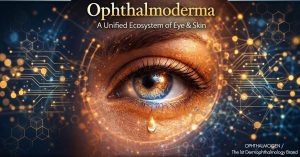
For the first time in medical history, the term “Ophthalmoderma” is introduced.
Definition
Ophthalmoderma is the unified functional microenvironment that includes:
- The periocular skin
- The eyelids and meibomian glands
- The eyelashes and their follicles
- The ocular surface and tear film
Why It Matters
- It recognizes that skin and eye do not function independently but as an ecosystem.
- Damage in one area (e.g., dermatitis) affects the entire system (dry eye, chalazion).
- A treatment targeting the Ophthalmoderma can deliver multiple systemic benefits.
The Difference from the Eyelid
- The eyelid is an anatomical structure.
- Ophthalmoderma is the entire functional unit: skin + eyelids + eyelashes + ocular surface.
- It forms the biological foundation upon which Dermophthalmology is built.

Dermophthalmology as the Medicine of the Ophthalmoderma
Dermophthalmology is defined as the medical discipline that studies, prevents, and treats disorders of the Ophthalmoderma.
The Innovation of DermOphthalmocosmetics

From this philosophy, a new medical category has emerged: DermOphthalmocosmetics
These are neither drugs nor simple cosmetic products. They are specialized formulations designed to:
- Care
- Protect
- Prevent
- Enhance both the health and beauty of the eyes
The Innovation of Ophthalmogen

The Ophthalmogen series is the first line developed based on Dermophthalmology principles, specifically designed to address the needs of autoimmune patients.
- Ophthalmogen Eye10
Self-heating, single-use sterile compresses safe for immunosuppressed individuals.
→ Soften meibum → Unblock meibomian glands → Reduce recurrence of chalazia
- Ophthalmogen Gel
Applied with gentle massage after Eye10.
→ Hydrates → Reduces inflammation → Controls Demodex
→ Supports eyelash alterations (madarosis, trichiasis)
- Ophthalmogen Spray
For use throughout the day.
→ Disinfects → Hydrates → Protects eyelids and eyelashes
→ Especially valuable for infection-prone patients
- Cleansing with Naviblef
Used in the morning after Ophthalmogen Spray.
→ Removes microbes, debris, excess oil, Demodex
→ Prevents blepharitis and reduces relapses
The Positive Impact on the Lives of Autoimmune Patients
- Reduced discomfort, chalazia, and recurrences
- Daily relief from dry eye and irritation.
- Protection and aesthetic enhancement of eyelashes
- Safety for immunosuppressed individuals
- A transformation of daily life: less pain, clearer eyes, brighter expression
Conclusion
Dermophthalmology, as a new subspecialty of Ophthalmology, does not aim to compete—but to enrich and collaborate. Combined with DermOphthalmocosmetics and the Ophthalmogen line, it offers autoimmune patients an innovative, scientifically grounded, and human-centered solution that transforms quality of life.
The revolution is not against physicians. The revolution is with physicians — for the patient.