
Introduction
Our eyes are never truly alone.At the base of the lashes, in invisible follicles and around the meibomian glands, lives a tiny guest: Demodex?.Although present in nearly all humans, when it multiplies uncontrollably, it becomes the hidden cause of blepharitis, dry eye, eyelash loss (madarosis), and allergic reactions.
This article reveals the role of Demodex? and how Dermophthalmology provides effective solutions.
What is Demodex?
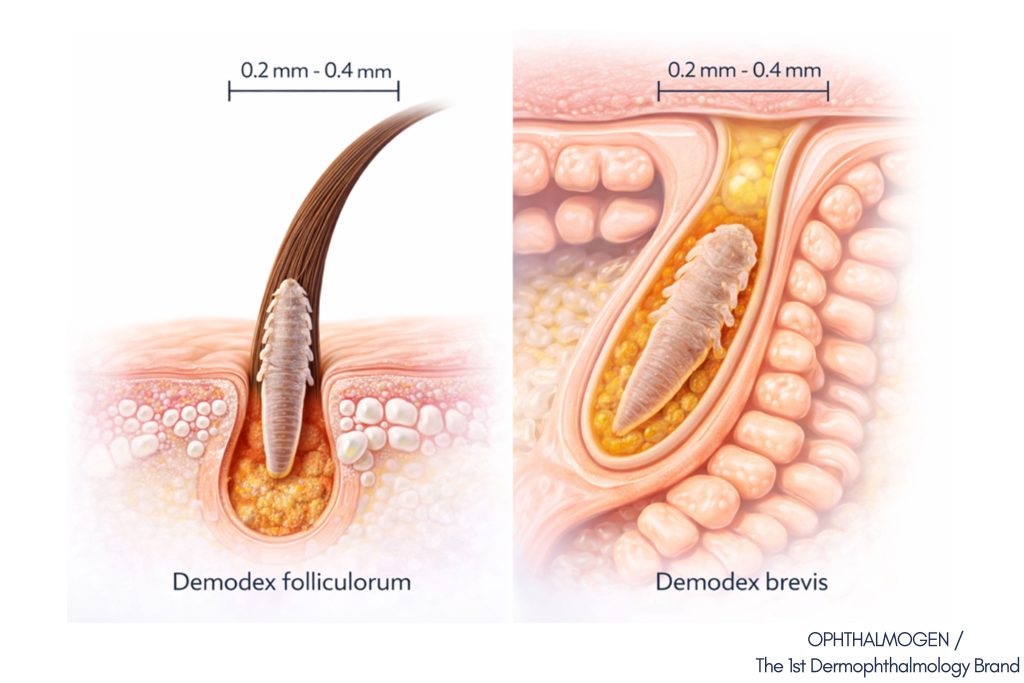
What is Demodex?
- Microscopic mite (0.2–0.4 mm).
- Lives in hair follicles and meibomian glands.
- Two main species in humans:
- Demodex folliculorum → lives at eyelash roots.
- Demodex Brevis → resides inside meibomian glands.
At normal levels, it is harmless. But when it overgrows → it triggers inflammation.

How it Connects to Blepharitis
Τhe Demodex is not just a “parasite.”It initiates multiple harmful reactions:
- Demodex is not just a “parasite.” It initiates multiple harmful reactions:
- Feeds on sebum and dead cells → clogs meibomian glands.
- Its waste contains bacteria → fuels inflammation.
- Its movements cause mechanical irritation.
Research highlights:
- 65% of blepharitis cases are associated with Demodex mites.
- 84% of people over 60 are colonized.
- Contact lens and eyelash extension users → even higher prevalence.
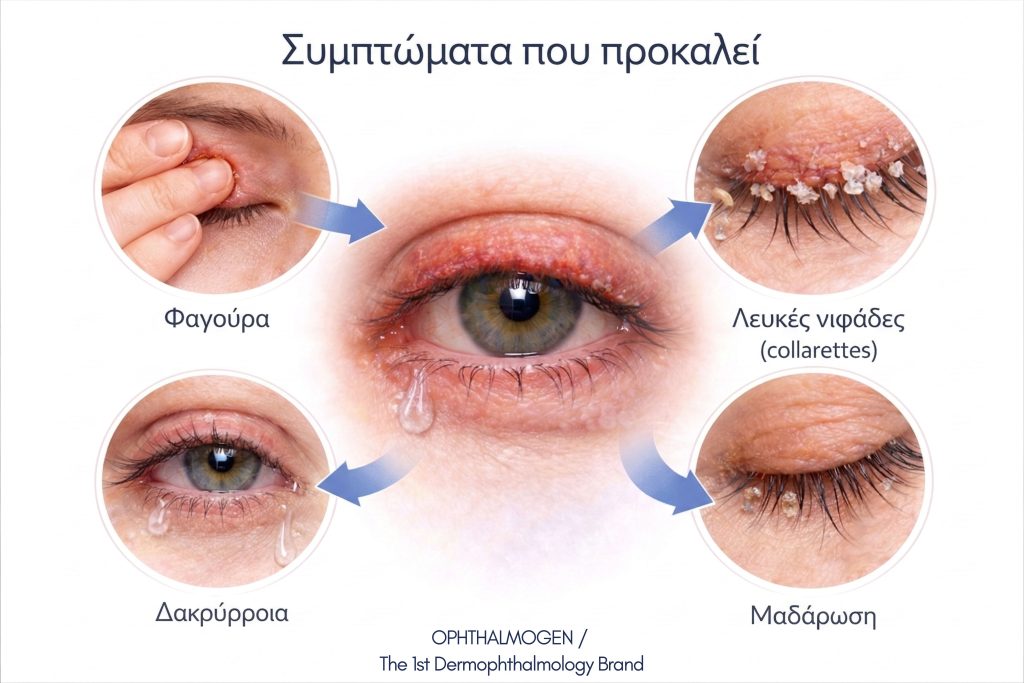
Symptoms of Demodex Infestation
- Intense itching of eyelashes.
- White flakes at lash bases (like dandruff).
- Red, tired eyes.
- Foreign body sensation.
- Excessive oiliness or, conversely, dryness.
- Constant tearing..
- Gradual eyelash loss.
Many mistake these signs for “allergies” or “fatigue,” but they are often Demodex? -related.
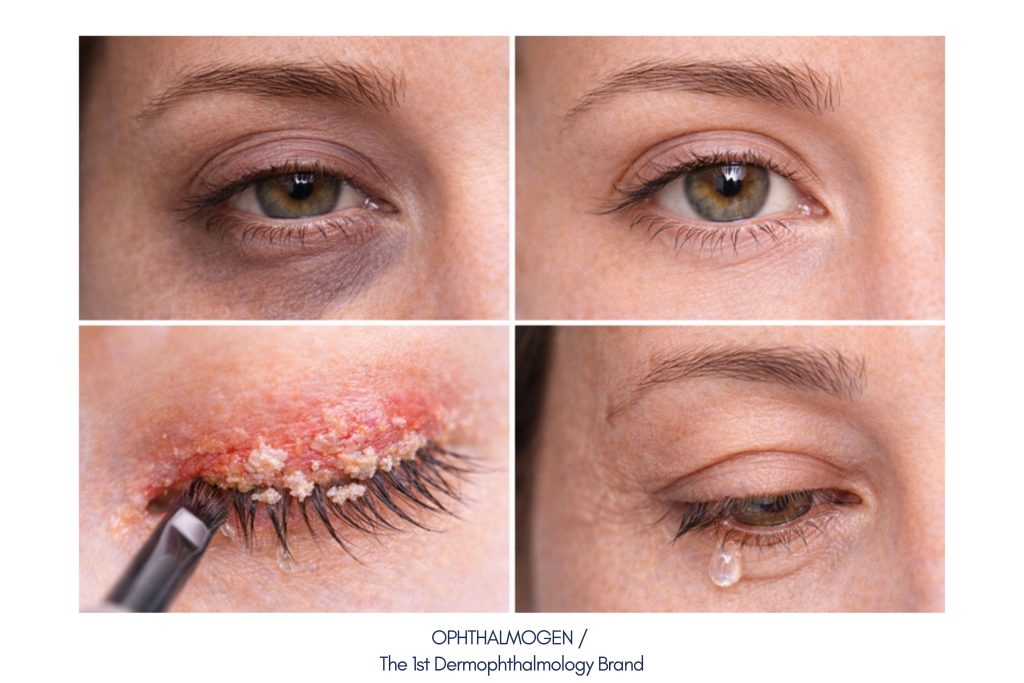
The Aesthetic Dimension of Demodex
It’s not just about health:
- Causes dark circles due to chronic inflammation..
- Contributes to early eyelid drooping.
- Makes lashes look thin, dull, and unhealthy.
Increases risk of Make up Drop Out,since makeup irritates already inflamed eyes.

Diagnosis
Diagnosis is made by an eye specialist via:
- Slit-lamp examination.
- Lash removal and microscopic analysis.
But often, the signs are evident: flakes, itching, chronic blepharitis unresponsive to regular eye drops.

The Dermophthalmology Solution
Treatment isn’t about one-off drops; it’s about a daily hygiene routine:
- Ophthalmogen Spray with tea tree oil → controls Demodex safely for daily use.
- Ophthalmogen EYE10 self heating masks (thermal compress) → unclogs meibomian glands, makes Demodex colonization harder.
- Ophthalmogen Gel massage → boosts microcirculation, reduces inflammation, nourishes lashes.
- Cleansing with Naviblef Daily Care & Naviblef Intensive Care → removes residues, lowers infestation.
With consistent care, results include:
- Cleaner lashes.
- Reduced itching.
- Less swelling and dark circles.
- Healthier, brighter eyes.
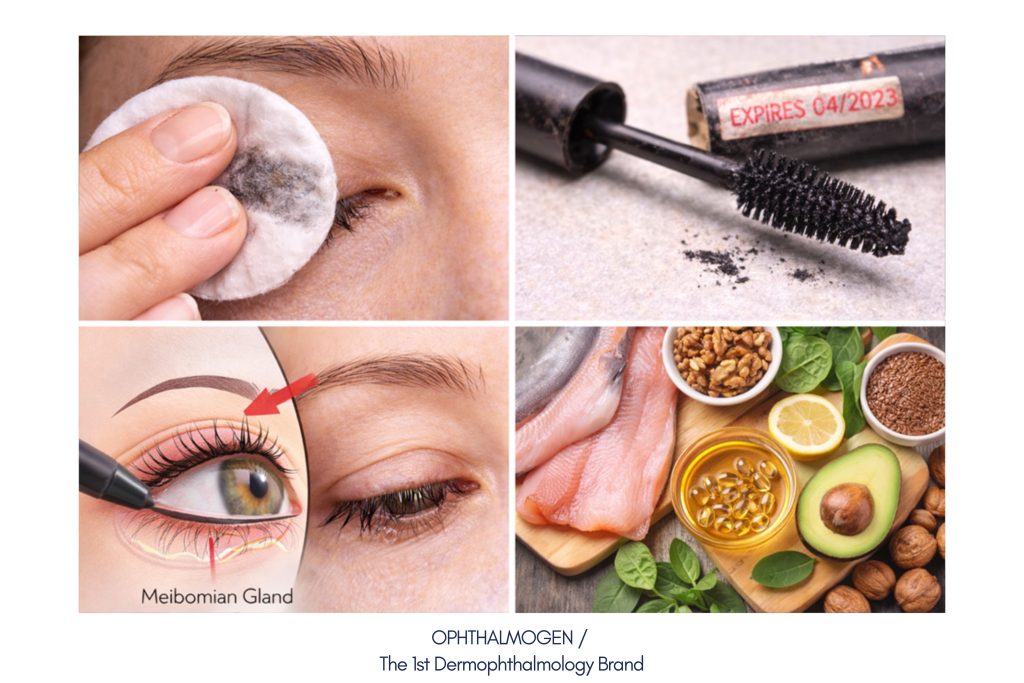
Complete Prevention
- ALWAYS remove makeup before bed.
- Avoid old mascara (>3 months).
- Don’t apply eyeliner inside the lash line.
- Clean lash extensions with special products.
- Maintain a balanced diet rich in Omega-3 fatty acids to support gland function.
Conclusion
Demodex isn’t a minor issue. It is a key factor in blepharitis, dry eye, and eyelash loss. Dermophthalmology teaches us the solution isn’t random eye drops, but a structured daily routine: cleansing, spray, thermal therapy, and massage.Because the real beauty of the eyes is not just makeup — it is clean, healthy eyelids and lashes.