
Introduction – The paradox of indifference
We all know that if you leave your teeth unbrushed for years, the result will be gingivitis, cavities, even tooth loss.
Yet when it comes to the eyes, a dangerous paradox prevails: chronic symptoms such as tearing, itching, redness, blurry vision, or foreign body sensation are often considered “normal.” Something that will “go away on its own.”
Science shows the opposite: these symptoms are clear signs of of chronic neglect of the eyelids and the ocular surface.
The result?
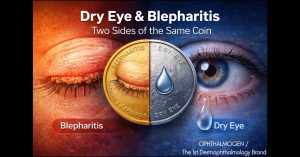
Blepharitis, dry eye, and chalazion – the most common chronic inflammatory eye diseases.
The “silent pandemic” of dry eye and blepharitis
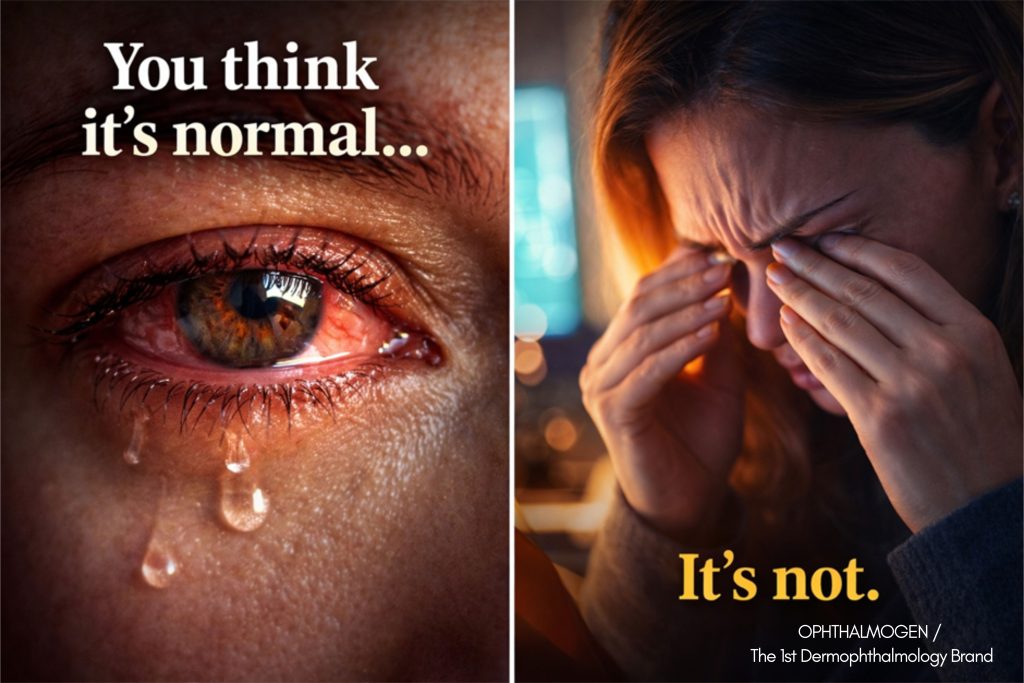
According to multiple scientific studies, dry eye is a chronic, multifactorial disease affecting 5–50% of the population, with enormous socioeconomic cost.
Blepharitis is equally widespread: studies show that the prevalence of Demodex? mites in patients with blepharitis exceeds 80% (Gaoetal., 2005).
And yet, most patients delay seeking care, believing these symptoms are harmless. The result is a silent pandemic:millions living with reduced visual quality, chronic discomfort, and an aesthetic decline of their gaze.
Chalazion: the tip of the iceberg
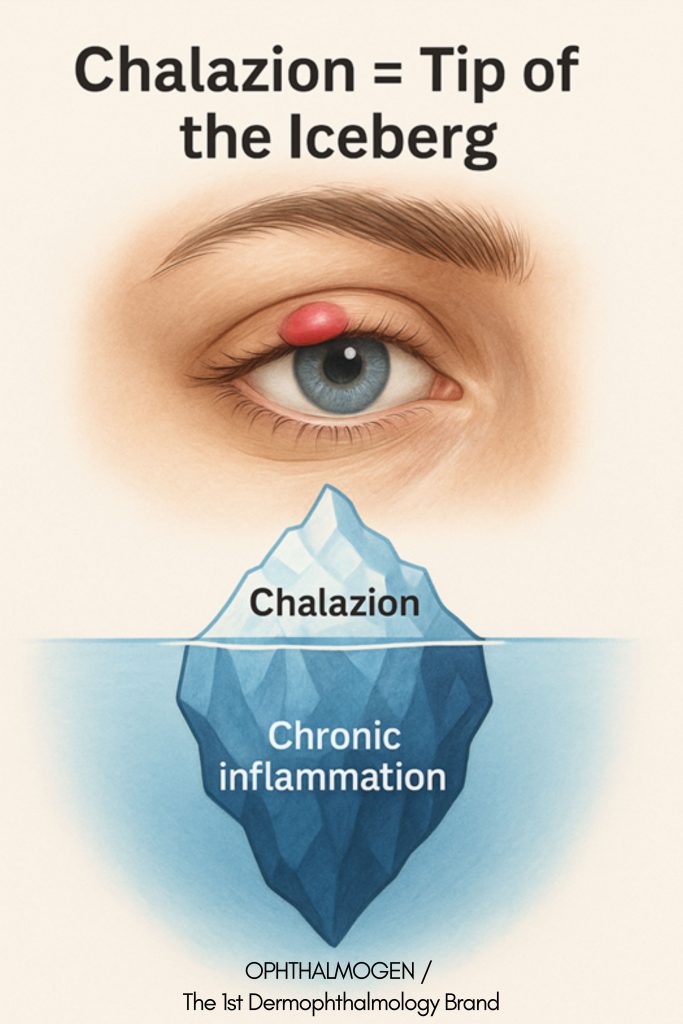
A chalazion – a cyst caused by meibomian gland inflammation– is one of the most visible complications of chronic neglect.
Just as periodontitis signals advanced oral disease, chalazion is the “red flag” of long-standing eyelid inflammation (Hogan, 1967).
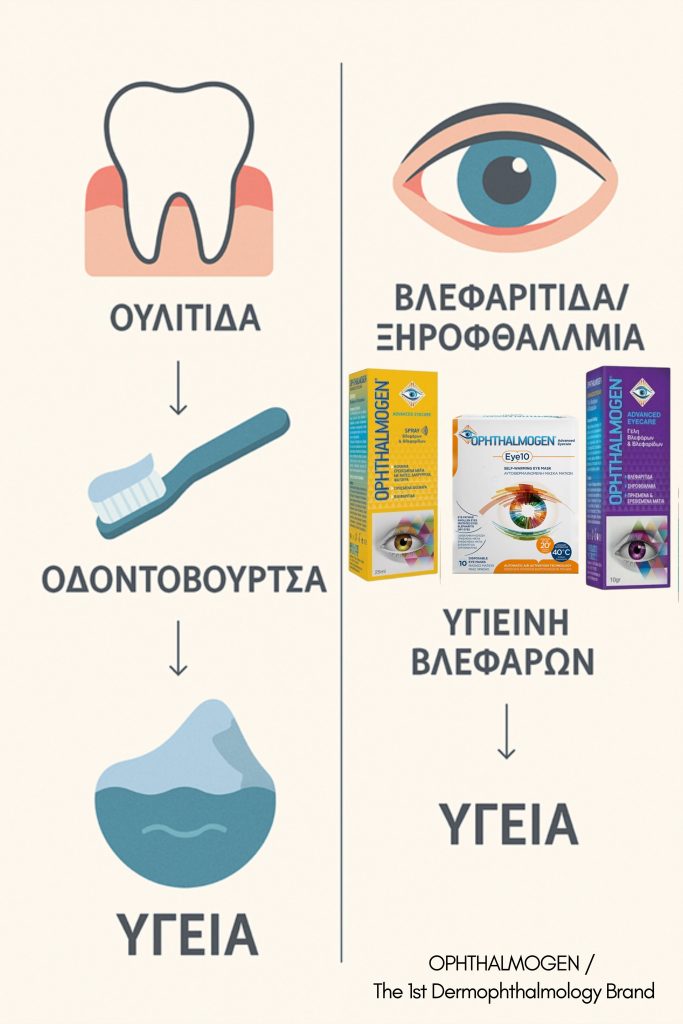
The analogy with dentistry – From neglect to prevention
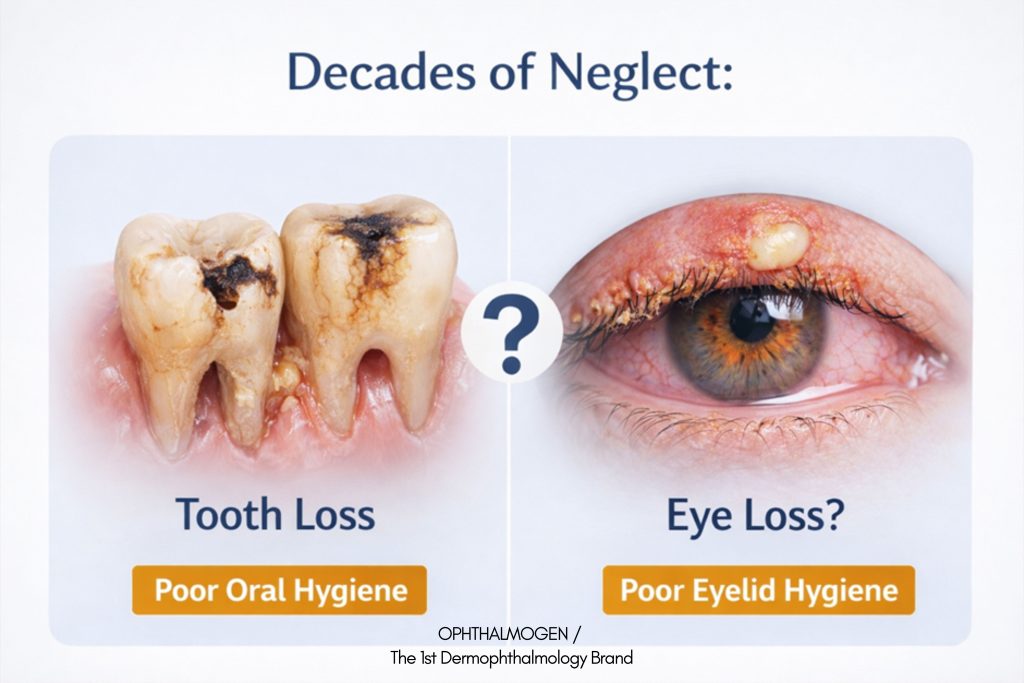
In 1965, Löe et al. demonstrated that poor oral hygiene inevitably leads to gingivitis, and that daily brushing can reverse the damage.
Today, we all brush our teeth daily – we don’t wait for pain or swelling to appear.
Dermophthalmology brings the same message for the eyes::
- Eyelid cleansing
- Removal of microbial and lipid load
- Thermal therapy & meibomian gland evacuation
- Spraying and hydration
These steps are the new “toothbrush” for the eyes..
The symptoms of neglect are not “normal”
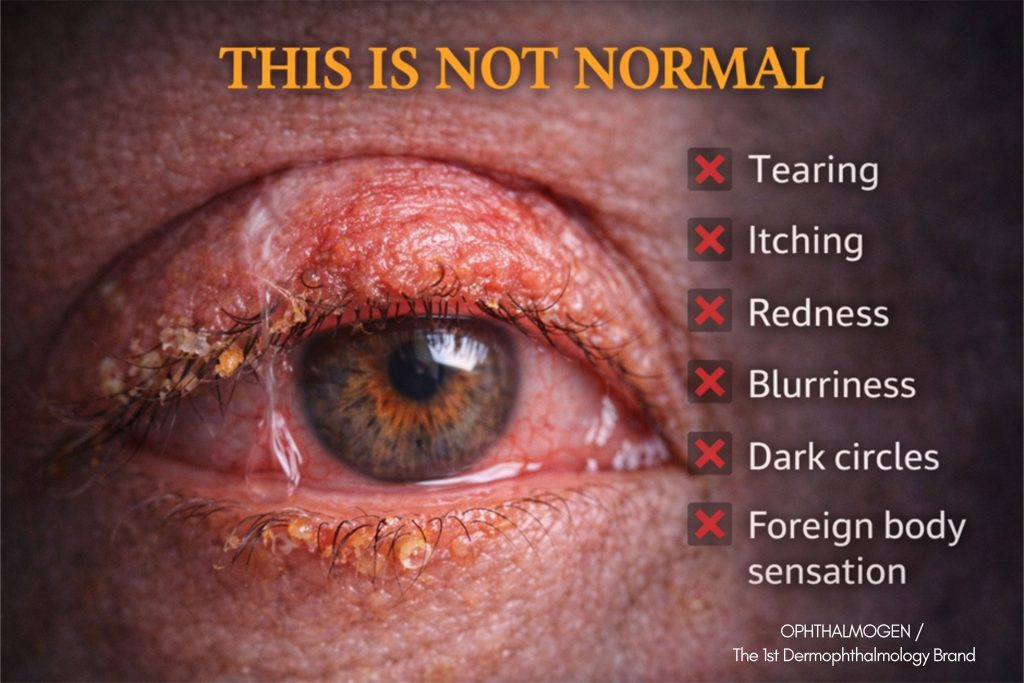
A truly healthy eye does not include::
- Tearing
- Itching
- Burning or stinging
- Foreign body sensation
- Dysfunctional eyelashes
- Dark circles
- Red eyes
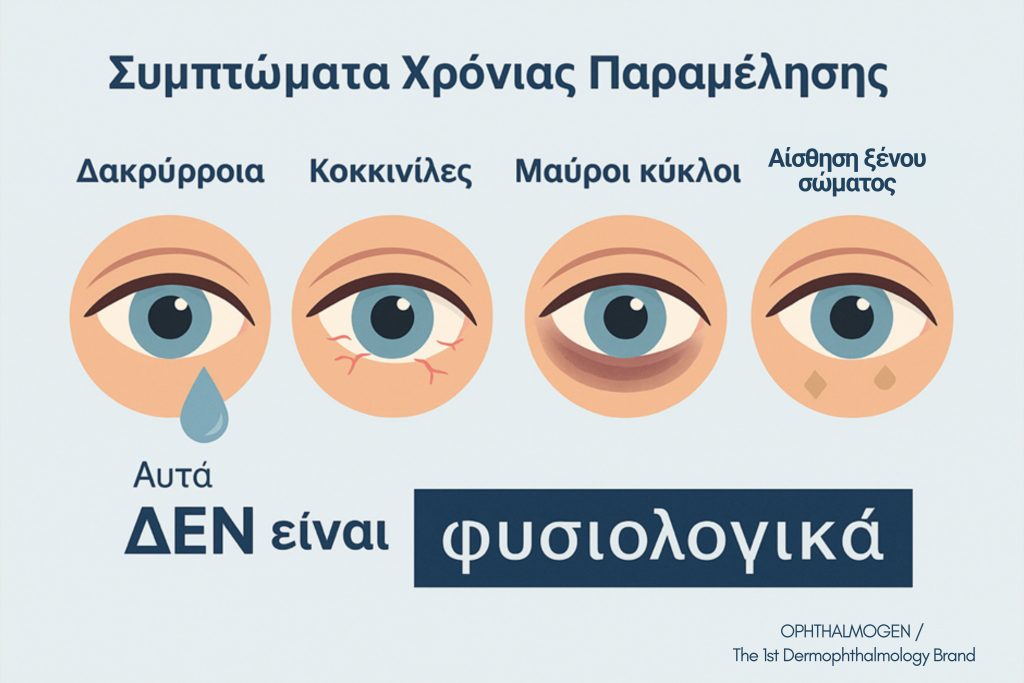
All of these are signs of chronic inflammation and neglect..
Το αντίδοτο: Πρόληψη

Prevention is the most economical and effective “treatment.”
It safeguards visual quality, concentration, and daily performance – and also preserves the aesthetic appearance of the eyes.
Just as dentistry proved, prevention is not a luxury – it is the foundation of health.
Dermophthalmology applies the same principle to the eyes: preventing chronic inflammation before it erodes comfort, clarity of vision, and the beauty of the gaze.
Conclusion
Vision is our most valuable sensory system – 80% of the information we receive comes through our eyes.
We cannot leave it to chance.
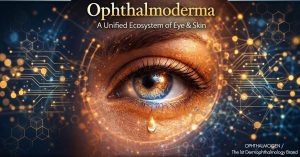
Dermophthalmology fills the missing gap:a new framework that places prevention at the center, organizes scattered scientific evidence, and gives our eyes what they truly deserve – health, comfort, and beauty.
"Dermophthalmology is not a luxury.It is the new standard for eye health and beauty.”
For more practical eye care solutions, visit the Ophthalmogen range, the first in the world to apply the philosophy of Dermophthalmology.
Selected Scientific References
- Craig JP, Nichols KK, Akpek EK, et al. TFOS DEWS II Definition and Classification Report. Ocul Surf. 2017.
- Gao YY, Di Pascuale MA, Li W, et al. High prevalence of Demodex in eyelashes of patients with blepharitis. Invest Ophthalmol Vis Sci. 2005.
- Hogan MJ. Chalazion and meibomian gland dysfunction. IntOphthalmolClin. 1967.
- Löe H, Theilade E, Jensen SB. Experimental gingivitis in man. J Periodontol. 1965.