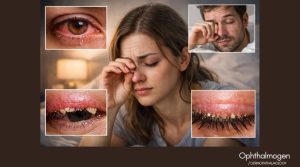

Blepharitis is one of the most common — and at the same time most misunderstood — eye conditions.Many people follow instructions, use products or medical treatments, notice improvement… and yet, after some time, the symptoms return.And then the natural question arises:
“Why does it never go away completely? And why does it keep coming back?”
The answer is not found only in the eye.It is found mainly in the eyelids.
What Blepharitis Really Is
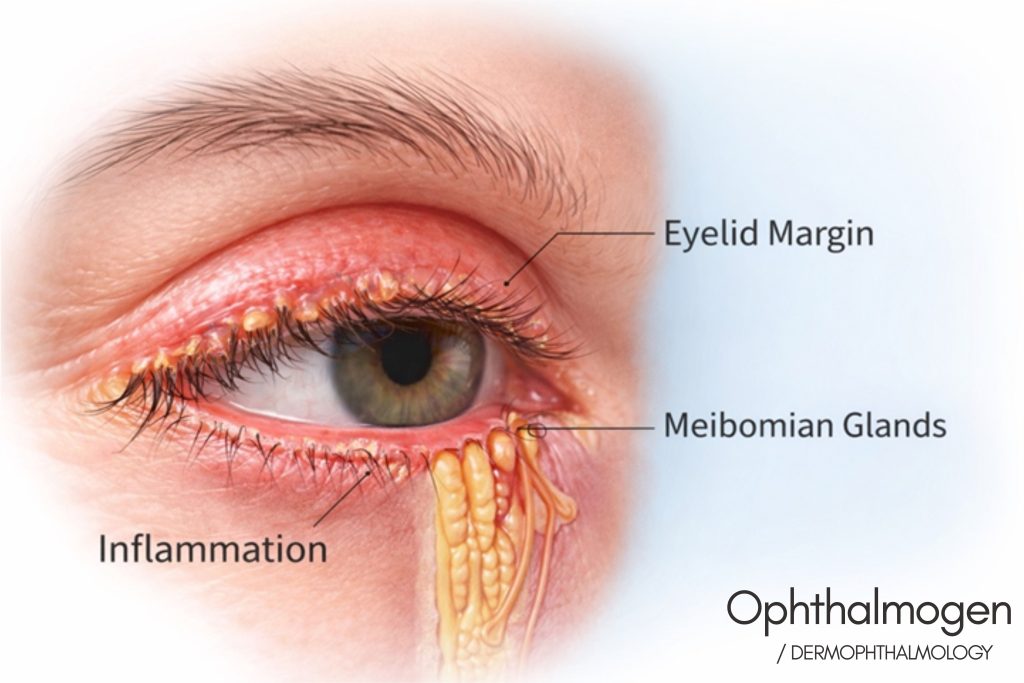
Blepharitis is not a simple, temporary problem.It is a chronic inflammatory condition of the eyelids, associated with:
- accumulation of microbial load
- dysfunction of the meibomian glands
- inflammation at the base of the eyelashes
- destabilization of the tear film
For this reason, it is often accompanied by:
- crusting or discharge
- sticky eyelids in the morning
- burning or stinging sensation
- Redness,
- blurry vision
- dry eye symptoms
- recurrent chalazia (styes)
The Most Common Mistake in Treatment
The biggest mistake is treating blepharitis as an isolated episode.Like a common cold.But it is not.Blepharitis is much more similar to:
- oral hygiene
- skin care
- scalp care
If you stop brushing your teeth, the problem returns.Exactly the same thing happens with the eyelids.
Why Frequent Use of Antibiotic Eye Drops Is Not the Solution
Another very common mistake is the repeated use of antibiotic eye drops every time symptoms flare up.In certain situations — and only under medical guidance — antibiotic eye drops may have a role.However, they are not a solution for a chronic condition.Blepharitis is not an acute infection.It is a chronic inflammatory process.
A Simple Example Everyone Understands
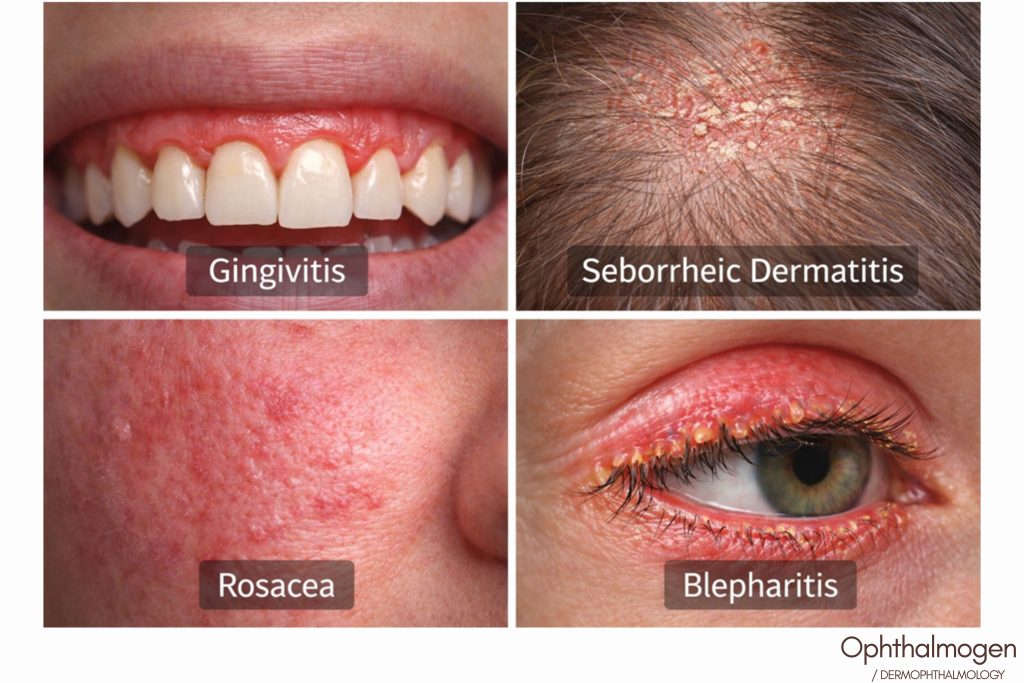
Treating blepharitis only with antibiotic drops is like:trying to treat gingivitis, which is a chronic inflammation of the gums,by taking antibiotics every 2–3 months,instead of brushing your teeth daily.Antibiotics may temporarily reduce symptoms.But without daily hygiene, the problem inevitably returns.The same applies to the eyelids.
A Simple Comparison That Explains Why Blepharitis Returns
- Eyelids → blepharitis
- Teeth & gums → Gingivitis
- Scalp → Seborrheic dermatitis / folliculitis
- Facial skin → Dermatitis / rosacea
The common denominator is simple:when daily care stops, the burden returns — and inflammation returns with it.That is why blepharitis does not “go away permanently” with occasional interventions.It requires consistent, daily eyelid hygiene.

Why the Eyes Also Need Care — and Why Water Alone Is Not Enough
Many people believe that washing the eyes with water is sufficient.In practice, it is not.The eyelids:
- produce lipid secretions
- contain sebaceous and meibomian glands
- host a microbial ecosystem
- accumulate pollutants, makeup, and tear proteins
A Simple Analogy
Eyelids are like a frying pan covered in grease.No matter how much water you pour on it, it won’t get clean.Lipids require specialized cleansing.
Why Not Soaps or Shampoos
The eyelids have a highly sensitive pH and a close relationship with the ocular surface.Common soaps and shampoos:
- disrupt pH balance
- cause irritation
- destabilize the tear film
- worsen inflammation
That is why many people “clean” their eyelids — yet feel worse afterward.The correct logic is specialized cleansing for a specialized area, respecting: pH lipid balance eyelid physiology This is the foundation of Dermophthalmology.
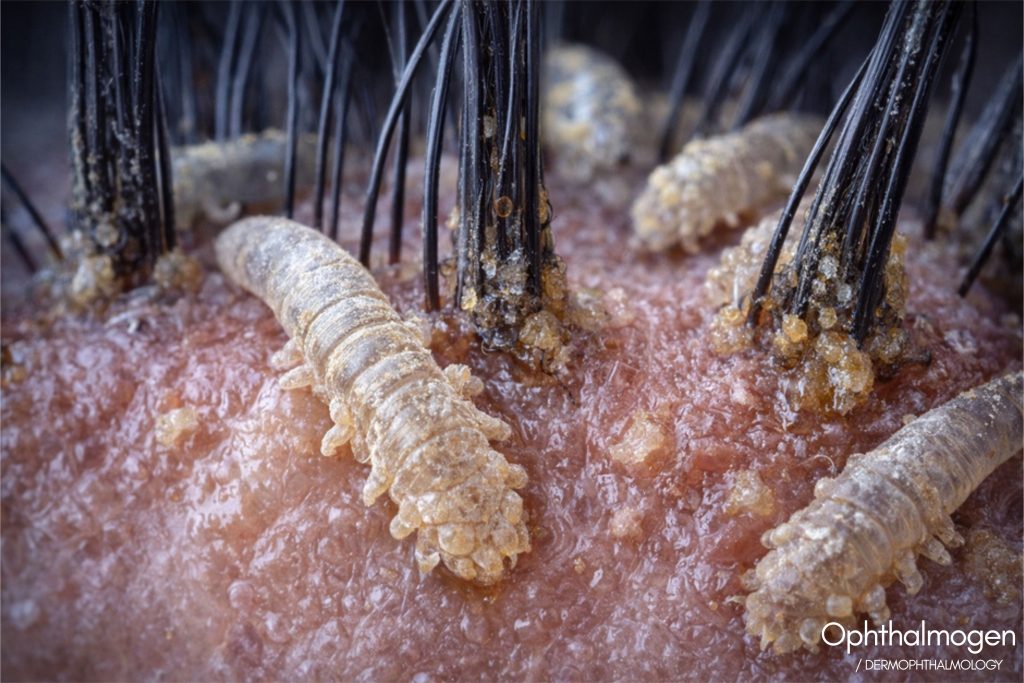
The Role of Demodex in Chronic Blepharitis
When local balance is disrupted, Demodex may contribute to:
- inflammation
- irritation
- scaling at the base of the eyelashes
- worsening dry eye symptoms
- increased risk of chalazion
Why Blepharitis Returns When Care Stops
The eyelids are skin with a highly specialized function. Dermophthalmology bridges dermatology and ophthalmology, focusing on long-term eyelid care rather than episodic treatment.

The 3-Step Ophthalmogen Protocol
Daily eyelid hygiene
STEP 1 — Cleaning & massage Ophthalmogen Gel
Ophthalmogen Gel is used daily to cleanse the eyelids and the base of the eyelashes.
It helps:
- remove secretions and residues
- reduce microbial load
- control factors associated with blepharitis and Demodex
Without consistent cleansing, symptoms tend to return..
STEP 2 — Thermal Decongestion OphthalmogenEYE10
Controlled heat:
- liquefies thickened secretions
- supports meibomian gland function
- facilitates gentle eyelid massage
STEP 3 — Σταθεροποίηση & προστασία με Ophthalmogen Spray
It helps:
- maintain hydration
- reduce daily irritation
- support a healthy microbial balance of the eyelids
Consistency is the key in chronic blepharitis.
In Summary
Blepharitis persists not because there is no solution —but because it requires daily care, not fragmented actions.Just like teeth, skin, and hair,eyelids need consistent hygiene.
Medical Disclaimer
This content is for informational purposes only and does not replace medical advice.For persistent or severe symptoms, consultation with an ophthalmologist is recommended.