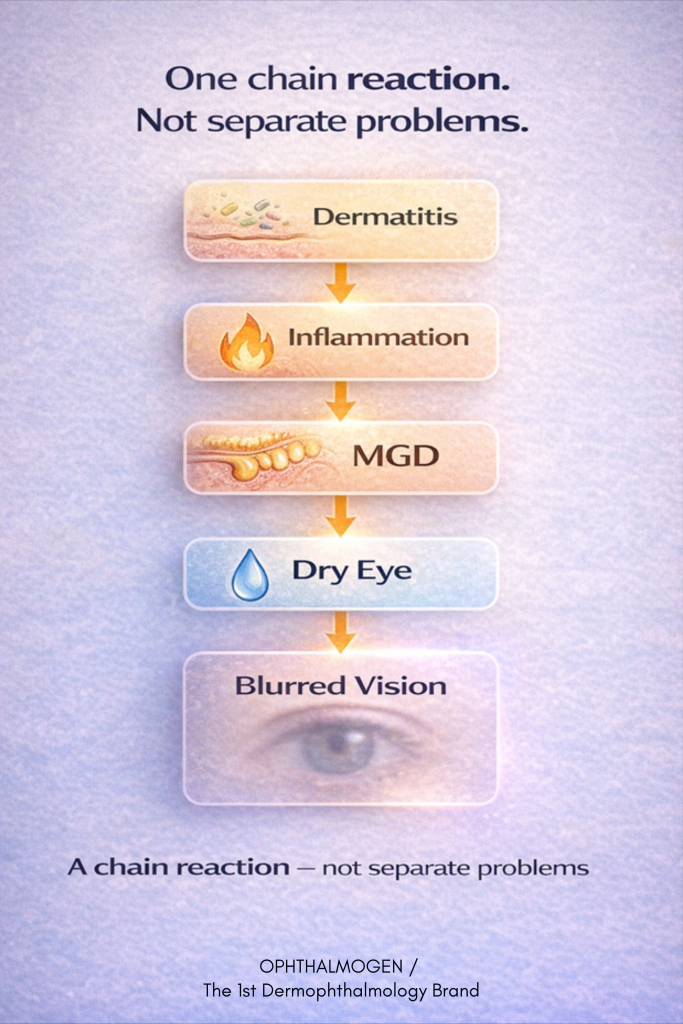
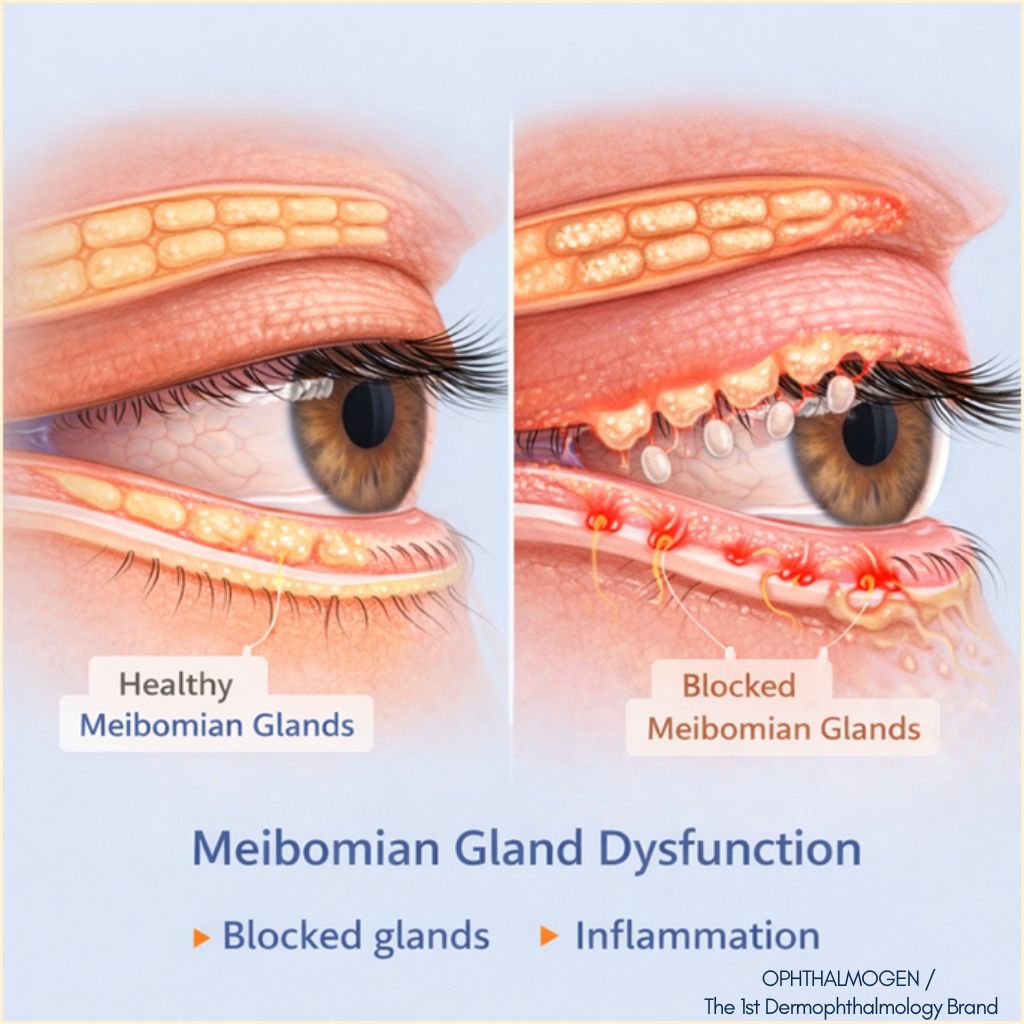
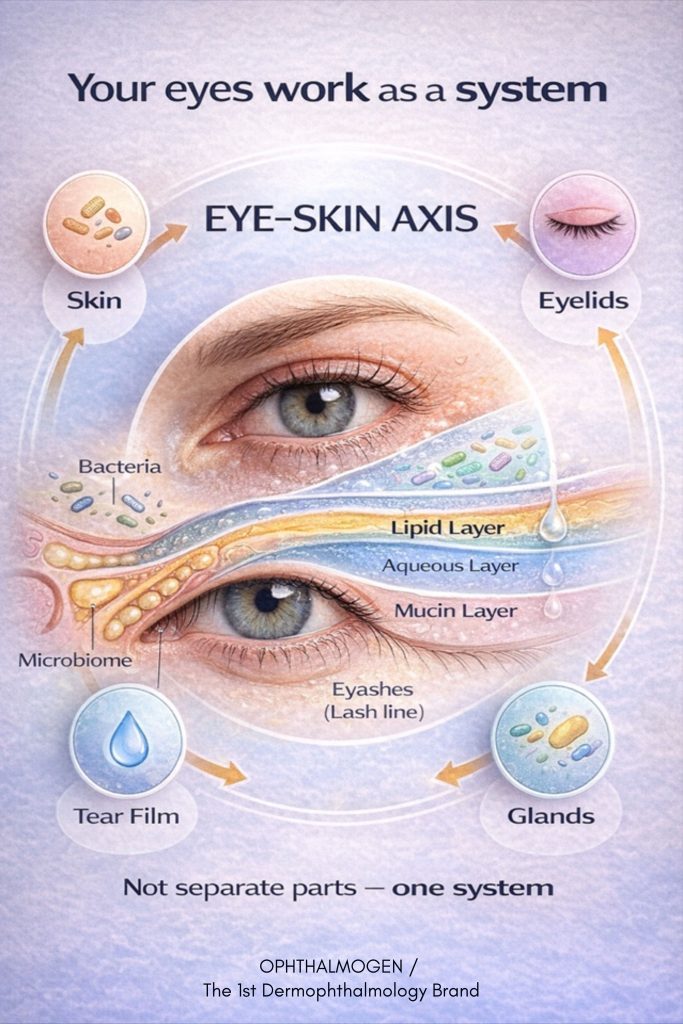
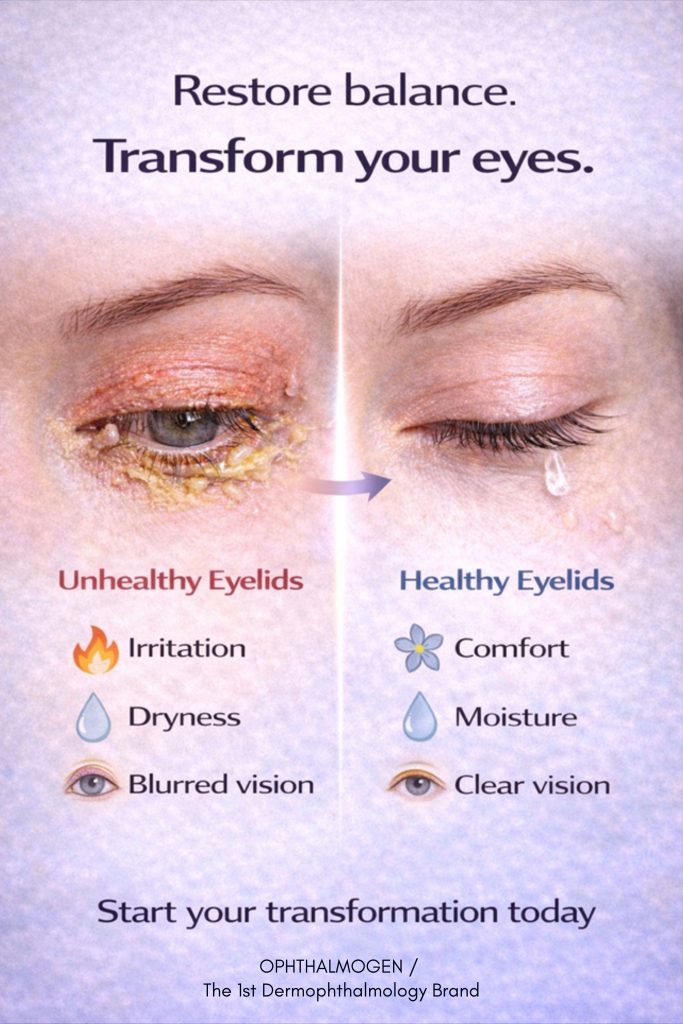
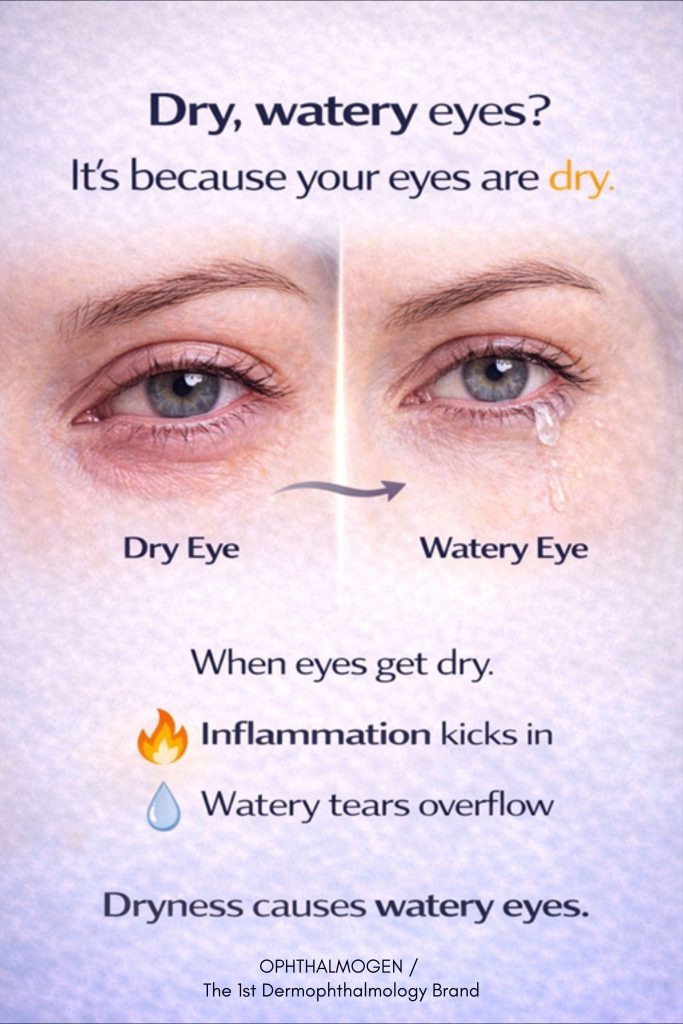
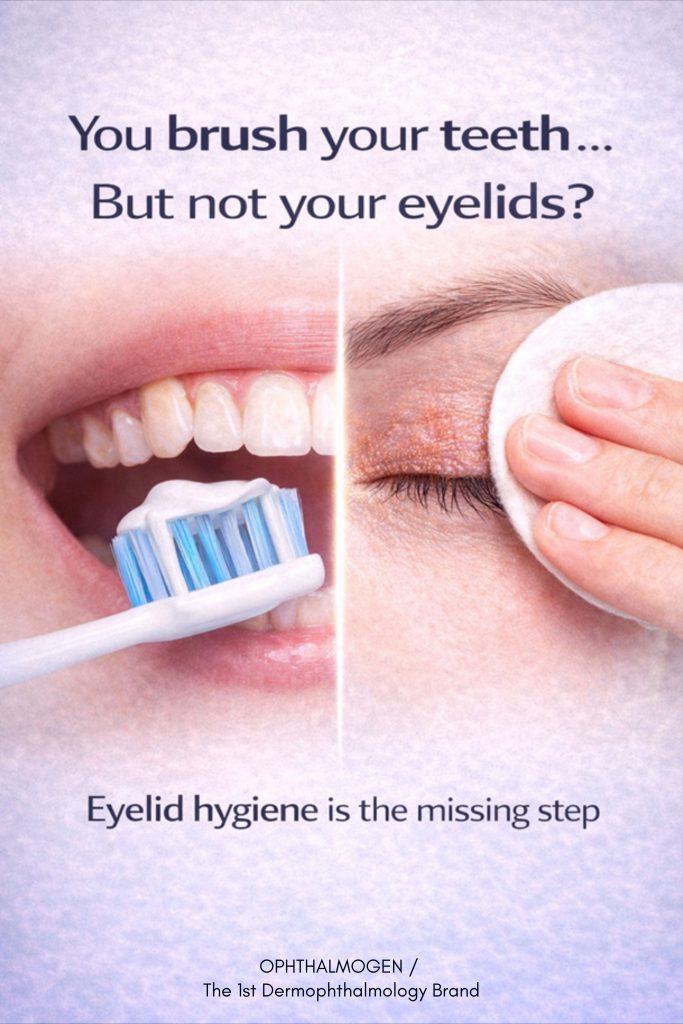
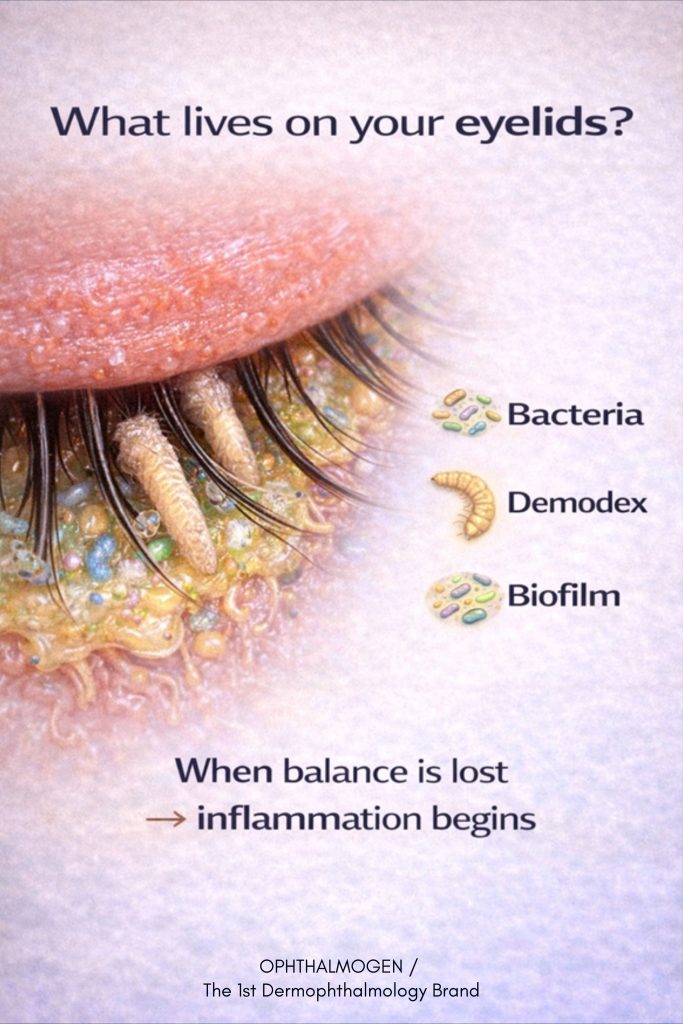
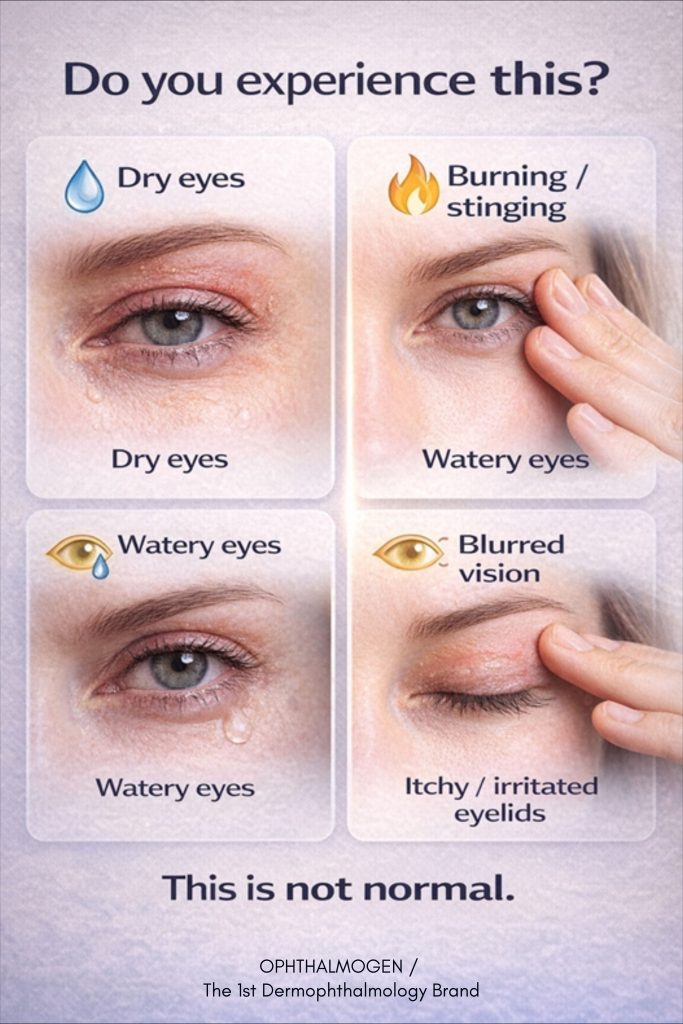
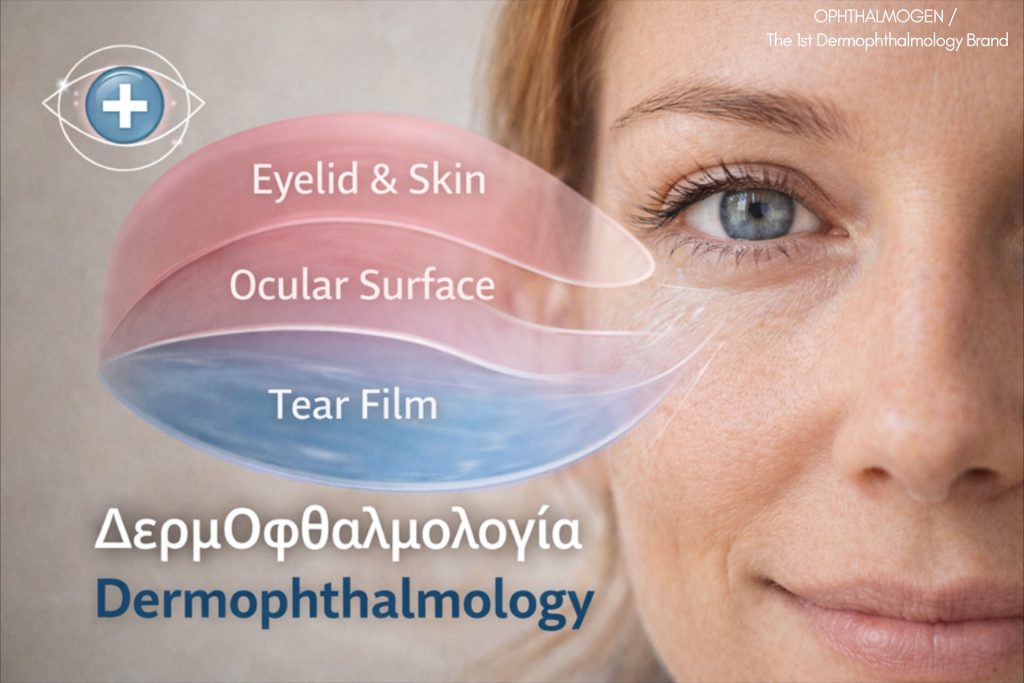
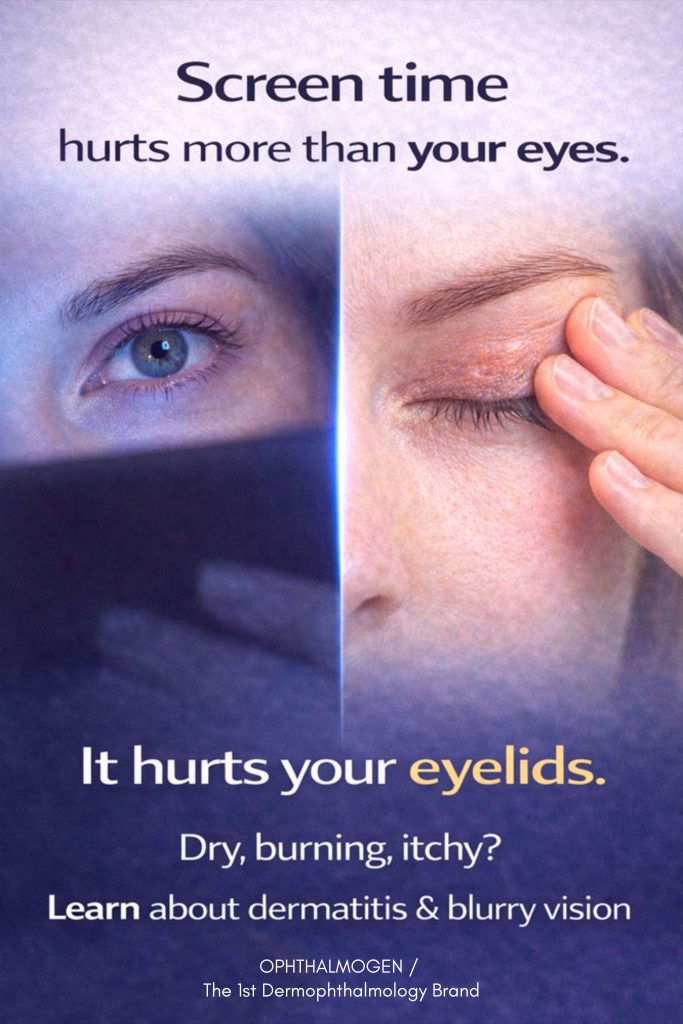
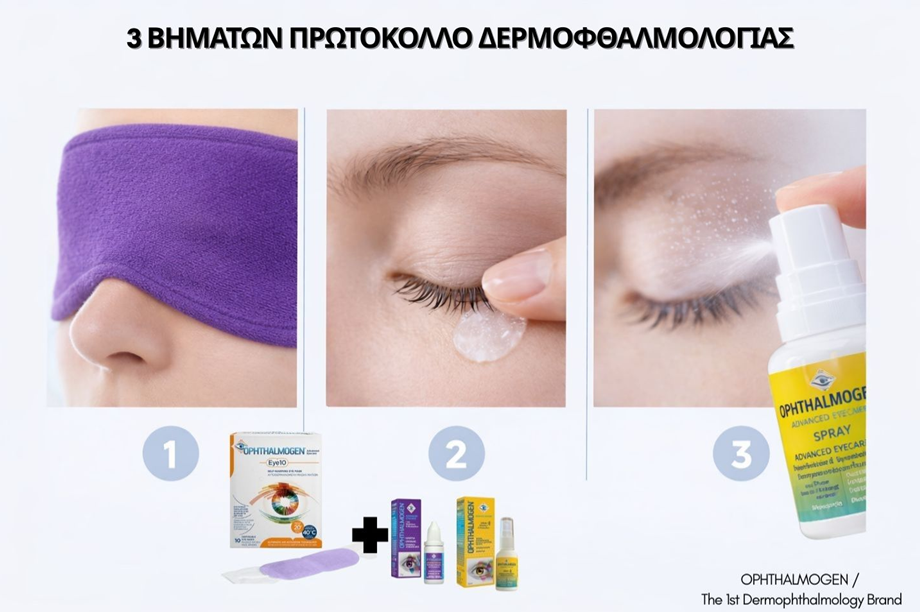
Posted on May 3, 2026By OphthalmogenIn Blog, Eye diseases Introduction If you have When dermatitis is present on your face or eyelids and notice:burning or stinging eyessensitivity to lightblurred vision that comes and goeswatery eyes for no clear reasonyou might think it’s an “eye problem.”But in reality: the cause may start from the skin. What Is Dermatitis Around the Eyes? Eyelid dermatitis (eczema) is an inflammatory condition that may appear as:atopic dermatitisseborrheic dermatitiscontact dermatitisperiocular dermatitis The skin of the eyelids:is extremely thinhas a weak protective barrieris constantly exposed to irritantsThis makes it the most vulnerable connection point between skin and eye. The Biggest Mistake Most People Make Dermatitis is usually treated as a purely skin condition.CreamsCorticosteroidsAntihistaminesBut what is often overlooked is:its impact on the eyelids and the visual system The Hidden Connection: Skin → Eyelids → Tear Film → Vision According to the modern Dermophthalmology approach:the eye is not an isolated organIt depends on a system:eyelid skineyelashesMeibomian glandstear filmocular surfaceThis is called::Eye-Skin Axis How Dermatitis Causes Dry Eye Eyelid Skin Inflammation Η When dermatitis is present:weakens the skin barriercauses swellingcreates flakes and cruststhese directly affect the lash line. Meibomian Gland Dysfunction (MGD) These glands produce the oil layer of your tears.Όταν υπάρχει When dermatitis is present:glands are compressedopenings become blockedoil becomes thicker and abnormalleading to: Meibomian Gland Dysfunction (MGD) Tear Film Instability The tear film:protects the eyemaintains hydrationensures clear vision When disrupted:tears evaporate too quicklythe surface becomes unstableShow resulting in: dry eye Why Blurred Vision Occurs Here is the key insight:The tear film is the first optical surface of the eye When it becomes unstable:light scattersthe surface becomes irregularvision fluctuatesThat’s why many people say:“Sometimes I see clearly… then suddenly it blurs.”It’s not your glasses, it’s your tear film. The Role of Demodex & the Microbiome In dermatitis:Demodex populations increasethe microbiome becomes imbalancedbiofilm developsthis:worsens inflammationincreases irritationcontributes to blepharitis & chalazion Why Symptoms Persist Most patients: treat only the symptomseye drops for drynesscreams for the skinbut not the system.As a result:inflammation persistsglands remain dysfunctionalthe problem returns The Dermophthalmology Solution Dermophthalmology addresses the condition holistically:opens the glandsnot just the eyebut the entire system. The Modern Approach in Practice Controlled Heat Therapy ( Ophthalmogen Eye10)opens the glandsliquefies thickened oilsimproves gland functionrequires controlled temperature (~40°C) Daily eyelid hygiene (Ophthalmogen Gel)removes flakes & biofilmreduces Demodexcleans the eyelash basenot “eye cleaning”, lash line cleaning. Microenvironment Restoration (Ophthalmogen Spray)hydrates the skinbalances the microbiomereduces irritation Reduce Eye Rubbingprevents mechanical damagelimits inflammation The Big Picture This is not about a single product or treatment.It is abouta system restoration approachtargeting:skineyelidsglandstear film Conclusion Dermatitis can:cause dry eyecreate eye sensitivitylead to blurred visionbecause it affects the entire eye system. Final thought If you treat only the symptoms…the problem will returnIf you take care of your eyelids…you restore the foundation of visionand the system returns to balance. FacebookTwitterLinkedIn