
Anxiety, the Brain, and Why Floaters Feel Worse During Stress
Eyefloatersare among the most common—and anxiety-provoking—visual symptoms.Many people notice that floaters:
- appear or become more noticeable during periods of stress
- feel more disturbing when they are tired or mentally overwhelmed
- fade into the background when they are calm, rested, or distracted
This often leads to the question: “Can anxiety cause eye floaters?”
The answer is no—but the real explanation is far more interesting and lies in the complex interaction between the eye, the brain, and attention.
Can Anxiety Create Eye Floaters?
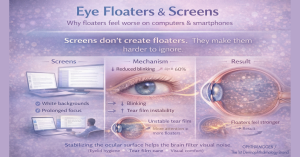
No.Anxiety does not create floaters, does not alter the vitreous body, and does not cause new intraocular pathology.However, anxiety can dramatically increase how strongly floaters are perceived.The key distinction is not whether floaters exist—but whether they dominate attention.
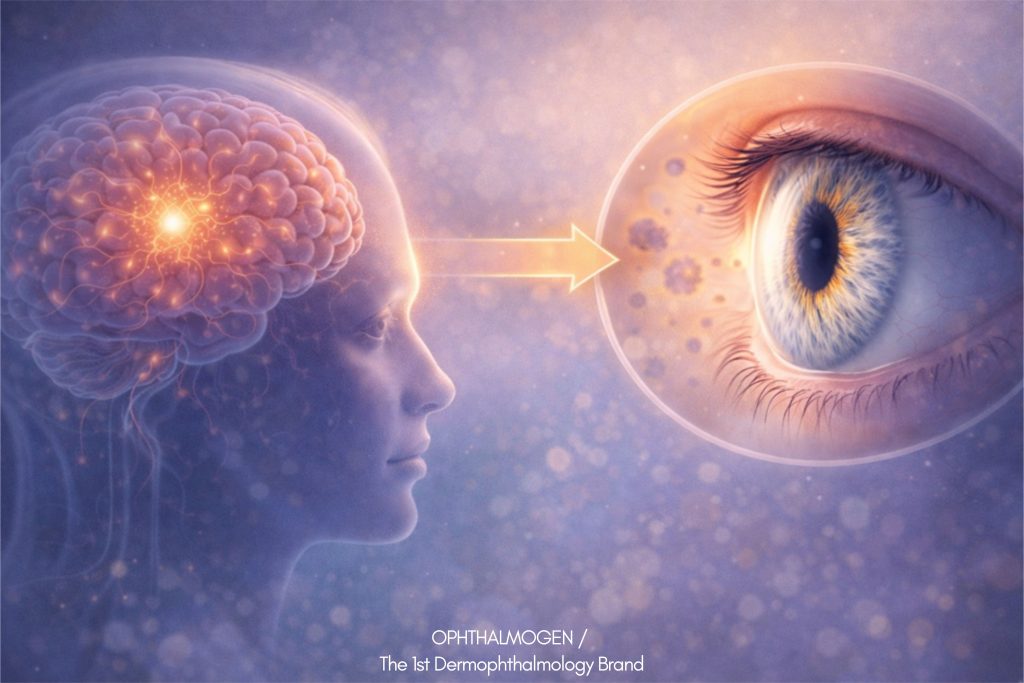
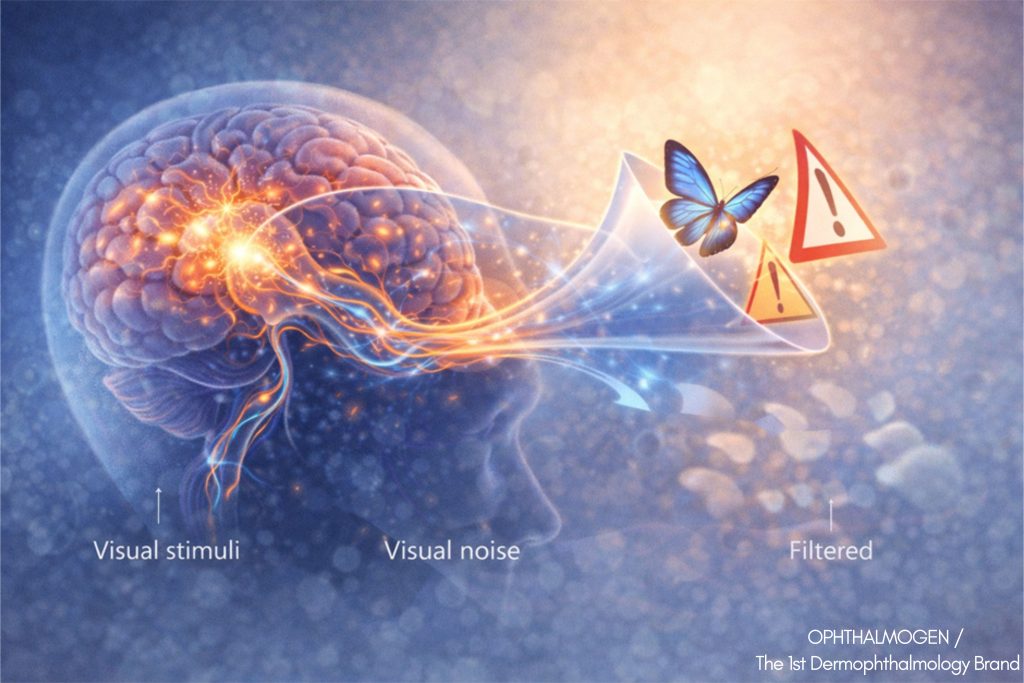
How the Brain “Filters” Vision
Vision is not a passive process.The brain:
- receives an enormous amount of visual information
- filters out what it considers irrelevant
- highlights what it perceives as important or threatening
Under normal conditions:
- floaters are ignored
- they are treated as harmless “visual noise”
- they are filtered automatically
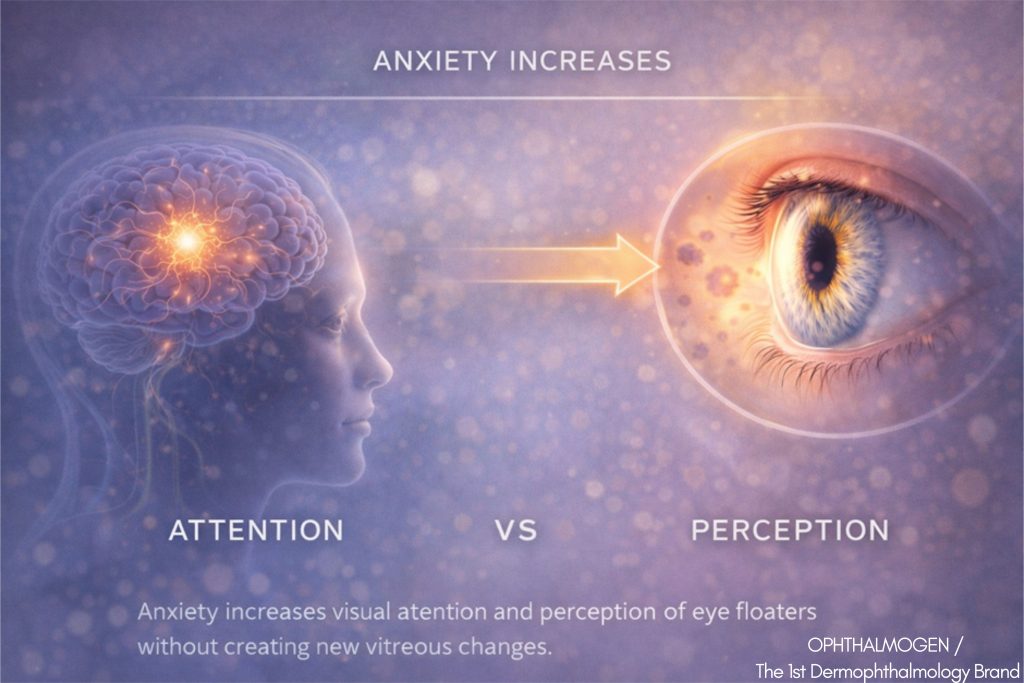
What Changes During Anxiety and Stress
During anxiety or psychological stress:
- alertness increases
- the brain scans for potential threats
- attention becomes hyper-focused
Result:
- floaters pass through the perceptual filter
- they become the focus of attention
- they feel more intense and disturbing
There are not more floaters—there is more attention directed at them.
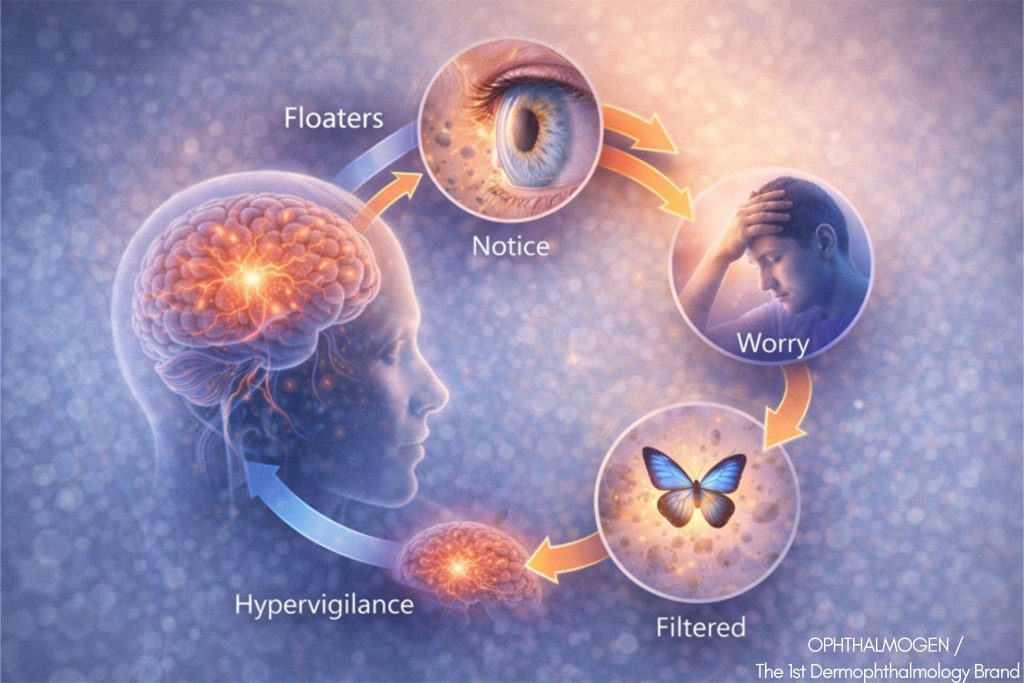
The Anxiety–Floater Feedback Loop
- A common pattern looks like this:
- Floaters are noticed
- Worry increases
- Brain alertness intensifies
- Floaters feel more prominent
This loop is not caused by new eye damage, but by a neuro-visual mechanism.
Why Unstable Vision Makes Floaters Feel Worse
When floaters coexist with:
the visual image becomes:
- less clear
- more “jittery”
- more mentally fatiguing
The brain then:
- works harder to stabilize vision
- fixates excessively on shadows and movement
As a result, floaters gain disproportionate perceptual importance.
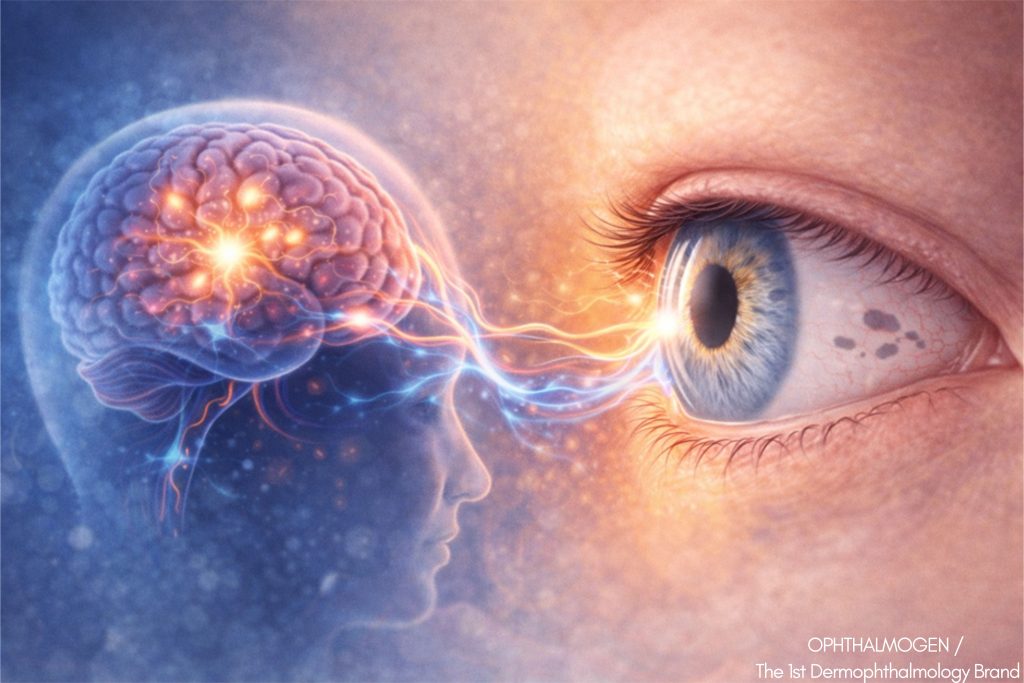
Scientific Background
Clinical and neuro-ophthalmological research supports this model:
- Anxiety & Visual Hyper-Attention
McTeague et al., Biological Psychiatry – “Attention Bias Toward Threat”
- Anxiety increases attentional bias toward neutral sensory stimuli
- These stimuli are interpreted as potential threats
Anxiety does not create floaters—it amplifies focus on them.
- Filtering of “Visual Noise”
Seriès& Seitz, Vision Research – “Learning what to ignore”
- The brain learns to ignore repetitive, non-threatening stimuli
- Stress, fatigue, and visual instability weaken this filtering process
Floaters stop being ignored.
- Anxiety & Dry Eye Disease
Li et al., Cornea – “Association between dry eye disease and depression/anxiety”
- Strong association between anxiety and dry eye symptoms
- Worse subjective visual quality
Visual instability increases floater-related discomfort.
- Ocular Surface & Image Stability
Wolffsohn et al., Ocular Surface – TFOS DEWS II Report
- Tear film quality directly affects
- image stability
- visual fatigue
- subjective discomfort
This provides the scientific foundation for eyelid hygiene and tear-film care.
Psychosomatic Perception
Levenson et al., Psychosomatic Medicine
- Stress increases perception of bodily symptoms
- without corresponding structural deterioration
Floaters exist, but stress makes them perceptually dominant.

Why Eyelid Hygiene Is Essential During Stressful Periods
Eyelid hygiene:
- does not alter the vitreous
- does not “cure” floaters
But it does:
- stabilizes the tear film
- cleans the optical surface
- reduce visual “noise”
As a result, the brain stops fixating on floaters.
The Daily eye care works on two levels:
- optical (clearer, more stable vision)
- neurological/psychological (reduced hyper-vigilance)
FAQ – Frequently Asked Questions (FAQ Schema Ready)
- Can anxiety cause eye floaters?
No. Anxiety does not create new floaters but increases awareness of existing ones.
- Why do floaters feel worse when I’m stressed?
Stress heightens brain alertness and visual scanning.
- Can stress affect vision clarity?
Yes. It is linked to dry eye and tear-film instability.
- Why does eyelid hygiene help?
It stabilizes vision and reduces visual “noise.”
- Does treating dry eye remove floaters?
No, but it often reduces how disturbing they feel.
- Should I worry if floaters increase during anxiety?
Not usually—unless accompanied by flashes or vision loss.
- Is it normal that floaters disappear when distracted?
Yes. The brain filters them more effectively.
- Does eyelid hygiene affect the vitreous?
No. It affects the optical surface of the eye.
- Do lifestyle changes help?
They improve comfort and perception, not floater structure.
- Are floaters psychological?
No. They are real, but their impact is strongly influenced by the brain.
Conclusion
Eye floaters are common and usually harmless.Anxiety does not create them—but it can make them dominant in perception.
The more:
- clearer
- stable
- comfortable
the visual image is, the less the brain fixates on floaters.Accurate information, eyelid hygiene, and stress reduction can significantly improve quality of life.
Medical Disclaimer :
This article is for informational purposes only and does not replace a professional medical examination.