
After 40: What Changes Naturally in the Eye and Why Floaters Become More Common
Many people notice that eye floaters appear or become more noticeable after the age of 40.This is often accompanied by questions such as:
- “Why now?”
- “Does this mean my eyes are aging?”
- “Should I be worried?”
The reality is that after the age of 40, predictable and physiological changes occur in the eye, which largely explain the increased awareness of floaters.
What Changes Naturally in the Eye After 40
- The Vitreous Changes Its Structure
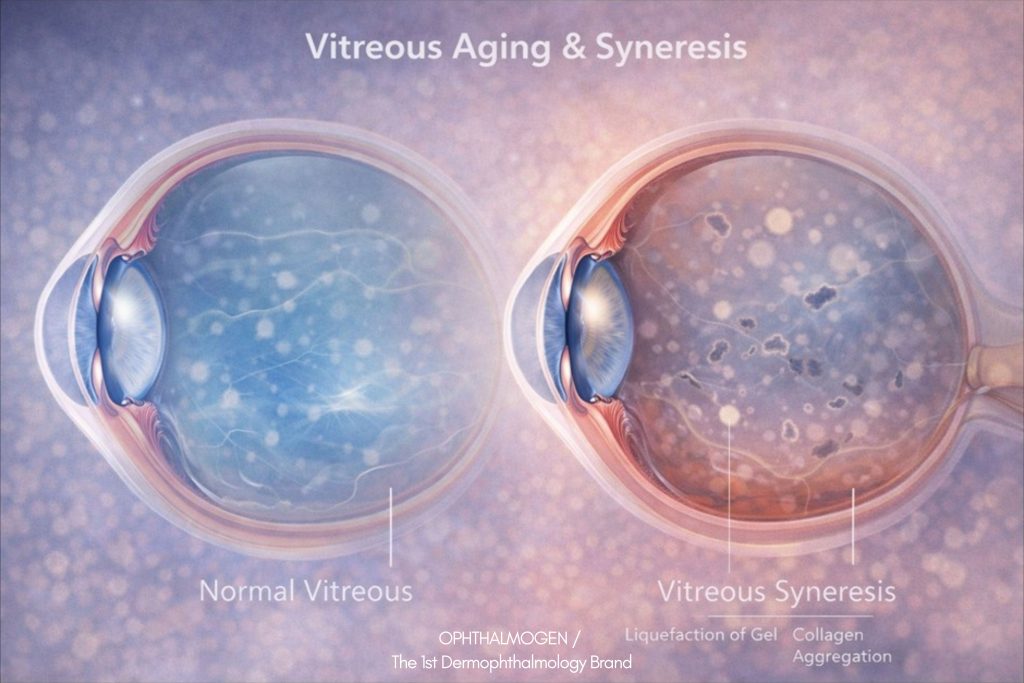
The vitreous body:
- does not remain uniformly gel-like forever
- gradually undergoes liquefaction (vitreous syneresis) with age
- develops small collagen aggregations
These changes:
- are physiological
- occur in everyone, to varying degrees
- are perceived as eye floaters
Scientific background:
Sebag J., Progress in Retinal and Eye Research The vitreous undergoes age-related structural changes, leading to visual phenomena such as floaters.
Increased Likelihood of Posterior Vitreous Detachment (PVD)
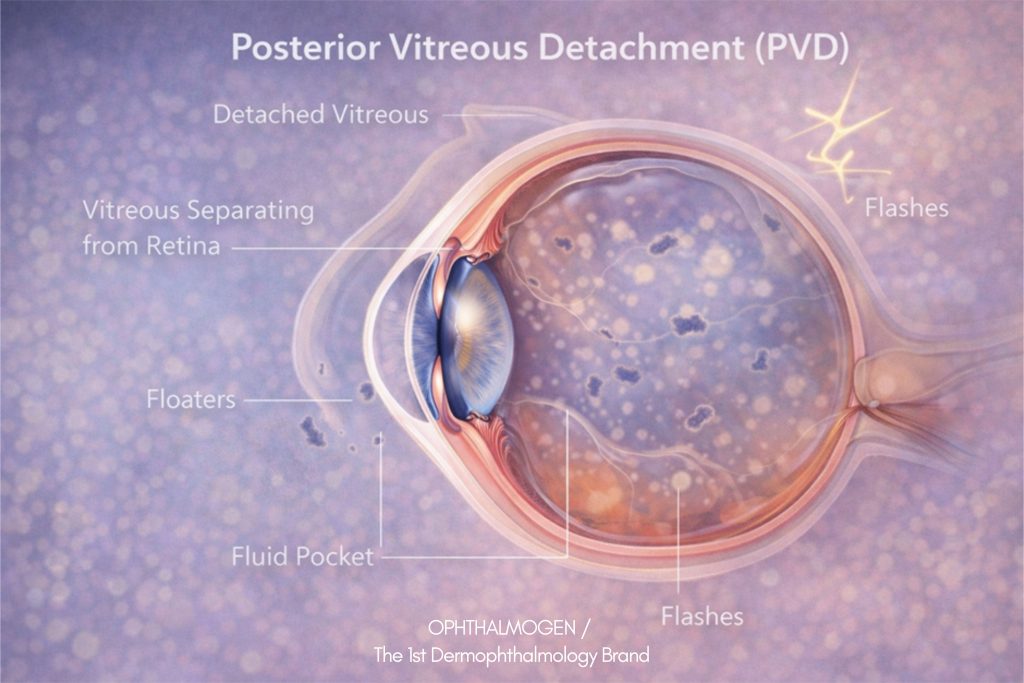
After the age of 40–50:
- the vitreous gradually separates from the retina
- floaters and light flashes may appear
- in most cases, this is a benign, age-related process
Ophthalmic evaluation is mainly required:
- at the initial onset
- when symptoms appear suddenly
Studies:
The incidence of posterior vitreous detachment increases significantly after the fourth decade of life.
Vision Does Not Deteriorate — Perception Changes
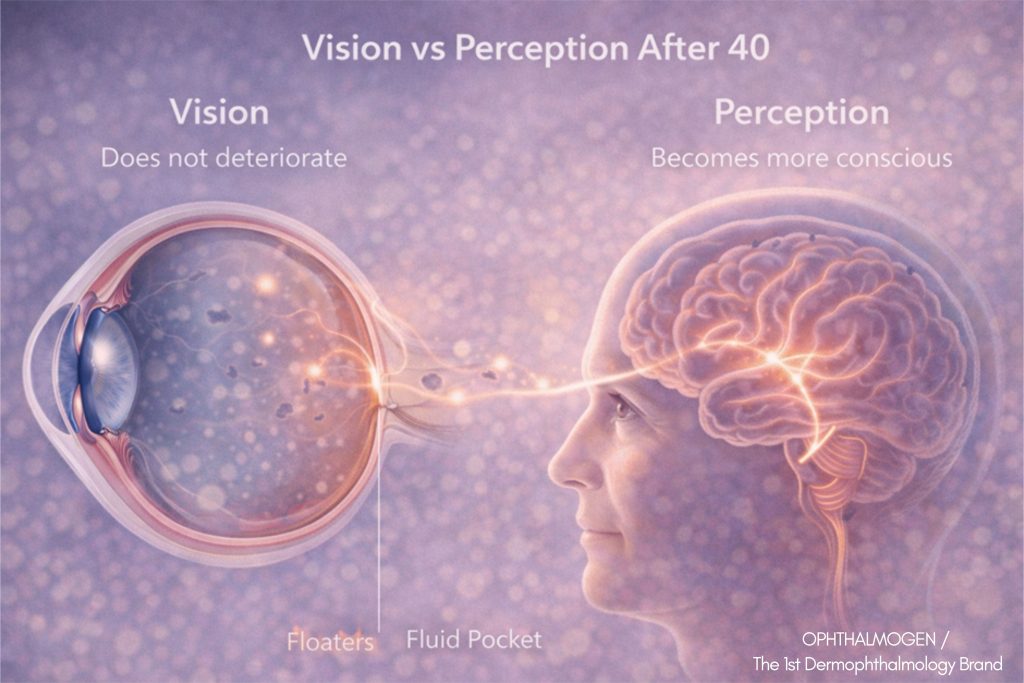
Eye floaters:
- do not reduce visual acuity
- do not damage vision
However, after 40:
- the brain becomes more sensitive to visual “imperfections”
- visual input is evaluated more consciously
- tolerance to visual “noise” decreases
Something that existed before now becomes noticeable.
Why Some People Are More Bothered by Floaters Than Others
The difference is not only in the vitreous. Other factors play a role:
- ocular surface quality
- tear film stability
- eyelid function
- fatigue, stress, and lifestyle
The clearer and more stable the image, the less disturbing floaters appear.
After 40: Why the Ocular Surface Becomes More Vulnerable
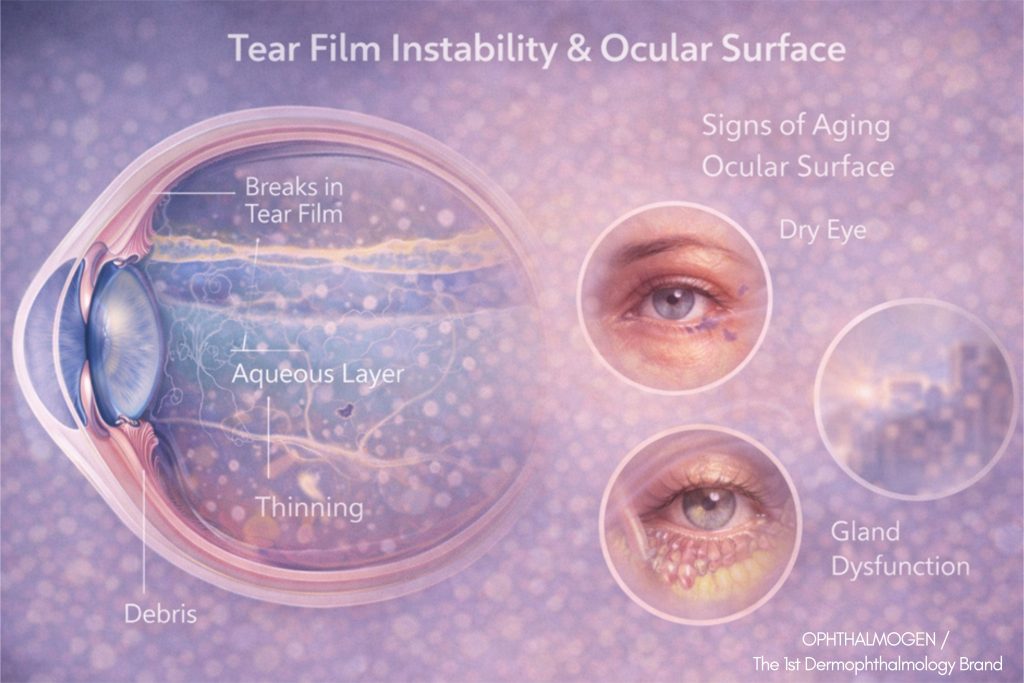
With age:
- tear quality and lipid composition decline
- dry eye becomes more common
- meibomian gland dysfunction increases
This leads to:
- fluctuating or blurred vision
- fatigue
- heightened attention to shadows and movement
TFOS DEWS II Report – The Ocular Surface: Tear film instability directly affects visual quality and subjective visual discomfort.
Floaters do not increase — their perceptual prominence does.
The Role of Eyelid Hygiene After 40
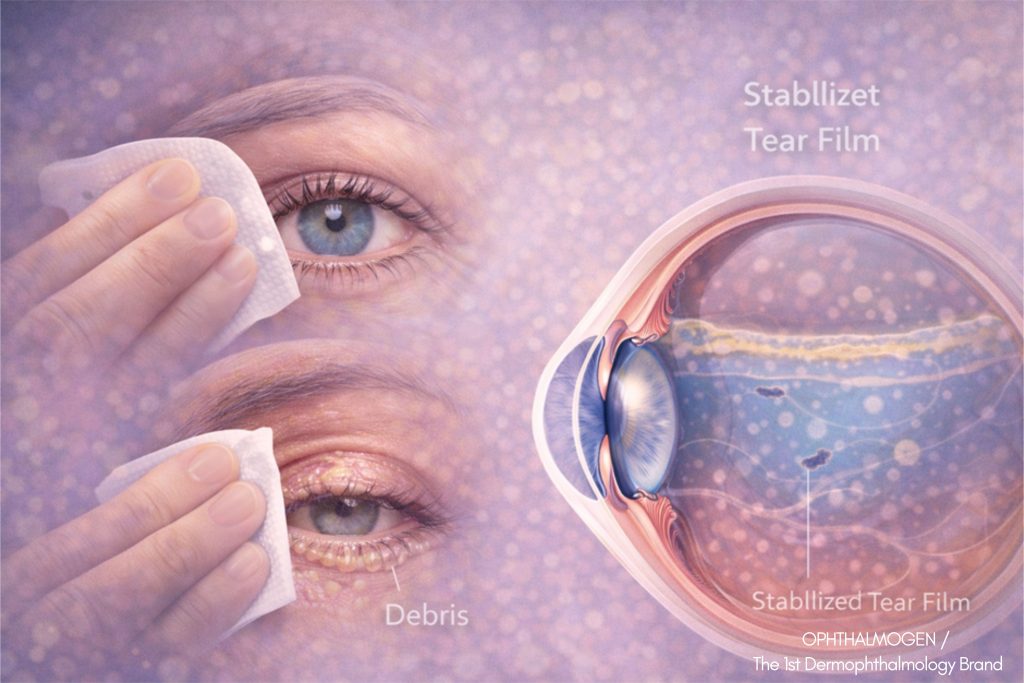
After 40, eyelid hygiene is not a luxury. It is essential care.
Lack of proper hygiene:
- destabilizes the tear film
- increases visual blur
- intensifies visual “noise”
A proper routine:
- cleans the optical surface
- supports meibomian gland function
- helps the brain ignore floaters more effectively
Practical Daily Support with Ophthalmogen (Realistic & Scientifically Grounded)
Important::
These products do not alter the vitreous and do not eliminate floaters.They optimize the visual environment through which the image is formed.
Evening — Ophthalmogen EYE10
- gentle warmth
- meibum liquefaction
- support of meibomian gland function
Morning — Ophthalmogen Gel
- eyelid margin cleansing
- removal of residues that blur vision
During the Day — Ophthalmogen Spray
- enhances hydration
- comfort during screen use and air conditioning
- improved visual stability
Goal: less visual noise → less attention to floaters.
When Extra Caution Is Needed After 40
Regardless of age, immediate examination is required if:
- many floaters appear suddenly
- intense flashes of light occur
- a shadow or “curtain” appears in the visual field
Age does not mean neglect — it means proper monitoring.
FAQ – Frequently Asked Questions (Schema Ready)
Are floaters after 40 normal?
Yes. In most cases, they are related to normal vitreous aging.
Do floaters mean my vision is aging?
No. They do not reduce visual acuity.
Can eyelid hygiene eliminate floaters?
No, but it can significantly reduce how disturbing they feel.
Why do some people ignore floaters easily?
Because of better image stability and ocular surface quality.
Do I need treatment?
Usually not — education, monitoring, and proper eye care are sufficient.
Conclusion
After the age of 40, eye floaters are usually the result of natural changes in the vitreous and the ocular surface.On their own, they are not a sign of serious disease.Understanding what changes in the eye — combined with consistent eyelid hygiene and ocular surface care — helps most people live with floaters without anxiety and without compromising quality of life.
Medical Disclaimer : This article is for informational purposes only and does not replace a professional medical examination.