A Dermophthalmology Perspective on Functional Vision in the Digital Age.

Abstract

Myopia is rapidly emerging as one of the most significant global public health challenges. While traditionally attributed to axial elongation, genetic predisposition, and environmental factors such as prolonged near work and reduced outdoor exposure, increasing attention is being directed toward functional visual determinants that may contribute indirectly to its progression.

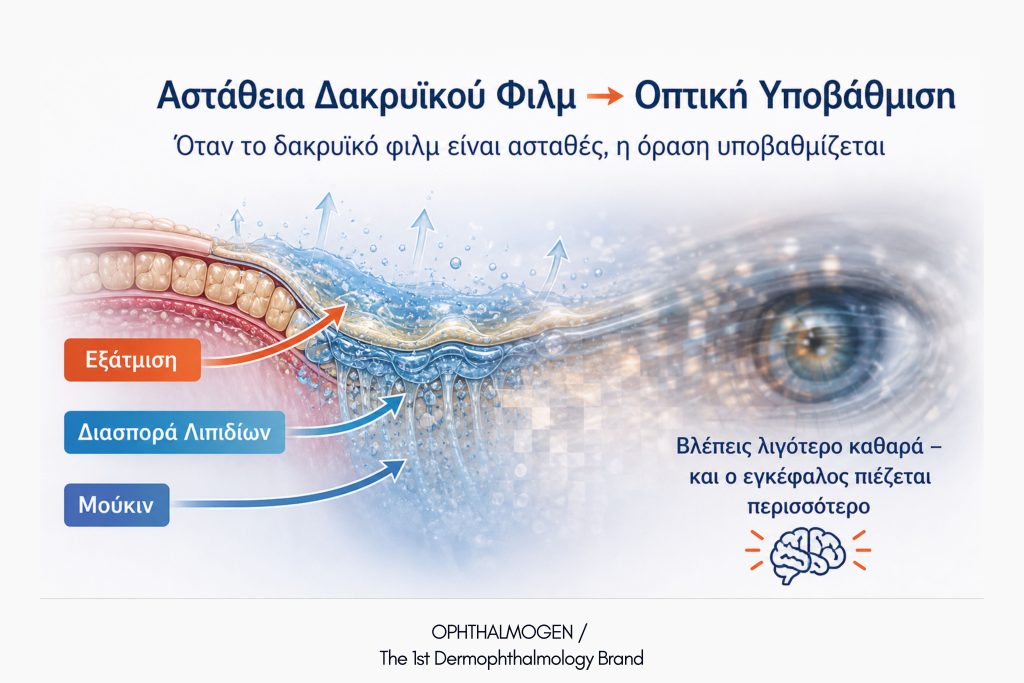
Tear film instability—commonly associated with blepharitis, meibomian gland dysfunction (MGD), and ocular surface disease—represents a critical yet underrecognized factor in visual performance.

Within the Dermophthalmologyframework, vision is conceptualized as the outcome of an integrated biological system defined by the Eye–Skin Axis the Ophthalmodermal Barrier and the functional unit known as Ophthalmoderma (Ophthalmoderma).

This paper proposes that tear film instability contributes to optical degradation, increased cognitive load, and behavioral adaptation, thereby creating a physiological environment that may favor myopia progression.

1. Introduction

Myopia has evolved into a global epidemic, with projections suggesting that nearly half of the world’s population will be affected by 2050.


Conventional models emphasize::

  • axial elongation
  • genetic predisposition
  • environmental exposure


However, these models overlook a critical dimension::

  • the quality and stability of visual input


Vision is not static. It is a dynamic, system-level process influenced by optical, neural, and surface-level factors. Within Dermophthalmology, this system is defined by the interaction between the eye and the skin.

2. Myopia: Definition, History and Epidemiology

2.1 Definition


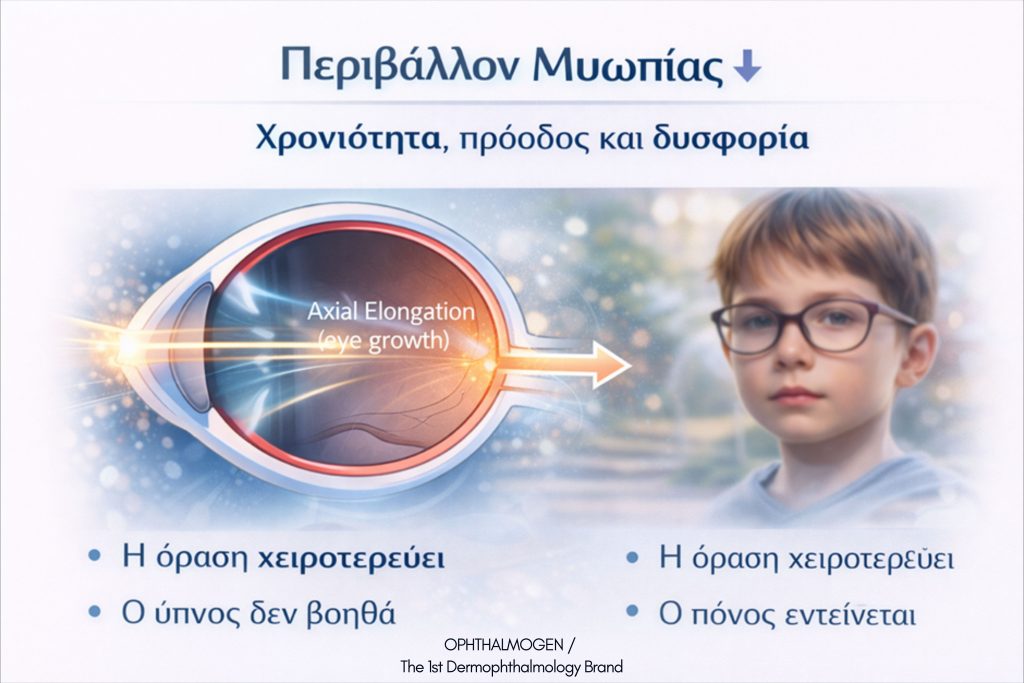
Myopia is a refractive condition in which parallel light rays focus anterior to the retina, resulting in blurred distance vision.

It is associated with::

  • axial elongation
  • scleral remodeling
  • refractive imbalance

2.2 Historical Perspective

Myopia has been recognized since antiquity::

  • Aristotle described squinting behavior in distance vision
  • The term derives from the Greek myein (to close) and ops (eye)


Later developments:

  • Kepler (17th century) explained optical mechanisms
  • 19th century ophthalmology established axial length correlation


Historically, emphasis has been placed on optics and structure, not functional vision.

2.3 Epidemiology

Myopia is one of the fastest-growing visual conditions worldwide::

  • ~30% of the global population currently affected
  • projected to reach 50% by 2050
  • high myopia expected in ~10%


In East Asia::

  • prevalence exceeds 80–90% in young adults

2.4 Institutional Perspective

Major organizations highlight its significance::

  • American Optometric Association → major visual health concern
  • World Health Organization → global public health priority
  • International Myopia Institute → emphasizes environmental drivers

2.5 Why Myopia Is Increasing

Key drivers include::

  • prolonged near work
  • excessive screen exposure
  • reduced outdoor time
  • decreased natural light exposure

2.6 The Digital Environment

Modern digital behavior leads to::

  • reduced blink rate (up to 60%)
  • increased tear film instability
  • prolonged accommodative demand

creating chronic visual stress conditions

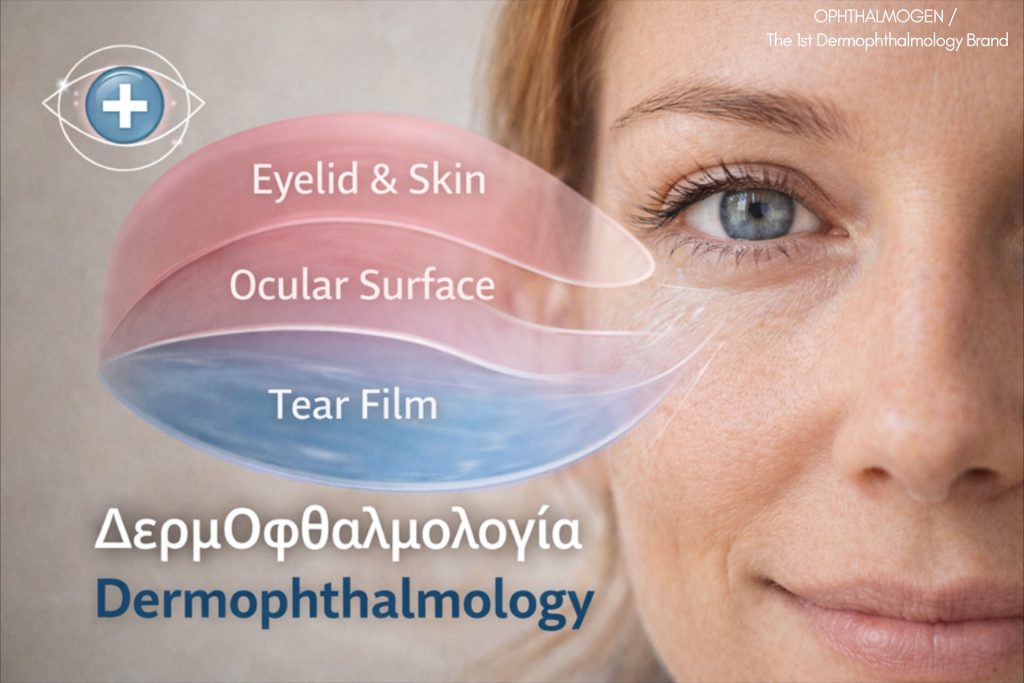
3. The Eye–Skin Axis: A Functional Framework

The Eye–Skin AxisEyeSkinAxis) περιγράφει τη συνεχή και δυναμική σχέση μεταξύ:

  • του eyelid skin
  • meibomian glands
  • tear film
  • ocular surface


This system regulates::

  • hydration
  • inflammation
  • microbiome
  • optical stability


Disruption results in system-wide dysfunction

4. Ophthalmoderma: The Integrated Organ Concept

Το Ophthalmoderma (Ophthalmoderma) ορίζει τον οφθαλμό ως ένα ενιαίο βιολογικό σύστημα που περιλαμβάνει:

  • eyelids
  • periocular skin
  • lashes
  • glands
  • tear film
  • ocular surface

forming a continuous functional interface

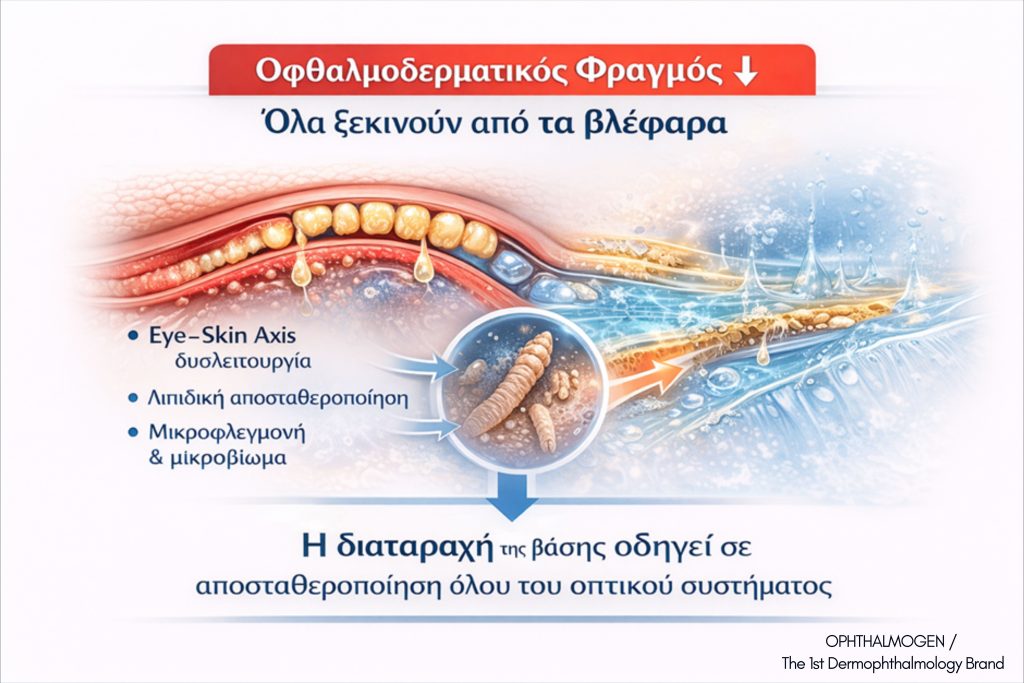
5. The Ophthalmodermal Barrier

The Ophthalmodermal Barrier integrates:

Functions:

  • protection
  • inflammation control
  • tear film stabilization
  • optical integrity

Disruption leads to::

  • evaporation
  • inflammation
  • instability

6. Tear Film as the First Optical Surface

The tear film is the primary refractive interface.


It:

  • smooths the cornea
  • reduces aberrations
  • stabilizes vision


Disruption results in:

  • light scatter
  • reduced contrast
  • fluctuating acuity


Unstable tear film = unstable vision

7. Optical Instability and Visual Stress

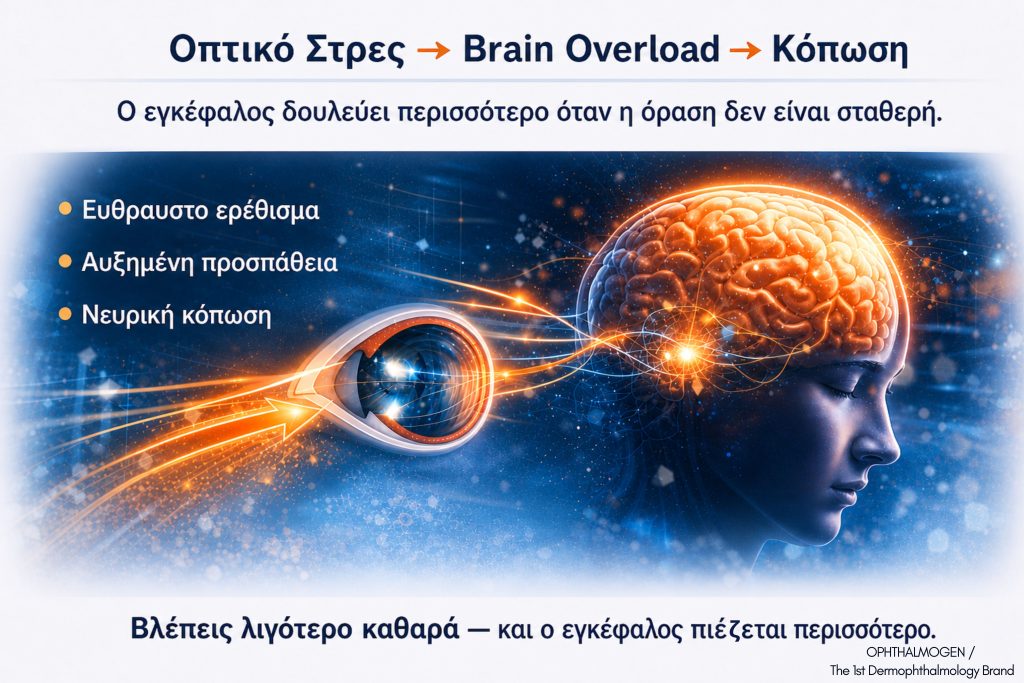
When visual input becomes unstable::

  • accommodative demand increases
  • blink efficiency decreases
  • visual effort rises


leading to:

  • fatigue
  • discomfort

reduced performance

8. Neural Compensation and Cognitive Load

Degraded input leads to::

  • increased cortical processing
  • neural compensation
  • attentional demand

resulting in: continuous micro-compensation

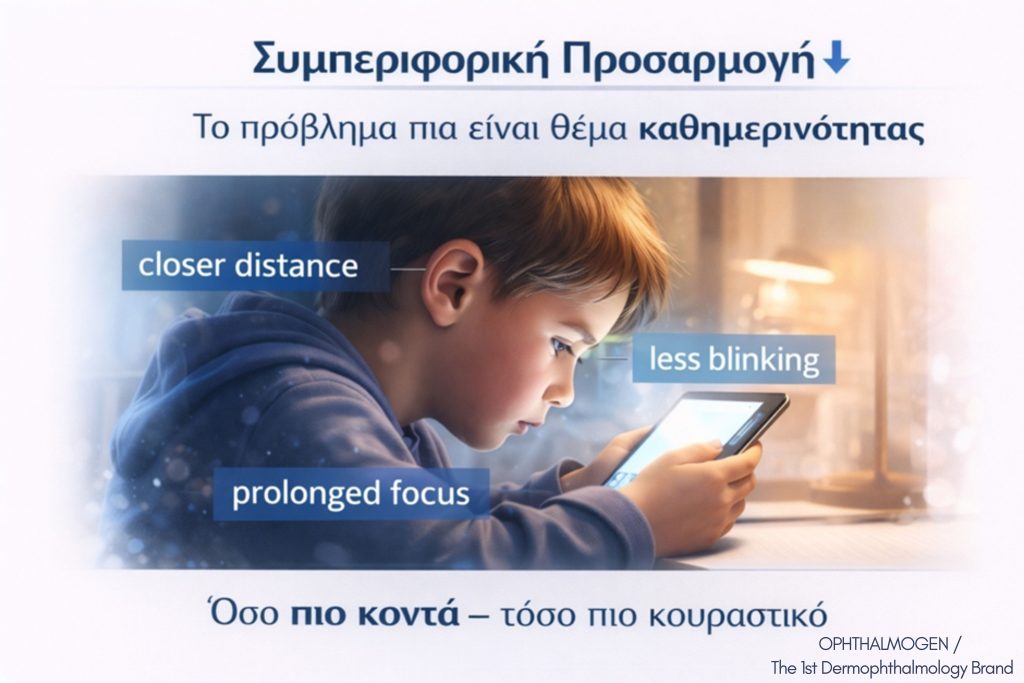
9. Behavioral Adaptation

Children respond with::

  • closer viewing distance
  • prolonged fixation
  • reduced blinking


These are adaptive responses to poor optical quality

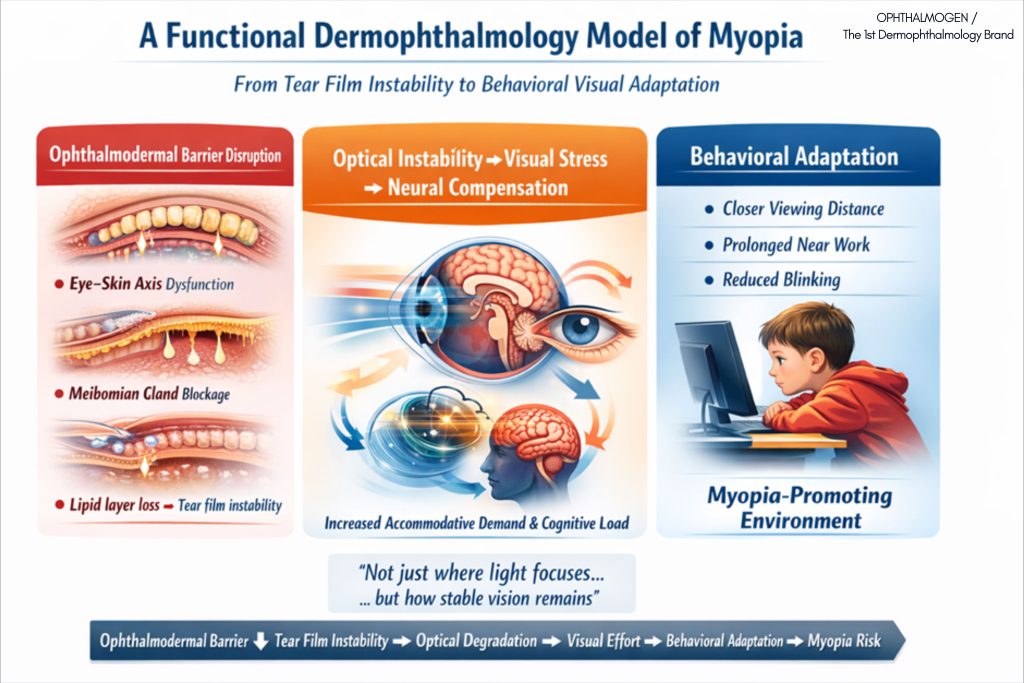
10. Functional Pathway Linking Tear Film and Myopia

Tear film instability contributes indirectly:

  • Functional Model

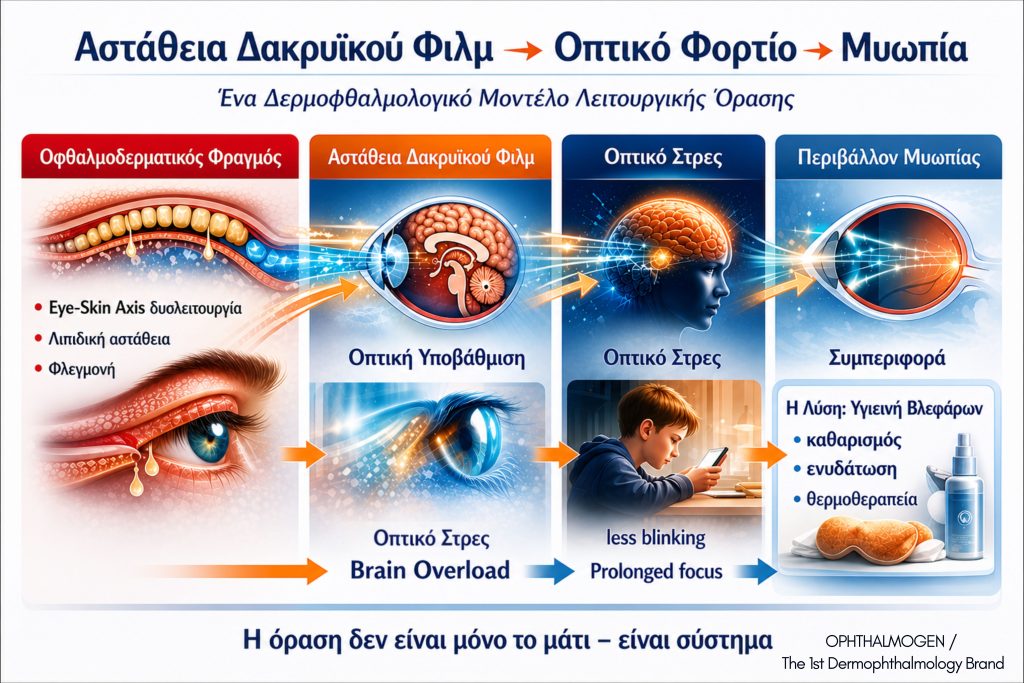
Ophthalmodermal Barrier Disruption → Tear Film Instability → Optical Degradation → Visual Stress → Behavioral Adaptation → Myopia-Promoting Environment


It does not initiate myopia but facilitates its progression environment

11. The Digital Age Amplifier

Modern behavior intensifies::


resulting in:

  • chronic instability
  • early fatigue

increased visual load

12. Eyelid Hygiene as a Preventive Strategy

Eyelid hygiene restores the Ophthalmodermal Barrier.


It:

  • reduces microbial load
  • improves lipid secretion
  • decreases inflammation
  • stabilizes tear film


Functional Outcome

  • improved optical quality
  • reduced evaporation
  • increased stability


Behavioral Outcome

  • improved viewing distance
  • reduced strain
  • better concentration

13. Eye Hygiene as the “Oral Hygiene” of Vision


Daily eyelid hygiene parallels oral hygiene.

Core Concept: “The eyelids are the gums of the eyes”

14. Preventive Model

  • Includes:

    • eyelid hygiene
    • blink awareness
    • screen breaks
    • thermal therapy

    shift: treatment → prevention

15. Significance

This work introduces a new integrative vision model.


Scientific Contribution

  • integrates surface + optics + behavior
  • introduces Eye–Skin Axis
  • defines Ophthalmodermal Barrier
  • establishes Ophthalmoderma


Clinical Impact

  • reframes ocular surface as functional driver
  • promotes preventive care
  • supports early intervention


Conceptual Innovation

From isolated eye

  • To integrated system

Conclusion


Tear film instability does not directly cause myopia.


However, within the Ophthalmoderma system, it critically influences::

  • optical stability
  • neural processing
  • behavioral adaptation

shaping the environment in which myopia develops.

Final Statement

Within the Dermophthalmology framework, disruption of the Ophthalmodermal Barrier and instability of the Eye–Skin Axis contribute to a functional visual environment characterized by increased effort, reduced optical stability, and behavioral adaptations that favor myopia progression.

Recommended Posts