Introduction – The Paradox
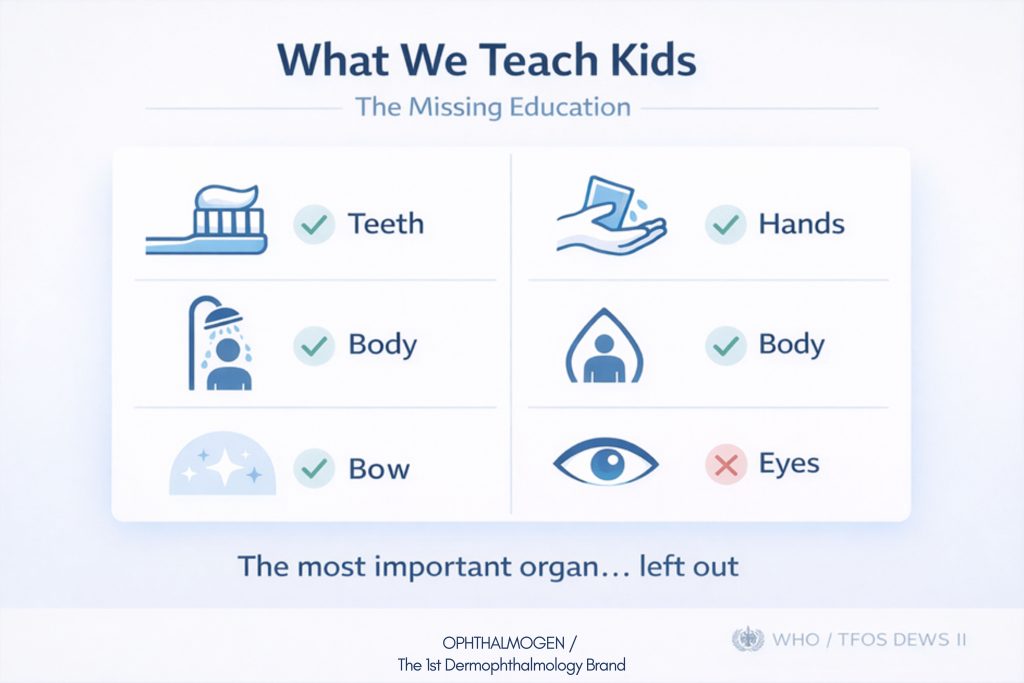
Kids today are taught to brush their teeth, wash their hands, and care for their bodies.
But no one teaches them to care for their eyes – the organ that gives them 80% of all information about the world.
The result:: red eyes, dry eye,myopia, allergies, and lower academic performance.
The Problem in Numbers
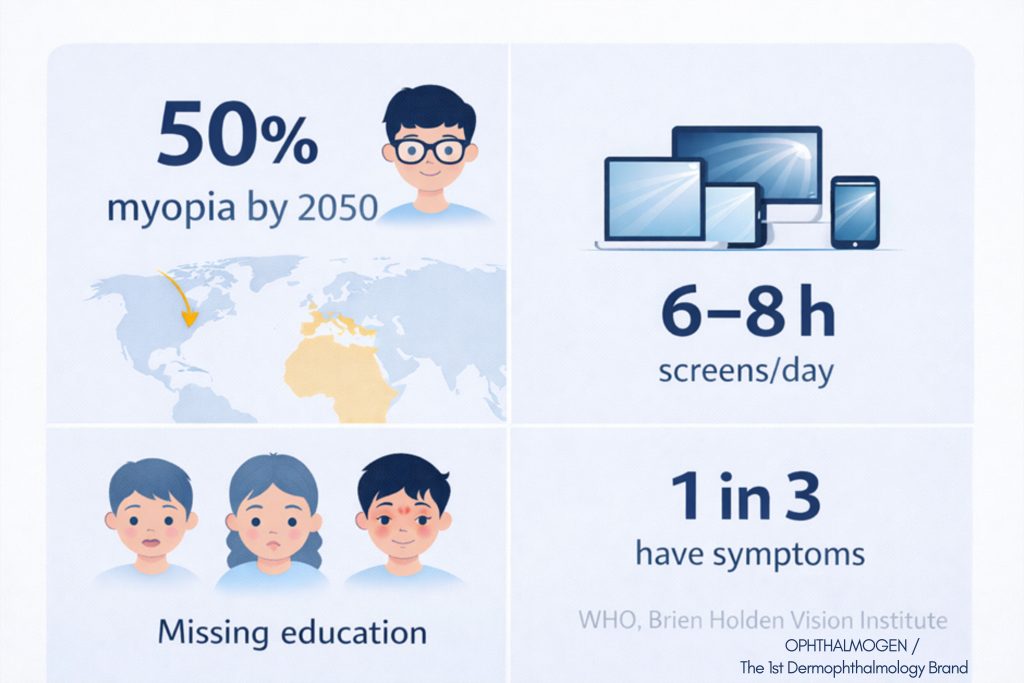
- By 2050, 50% of children in Europe will be myopic (WHO, Brien Holden Vision Institute).
- Children spend 6–8 hours/day on screens (PC, tablets, phones).
- 20–30% of students already show symptoms of dry eye.
- 30–40% rub their eyes frequently due to allergies or irritation..
And all this at ages when the eyes should be at the healthiest stage of their lives.
Mechanism of Damage
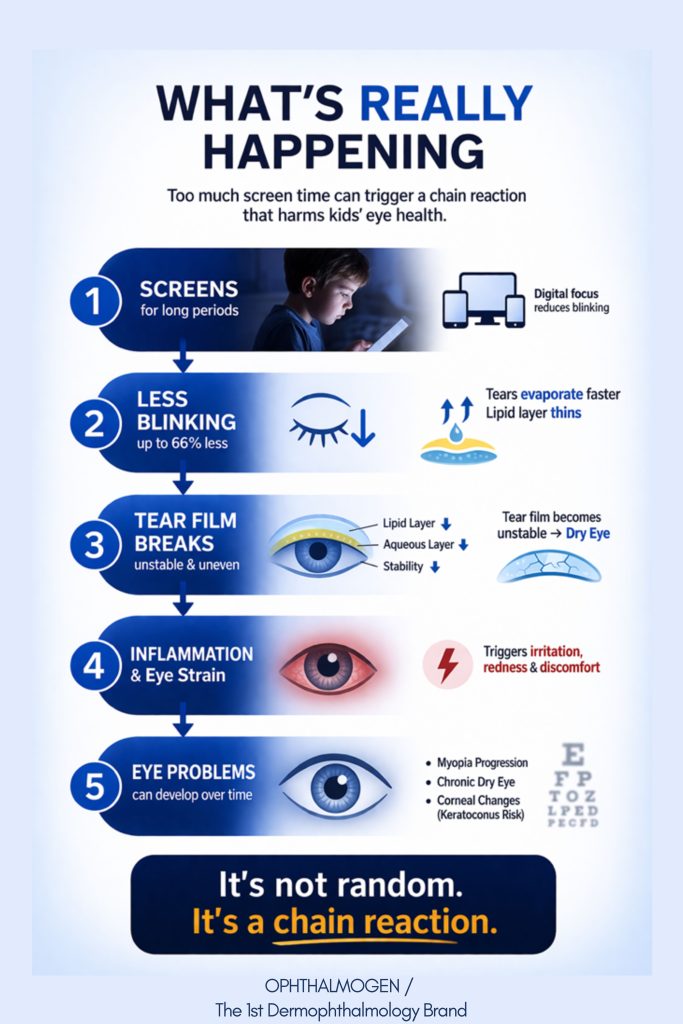
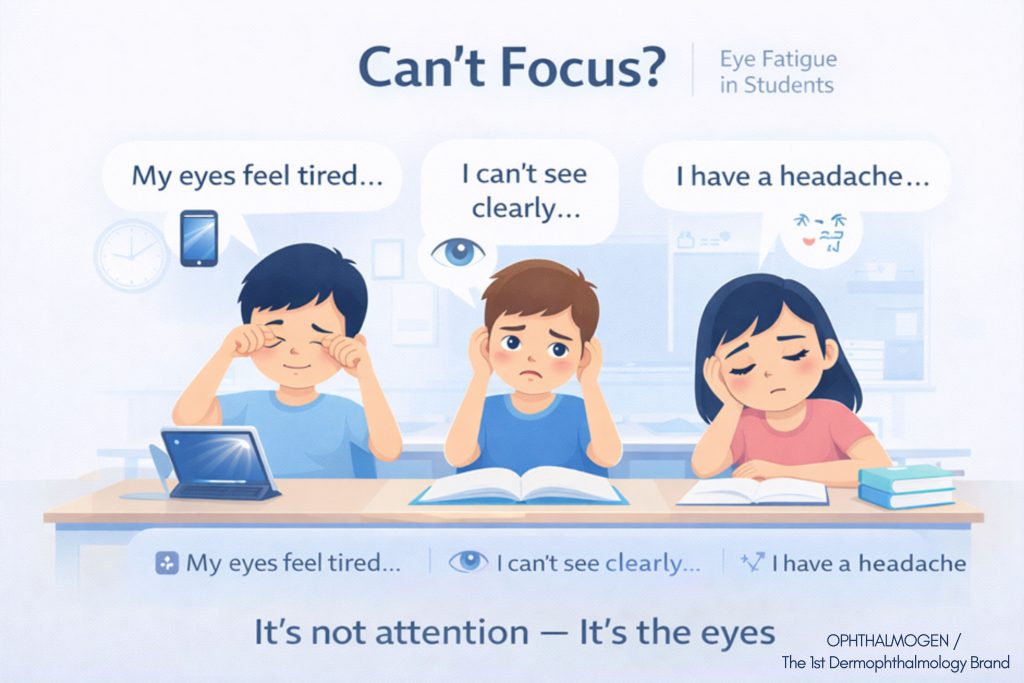
- Reduced blinking from screens → dry eye, fatigue.
- Eye rubbing → inflammation, keratoconus, blepharitis.
- Teen makeup →clogged meibomian glands.
- Contact lenses in teens → infections from poor care.
- Allergies → chronic itching and redness..
The Oral Hygiene Parallel
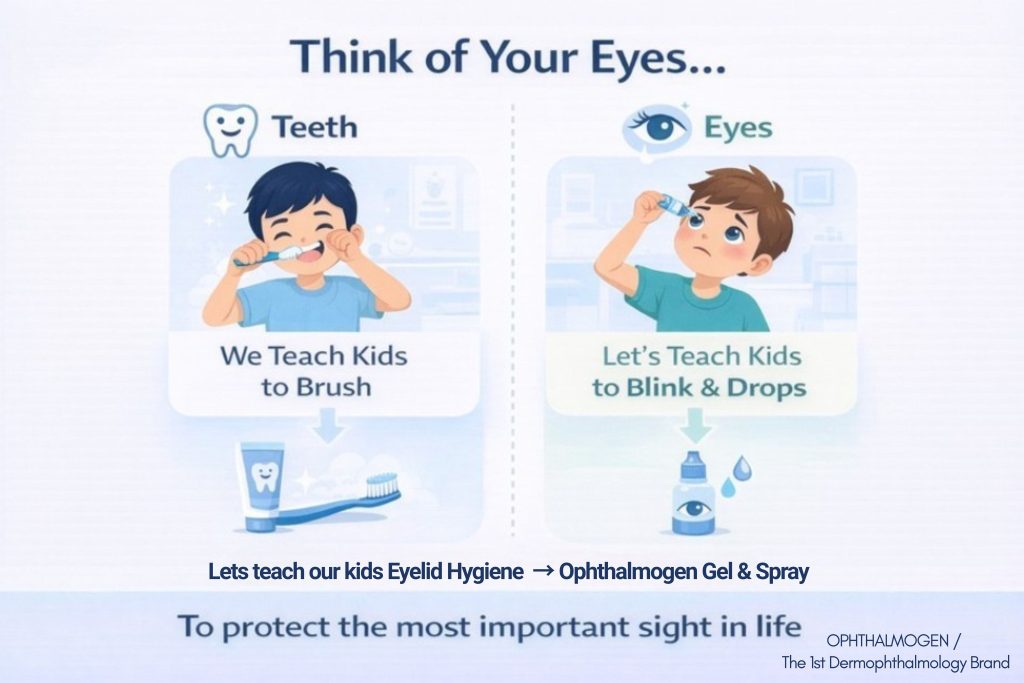
In the 1960s, cavities and tooth loss were considered “normal.”Dentistry & Periodontology changed everything by introducing oral hygiene at school. Today, brushing is second nature.The same must happen with eye hygiene.
Case Studies
Case 1 – Eye rubbing & allergies
A 10-year-old constantly rubbed his eyes → chronic blepharitis, classroom fatigue.
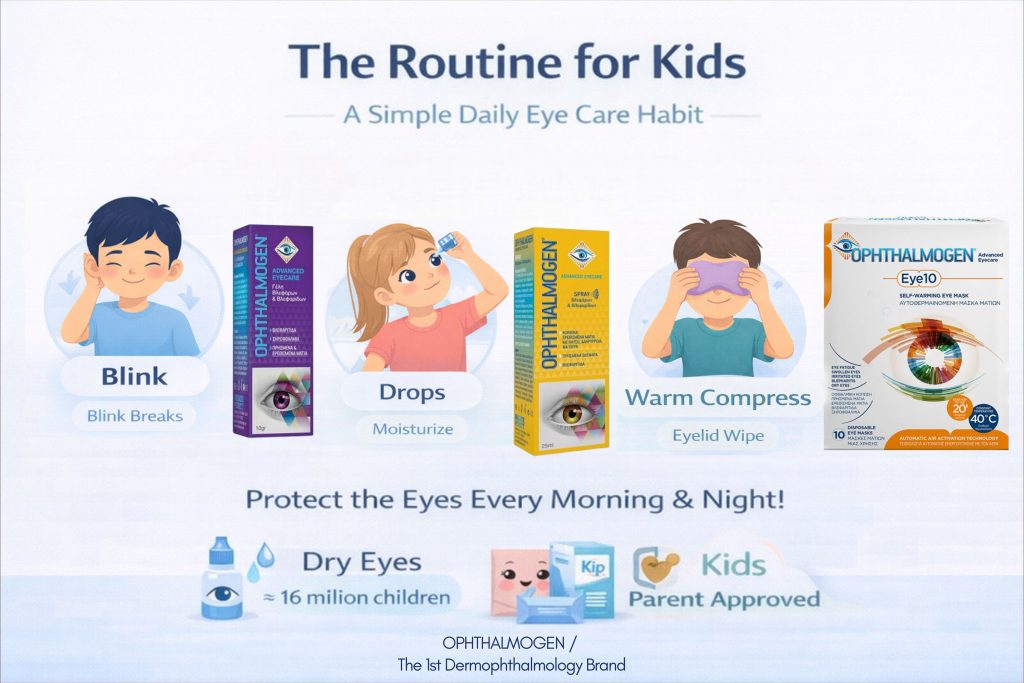
With Ophthalmogen Gel+ Naviblef+ spray + no rubbing, symptoms improved and concentration rose.
Case 2 – Tablet overuse
A 13-year-old boy using a tablet daily → dry eye, headaches, reading difficulties.
With Ophthalmogen EYE10 twice/week + Ophthalmogengel massage, vision and performance improved.
Case 3 – Teen contact lens misuse
A 16-year-old wore lenses without care → recurrent conjunctivitis & intolerance.
With eyelid hygiene education and proper use, the issue was solved.
The Role of Dermophthalmology
Dermophthalmology bridges the gap:
- Teaches kids that the Ophthalmoderma, Ophthalmodermal barrier (brows, lids, lashes, glands, tear film) needs care.
- Shows that eye hygiene is a daily need, like brushing teeth.
- Prevents disease and boosts academic and social performance.
F&Q (for parents & teachers)
Q: At what age should eye hygiene start?
A: From primary school. The earlier children learn, the more natural it becomes.
Q: How many hours of screen time are safe?
A: Ideally ≤2 hours/day outside school, with breaks every 20 minutes.
Q: Are hygiene products safe for children?
A: Yes, there are specific formulations free of irritants like Ophthalmogen product series, suitable for children.
Q: How is eye hygiene linked to school performance?
A: Children with clean, hydrated eyes have better focus, fewer headaches, and higher self-confidence.
Conclusion – A New Education
Just as society taught kids to brush their teeth, it must now teach them eye hygiene.
This is about health, prevention, and quality of life.
The future belongs to the generation that learns to love and care for their eyes.