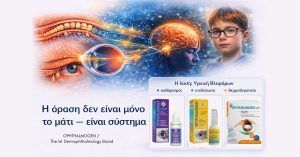
Introduction – The Hidden Link Between Eyes and Performance
Athletes know that every detail counts: strength, endurance, nutrition, recovery.
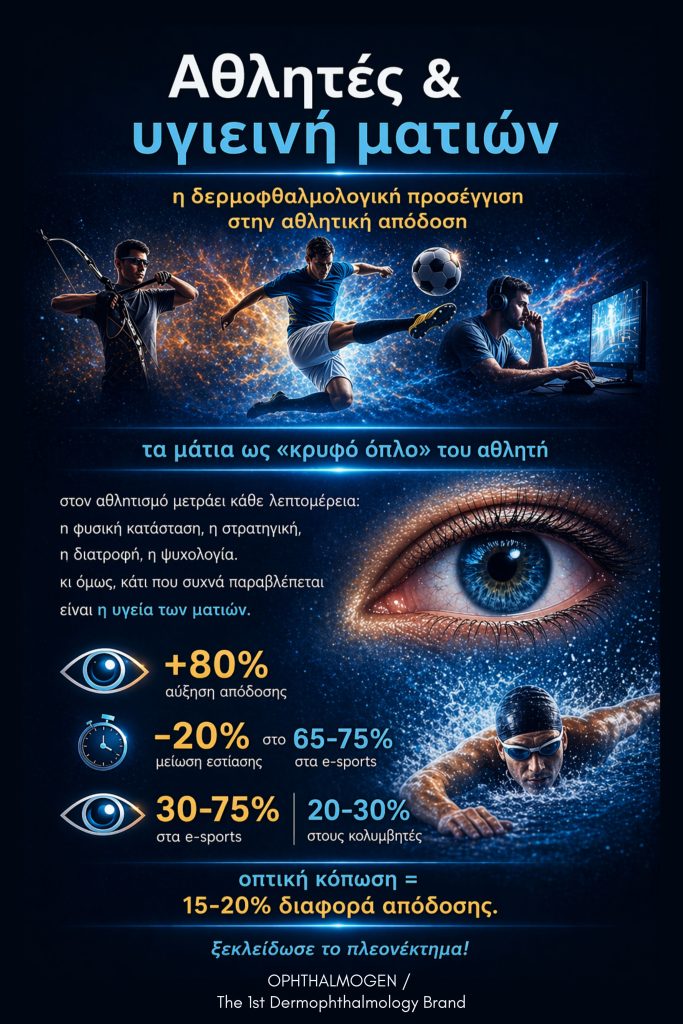
But one factor is often overlooked – the eyes. Vision represents up to 80% of the information intake during sports performance. Whether it’s following a fast-moving ball, keeping focus under bright lights, or maintaining hand-eye coordination, eye health is crucial.
And yet, while athletes carefully maintain their muscles, diet, and hydration, they rarely care for their eyes with the same discipline. The result? Fatigue, blurred vision, redness, and reduced performance.
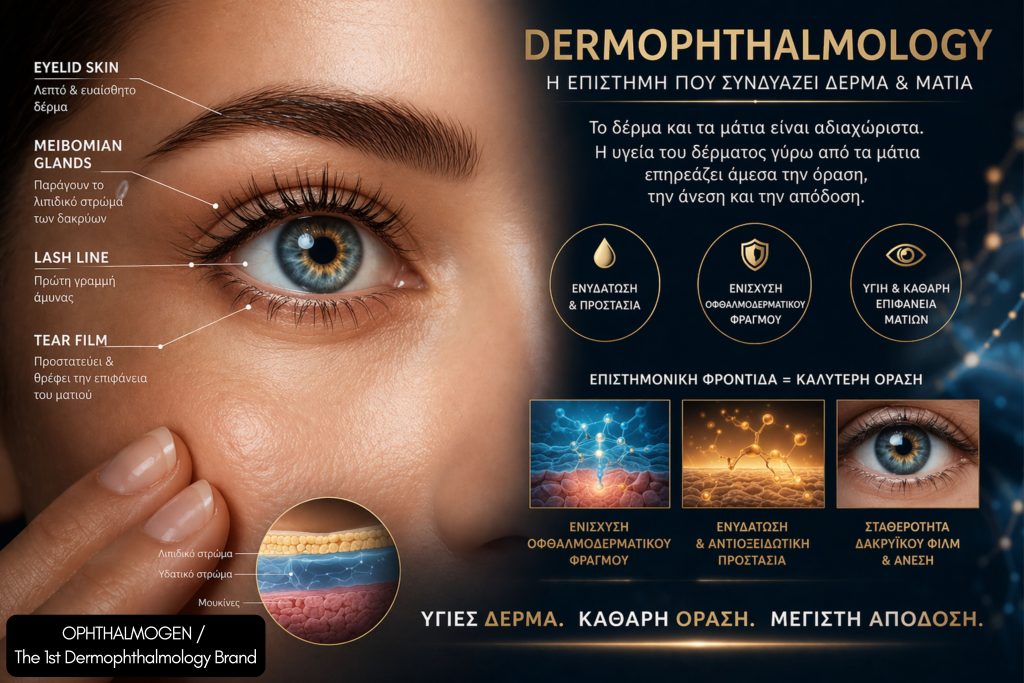
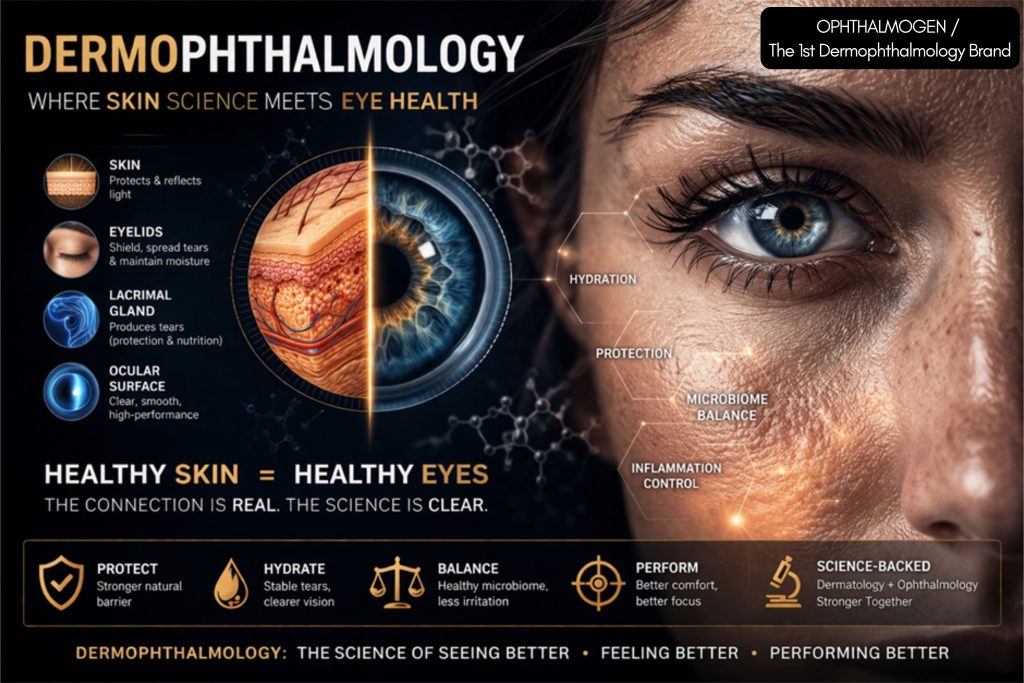
Dermophthalmology, the science that bridges dermatology and ophthalmology, introduces a new paradigm: eye hygiene as part of athletic training and recovery.
The Role of the Ciliary Muscle
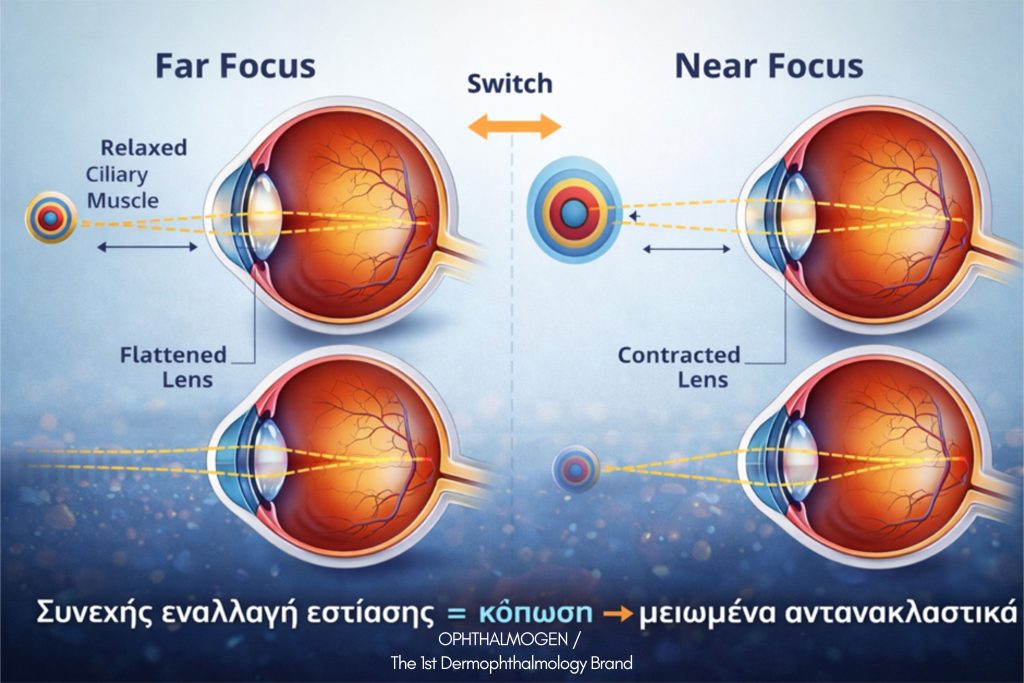
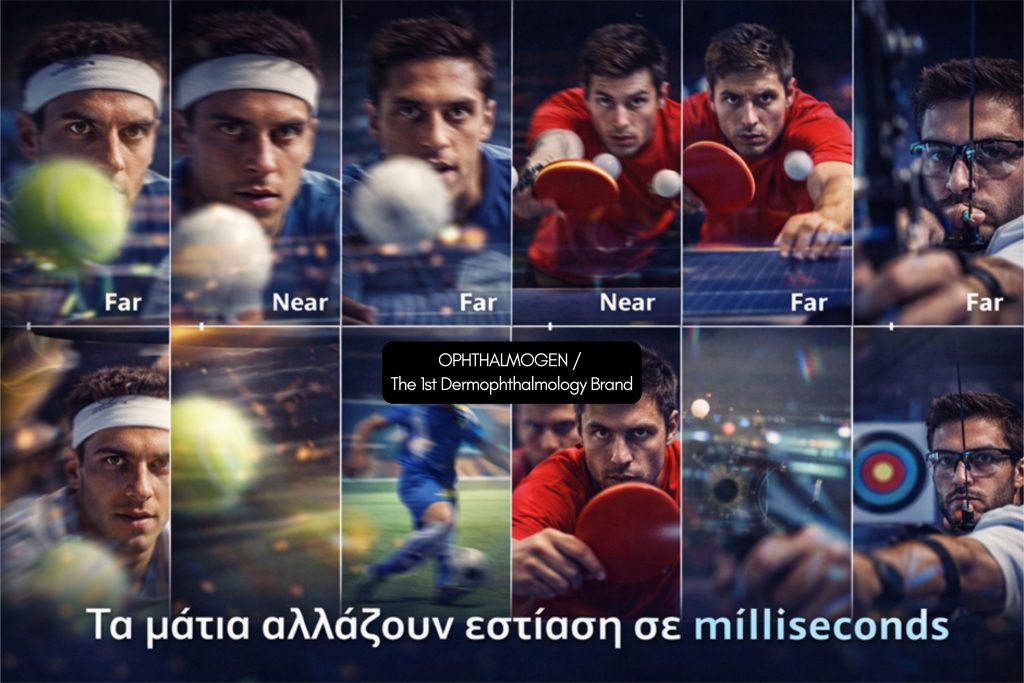
The ciliary muscle is the eye muscle that allows for focusing (accommodation). When the athlete looks far away and then near, this muscle “works” to adjust the lens of the eye.
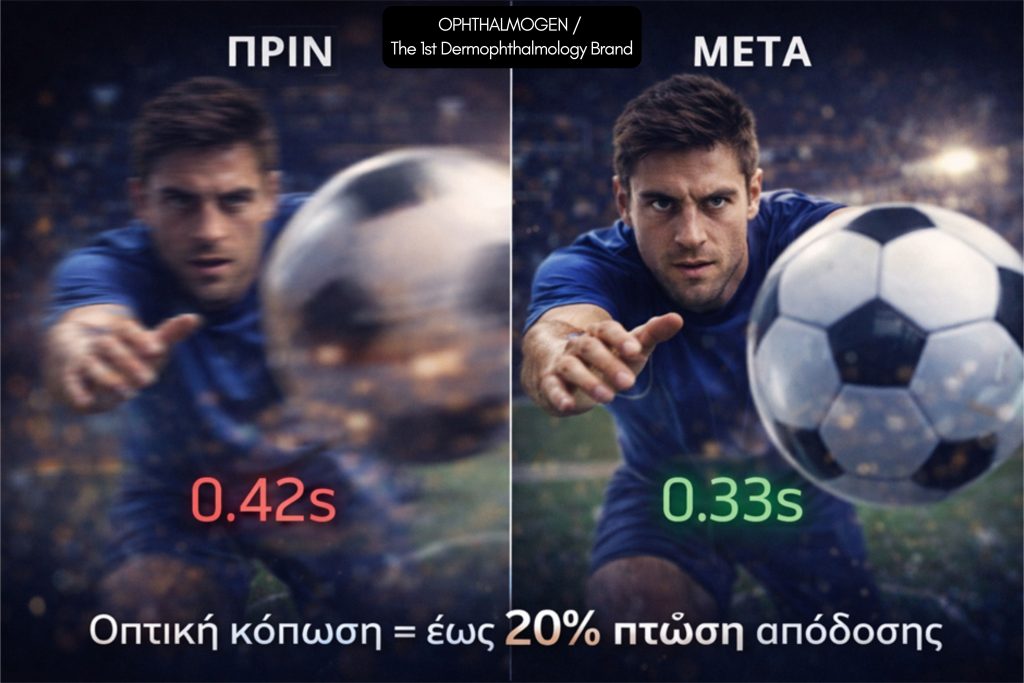
This leads to ciliary muscle fatigue, which manifests as headaches, blurred vision, and decreased concentration. Studies show that visual fatigue can reduce reflexes by up to 20% – a difference that can decide a match.
Visual Fatigue – The “Silent Opponent” of Athletes
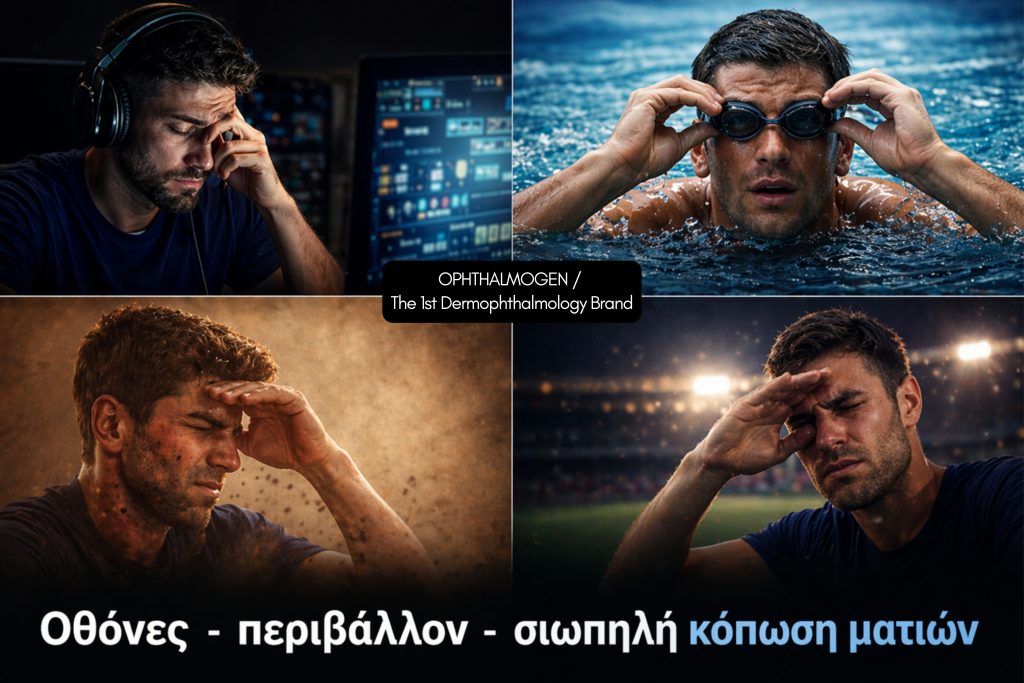
Athletes, especially in the digital age, are exposed to factors that increase the risk of dry eye and blepharitis:
Prolonged use of screens (videoanalysis, e-sports).
Exposure to dust, wind, air conditioning in stadiums and enclosed spaces.
Chlorine in swimming pools.
Intense blinking in outdoor conditions (sun, wind).
Statistics:
30–40% of athletes report symptoms of dry eye.
In e-sports, the percentage reaches 65–75%.
In swimmers, 20–30% experience eye irritation and inflammation.
This silent fatigue does not show up in blood tests or ergometric tests, but it dramatically reduces performance.
Shooting & Archery
The clarity and stability of vision determine the result. Even slight dry eye can alter aiming.
Tennis & Football
The ball moves at speeds >100 km/h. The eye's ability to focus quickly and clearly is vital.
Swimming
Chlorine disrupts the tear film, causing dry eyes and redness. Prevention is essential for those who train in a pool.
E-sports
Gamers spend 6–10 hours in front of screens. Digital eye strain is a pandemic. Eye health can make the difference between winning and losing.
Ειδικές Περιπτώσεις Αθλημάτων
Dermophthalmology in Sports
The new science of Dermophthalmology brings a holistic approach:
The eye, eyelids, eyelashes, glands and skin form a single ecosystem.
The Ophthalmogen range embodies this philosophy, offering a sports eye care protocol.
Self-heating compresses at 40°C for 20’. They dissolve clogged lipids, relax the ciliary muscle, improve blood circulation. Athletes report that after use they see more clearly and rested.
OphthalmogenGel
Eyelid massage after training → enhances microcirculation, reduces inflammation, improves eye recovery.
OphthalmogenSpray
For daytime use, it provides hydration, antimicrobial protection and revitalization with a single spray on the eyelids/eyelashes. Ideal for competitions and outdoor activities.
ADDITIONAL INFORMATION
NaviblefDailyCare& IntensiveCare
Eyelid cleansing foam with tea tree oil → reduces Demodex and bacterial load, keeping eyelids healthy.
FloraVisionSpray artificial tears in the form of spray
For direct hydration of the ocular surface with a single spray. Ideal for outdoor use. Much easier to use than eye drops.
Omega-3 Supplements and Vitamins
They improve tear composition and enhance ocular comfort. Among the best known are ALLVITAEYES and MACUSAVE antioxidant vitamin preparations specifically for the eyes.
Statistics & Research
80% of athletic performance is related to visual information.
Visual fatigue = 15–20% reduction in reflex times.
In screen athletes (gamers), >65% have dry eyes.
In swimmers, >25% experience eye inflammation.
1 in 2 athletes who report “fatigue” actually have eye strain.
Recommended Protocol for Athletes
Morning:
Cleaning with Naviblef and lukewarm water
Immediately afterwards, spray the eyelids with Ophthalmogen Spray.
Then 2 drops of artificial tears (Visionlux Plus, Thealoz Duo, Navitae Plus, Systane).
Beforethe training/match:
Hydration of the ocular surface with artificial tear spray for vision stability, such as Flora Vision Spray.
Afterwardsthe training:
Ophthalmogen Eye10 for 20 minutes
Immediately afterwards, massage the eyelids with Ophthalmogen Gel.
Weekly::
Omega-3 supplements.
Symptom control.
This protocol aims to maintain the athlete with clear, rested and stable vision, minimizing the risk of strain.
Conclusion – The eyes, the athlete's most valuable tool
Eye hygiene is not just disease prevention. It is a tool for improving athletic performance.