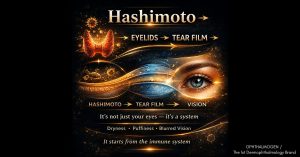

It’s Not the Lenses — It’s the Eyelids
The Contact lenses are an integral part of everyday life for millions of people. Yet one symptom keeps appearing again and again:
- red eyes
- burning, stinging, a heavy sensation
- decreasing tolerance as the hours pass
- the need to remove lenses earlier than planned
And the question is always the same: “Maybe contact lenses just don’t suit me?”
In most cases, they do. Modern scientific evidence shows that the problem is not the lenses themselves, but the condition of the eyelids and the stability of the tear film.
Red Eyes ≠ “I Can’t Tolerate Contact Lenses”
When there is no:
- severe pain
- purulent discharge
- acute infection
then contact lens–related redness is most commonly associated with:
- rapid tear evaporation
- destabilization of the tear film
- Meibomian gland dysfunction (MGD)
- chronic eyelid inflammation (blepharitis)
Simply put: the problem starts at the eyelids.
What scientific studies show
How Common Is the Problem?
- 50–60% of contact lens wearers experience symptoms of discomfort
(TFOS Contact Lens Discomfort Workshop)
- 30–40% discontinue lens use due to redness and dryness
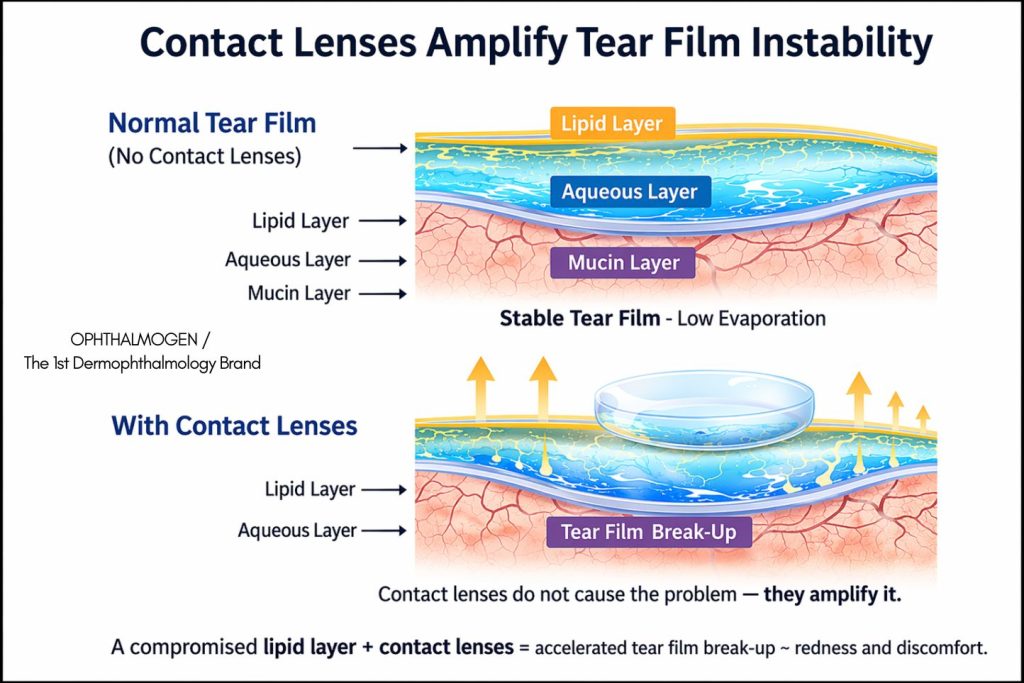
- Contact lens wear can double tear film evaporation
What happens biologically?
- Nichols et al., IOVS
→ Poor lipid layer = tear instability & vascular dilation
- TFOS DEWS II, 2017
→ The most common cause of redness is evaporative dry eye, not tear deficiency
- Baudouin et al., Ocular Surface
→ Inflammation is sustained by the eyelids, not the lens
Contact lenses reveal a pre-existing dysfunction — they do not create it on their own.
Connection to Dermophthalmology & the Eye–Skin Axis
Contact lens intolerance is a classic example of the “missed diagnosis” behind dry eye and red eyes.
Related scientific article: https://dermophthalmology.com/i-chameni-diagnosi-piso-apo-tin-xirofthalmia-kai-ti-dysanexia-stous-fakous-epafis/
eyelid OPHTHALMODERMA (eyelids – eyelashes – glands – tears) plays a central role.
Why eye drops alone are often not enough
Conventional artificial tears:
- provide temporary hydration
- do not improve the lipid layer
- do not relieve gland congestion
- do not prevent daily redness
That’s why symptoms keep returning.
The Foundation of Protection for Contact Lens Wearers: Eyelid Hygiene
Modern care is clear:
- It’s not enough to care for the lens.
- You must care for the environment of the eye.
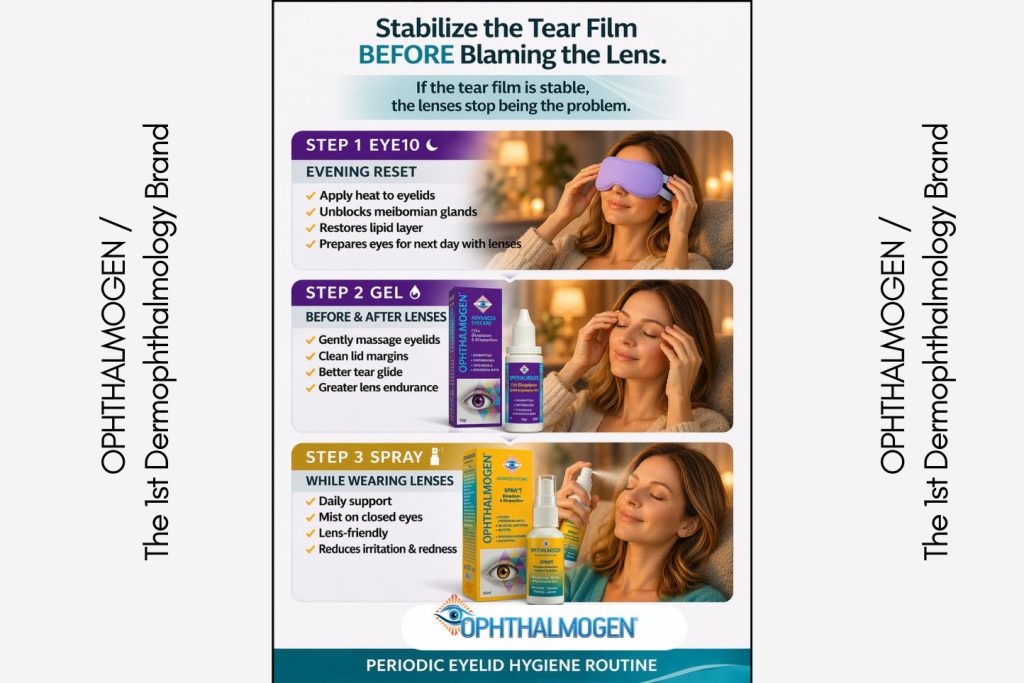
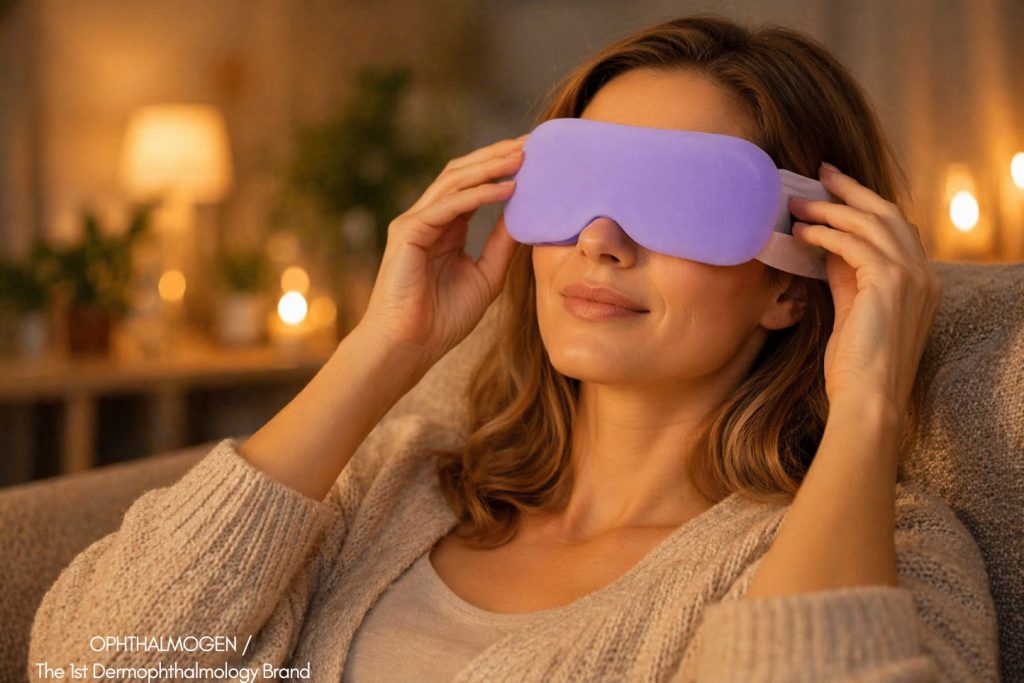
The Ophthalmogen for Contact Lens Wearers
After Contact Lens Use (especially >8 hours)
- controlled therapeutic heat
- liquefies thick lipid secretions
- opens Meibomian glands
- reduces evaporative dryness
- relaxes and prepares the eyes for the next day
Recommended:
- daily after heavy lens use
- preventively once weekly, even without symptoms
Ophthalmogen Gel - Before & After Lens Wear
- gentle eyelid massage
- cleans lash line
- unblock Meibomian glands
- improved lens tolerance
How to use
- before inserting lenses
- after removing them
Ophthalmogen Spray - During the Day
- spraying on closed eyes
- safe for use with contact lenses
- reduces micro-irritation
- ideal for office, driving, travel
It doesn’t “flood” the eye — it supports it.
Additional Support for Red Eyes in Contact Lens Wearers
- hydrates while wearing lenses
- protects against redness
- sprayed directly onto the ocular surface
- next-generation artificial tears in spray form, designed for lens wearers
Navi Infla -Ophthalmic Solution
- natural, daily support for red eyes
- no vasoconstriction
- suitable for frequent use
Supportive solutions — not replacements for the foundation.
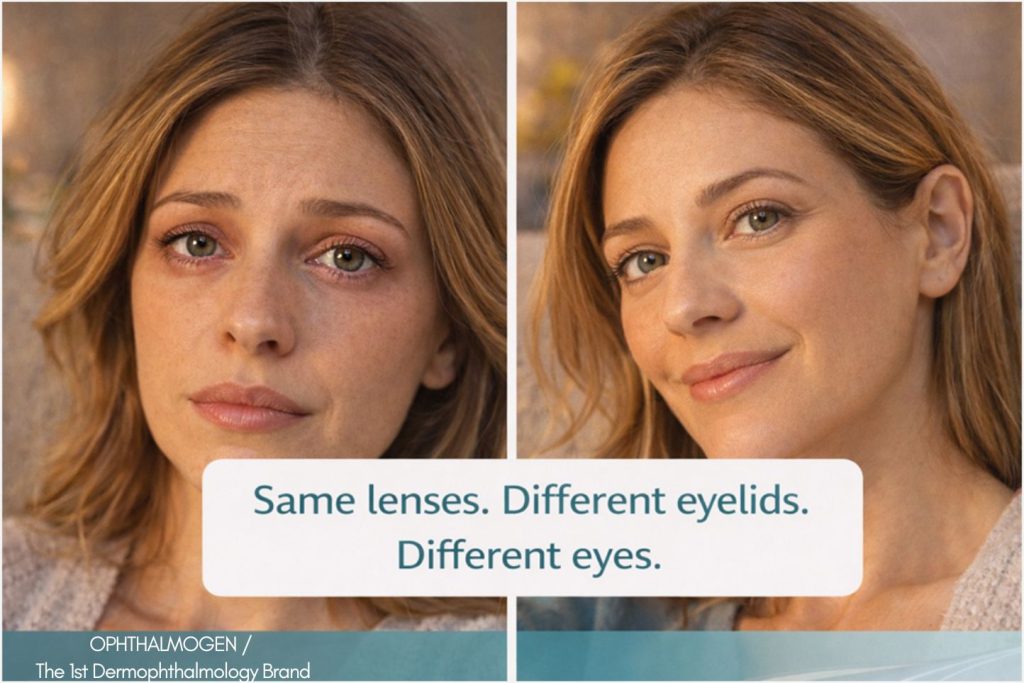
What changes in real life
Contact lens users who follow an eyelid hygiene routine report:
- less redness
- less burning at the end of the day
- longer comfortable lens-wear time
- reduced need for eye drops
- no need to change lenses
Conclusion
Red eyes from contact lenses do not mean “they don’t suit you”. They are not solved with a single drop. They start at the eyelids.
Eyelid hygiene is preventive care When the tear film stabilizes, lenses become comfortable again. Don’t change your lenses.. Change your routine.
FAQ Red Eyes & Contact Lenses
- Why do my eyes turn red with contact lenses?
Because of tear film instability and eyelid dysfunction.
- Is this dry eye disease?
Often evaporative dry eye rather than tear deficiency.
- Should I stop wearing contact lenses?
Not necessarily. Eyelid support is usually the key.
- When should I use Ophthalmogen EYE10;
After prolonged lens wear and preventively once per week.
- Can I use Spray over makeup? Ophthalmogen Spray lenses?
Yes, applied to closed eyelids.
- When should I see an ophthalmologist?
If there is pain, photophobia, sudden vision loss, or discharge.